
24/7 Customer Support

Free returns

Same-day & Next-day Delivery

Quality Guaranteed

Unlock Your Welcome Offers: FREE Delivery | Up to 80% OFF | Free 30-day JoyPlus trial
Download the APP
A flat battery is more than an inconvenience; it can disrupt your entire day, leaving you stranded at the worst possible moment. While a portable car battery booster seems like a simple solution, the market is filled with devices that over-promise and under-deliver. Many UK drivers find themselves with a useless gadget after falling for common marketing traps. Before you buy, it's crucial to understand what separates a reliable emergency tool from a waste of money.
The most frequent issues stem from three key areas:
jump starter power pack without spark-proof technology or reverse polarity protection can cause permanent damage to your car's electronics or, in a worst-case scenario, lead to a battery explosion.Understanding a few key specifications will empower you to choose a device that genuinely meets your needs.
The advertised peak amperage is the maximum current the booster can discharge in an instant. While a higher number can be an indicator of power, the starting current (sometimes called cranking amps) is a more practical measure. This is the power the unit can sustain for several seconds to get your engine turning. For a standard UK petrol car, a unit with 800A-1500A peak current is often sufficient. However, for larger SUVs or if you need a jump starter for diesel vehicles, you should look for models offering 2000A or more, such as a 3000A jump starter, to ensure reliable performance.
The capacity, measured in milliamp-hours (mAh), determines how many times you can attempt a jump-start on a single charge and how effective the device is as a power bank for your electronics. A larger capacity doesn't always mean more starting power, but it is essential for those who want a multi-functional emergency car starter.
Always cross-reference the booster's stated engine compatibility (e.g., "up to 7.0L Petrol, 5.5L Diesel") with your own vehicle. A 12V battery booster is standard for most cars, vans, and is even suitable as a motorcycle jump starter, but always confirm your vehicle's system voltage. Modern lithium jump starter models offer a great balance of power and portability compared to older, heavier lead-acid types.
This is non-negotiable. A reliable car jump starter must have a comprehensive set of safety features. Look for an "intelligent" or "smart" jump leads pack that includes:
Models with clear indicators (LED lights or an LCD screen) that confirm a correct connection before you start the engine add an invaluable layer of safety.
We've identified several models that align with the needs of different UK drivers, focusing on realistic performance and essential safety standards.
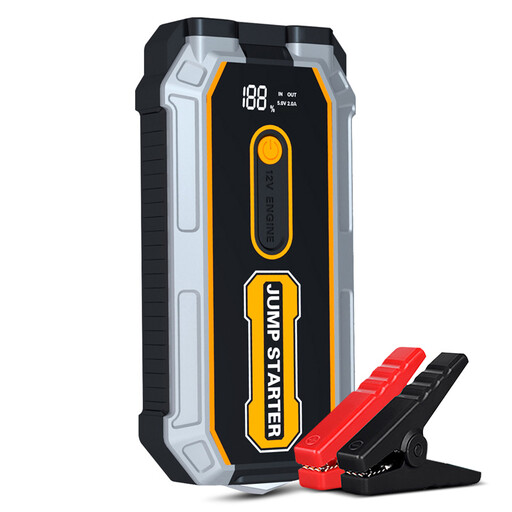
Why This Fits Their Persona: This unit is ideal for drivers of small-to-medium petrol cars. Its ultra-compact and lightweight design means it can be stored in a glovebox or door pocket without taking up valuable space, ensuring it's always on hand for an emergency.
Its 1200A peak power is a realistic and effective rating for its size, avoiding the trap of exaggerated claims that smaller units often make.
Features an ultra-compact and lightweight design (approx. 330g) with a clear LCD screen for at-a-glance battery status monitoring.
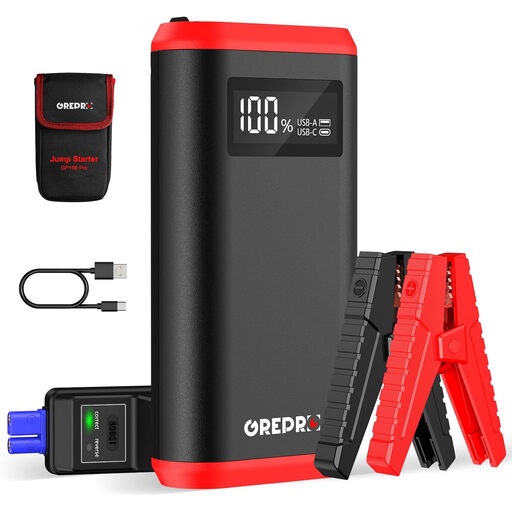
Why This Fits Their Persona: This model offers substantial power for the larger petrol or medium diesel engines found in SUVs and people carriers. It also serves as a high-capacity power bank to keep family devices charged on road trips, adding extra utility.
It features ten layers of advanced safety protection, including spark-proof clamps, directly addressing the critical risk of using a sub-standard, unsafe unit.
Provides a high 3000A peak current for reliable starting of larger engines and includes a "force start" button for deeply discharged batteries.
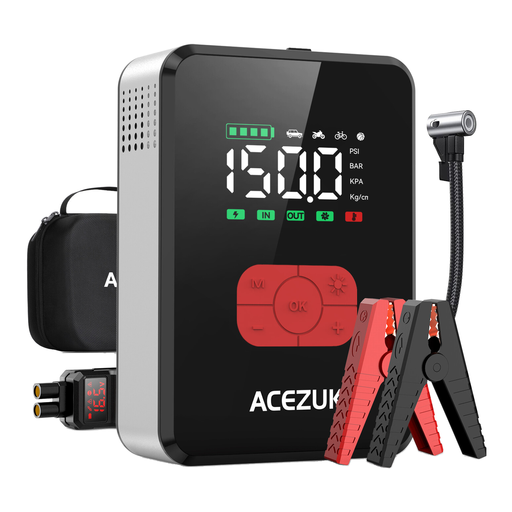
Why This Fits Their Persona: This is for users with demanding vehicles like large diesel vans, motorhomes or for those who want an all-in-one roadside emergency tool. The integrated air compressor is perfect for adjusting tyre pressures on the go, offering complete preparedness.
It delivers genuine high-end power (7000A peak) capable of starting large diesel engines, directly countering the pitfall of underpowered units with unrealistic compatibility claims.
A multi-functional tool combining a powerful jump starter with a 150 PSI digital air compressor, making it a complete roadside emergency kit.
We have compiled a complete, real-time list of products that fully satisfy these strict selection criteria and UK safety regulations.
Most modern lithium jump starters can hold their charge for 6 to 18 months, depending on the model and storage conditions. However, to ensure it's always ready for an emergency, it is good practice to check and recharge the unit every 3 to 4 months, especially before a long journey or the winter season.
Yes, most 12V car jump starters are also suitable for motorcycles, as they operate on the same 12V system. Given that motorcycle batteries are much smaller, a compact, lower-amperage booster is usually more than sufficient. Always check the manufacturer's specifications to confirm compatibility.
Reputable lithium jump starters are designed to operate within a wide temperature range, often from -20°C to 60°C. They are generally safe to be stored in a car during a typical UK winter. However, extreme cold can reduce battery efficiency, so it may be wise to bring it indoors during prolonged, severe cold snaps to ensure it delivers maximum power when needed.