
24/7 全天候客户支持

免费退货

当日/次日达

品质保障

开启新人专享福利: 全场免邮 | 低至 2 折 | 免费试用 30 天 JoyPlus 会员
下载 Joybuy
A flat battery is one of the most common and frustrating problems a driver can face. It often happens at the worst possible moment—on a cold morning, in a dark car park or when you are already running late. While roadside assistance is an option, the waiting time can be long and inconvenient. A modern car jump starter offers a fast, reliable and self-sufficient solution, getting you back on the road in minutes.
As a Joybuy Product Recommendation Officer, my role is to help you navigate the options. This guide cuts through the marketing jargon to focus on the practical features that matter. We will look at what to consider when choosing a portable car battery booster and highlight a few models suited for different types of UK drivers.
Before you buy, it is important to understand a few key specifications to ensure the device is compatible with your vehicle and meets your needs.
The most critical factor is the peak current, measured in amps (A). This determines the starter's ability to deliver the burst of power needed to turn over an engine.
Many modern lithium jump starters double as a high-capacity power bank with jump starter functionality. The battery capacity, measured in milliampere-hours (mAh), indicates how much charge it can hold. A higher mAh rating means it can perform more jump starts before needing a recharge or can charge your personal devices multiple times. Look for models with USB-A or USB-C ports to charge your smartphone, tablet or other gadgets, making them invaluable for travel, camping or long road trips.
Consider where you will store the device. Compact, lightweight models fit easily into a glove box or backpack, while more powerful units might be larger. Some advanced models also come with useful integrated features. For example, a jump starter with an air compressor can be a true all-in-one roadside emergency tool, allowing you to inflate a flat tyre as well as start a flat battery. Most units also include a built-in LED torch with different modes (steady, strobe and SOS), which is incredibly useful for emergencies at night.
Here are a few recommendations that cater to different vehicle types and user needs, based on their specifications and features.
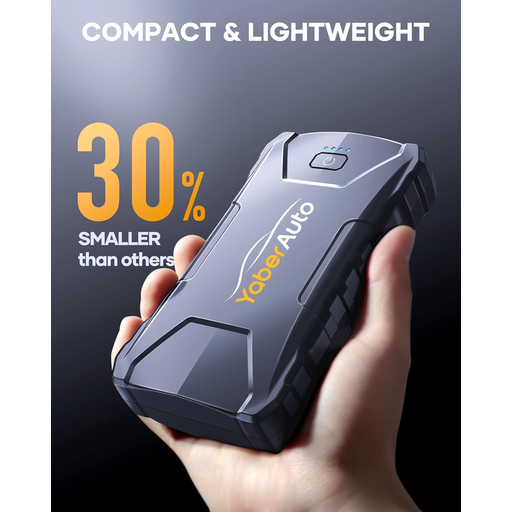
Why It Stands Out: The YaberAuto YA80 is a well-balanced and highly portable option for the average UK driver. Its compact and lightweight design means it can be stored almost anywhere without taking up valuable space. With 2000A peak current, it provides ample power for the majority of petrol and medium-sized diesel cars on the road.
Pros:
Who is it for?: Daily commuters and families with standard petrol or medium-sized diesel cars who want a reliable, no-fuss car starter for peace of mind.
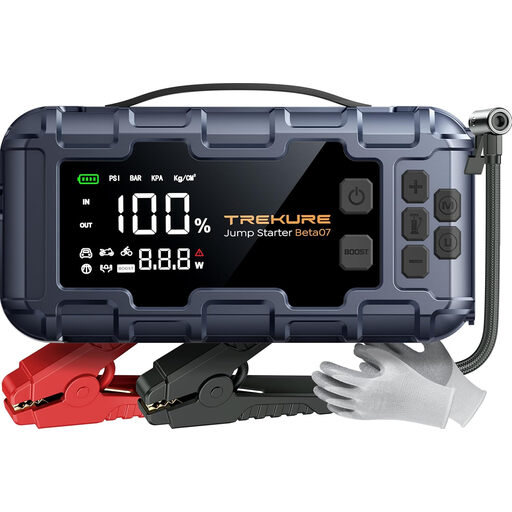
Why It Stands Out: This is a true multi-purpose emergency tool. The TREKURE Beta07 combines a powerful heavy duty jump starter with a 160PSI air compressor. Its massive 6000A peak current can handle almost any 12V vehicle, while the compressor can inflate a car tyre in minutes. The 3.3-inch smart display provides clear, real-time information.
Pros:
Who is it for?: Owners of large vehicles like vans, lorries and campervans, or anyone who values the convenience of an all-in-one roadside safety device.
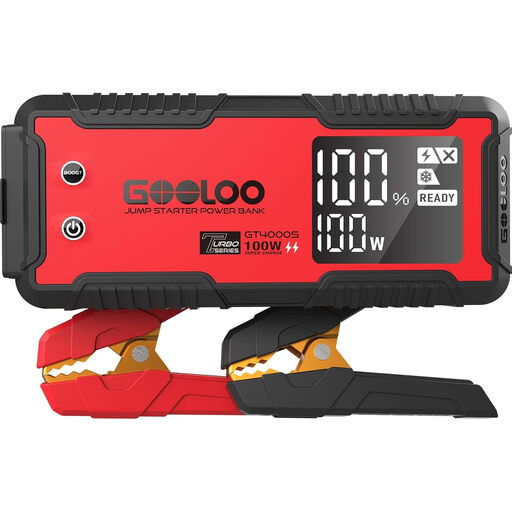
Why It Stands Out: The GOOLOO GT4000S is built for power and speed. Its headline feature is the 100W two-way fast charging, which can fully charge the unit in just over an hour. According to the manufacturer, just 5 minutes of charging can provide enough power for a single jump start. With 4000A peak power, it is a formidable jump box for diesel engines and large petrol vehicles.
Pros:
Who is it for?: Power users, professionals and owners of large campervans, lorries or boats who need serious starting power and cannot afford to wait for a slow-charging device.
If these models are not quite what you are looking for, there are many other types of 12v battery booster packs available. Whether you need a different power rating, a more compact design or a specific feature set, you can find a suitable match.
? Explore our full range of car battery booster packs to find the perfect fit for your vehicle.
1. How many amps do I need to jump start my car? This depends entirely on your vehicle's engine size and type. A small to medium petrol car can typically be started with 400-600 amps. However, larger petrol engines (V6/V8) and especially diesel engines require more power, often needing 1000 amps or more. Always check your vehicle's manual or consult the jump starter's specifications to ensure compatibility.
2. Are lithium jump starters better than traditional jump leads? They serve different purposes. Traditional jump leads are simple and effective but require a second vehicle with a healthy battery. A lithium jump starter is a self-contained jump starter power pack, meaning you can start your car on your own without waiting for help. They are also far more portable and often come with extra features like power bank functionality and a torch.
3. Can I leave a jump starter connected to my car battery? No. Once the vehicle's engine has started, you should disconnect the jump starter clamps from the battery terminals promptly, usually within 30 seconds. Leaving it connected can damage the jump starter's internal battery and potentially the vehicle's electrical system. Always follow the manufacturer's instructions for safe operation.