
24/7 Customer Support

Free returns

Same-day & Next-day Delivery

Quality Guaranteed

Unlock Your Welcome Offers: FREE Delivery | Up to 80% OFF | Free 30-day JoyPlus trial
Download the APP
There are few things more frustrating than turning the key in your ignition and hearing nothing but a faint click. A dead car battery can happen to anyone, at any time, often on a cold morning or in a remote car park. While roadside assistance is an option, it can involve long waits and costly call-out fees. A modern, portable car jump starter offers a practical and immediate solution, putting you back in control and on the road in minutes.
Navigating the market for an emergency car battery pack can be confusing, with a wide range of power ratings and features. This guide is designed to cut through the clutter, helping you understand the key features to look for and providing our recommendations for reliable units that offer genuine value.
Before you buy, consider these key factors to ensure you select a device that meets your specific needs.
The most critical specification is the jump starter's peak current, measured in Amps (A). This figure indicates the maximum power the unit can deliver to turn over your engine. A small petrol car might only need 400-600A, but larger vehicles require significantly more.
Modern jump starters are more than just a battery booster. Many are multi-functional tools that prove useful in various situations.
Here are our recommendations, selected for their performance, features and overall value for UK drivers.
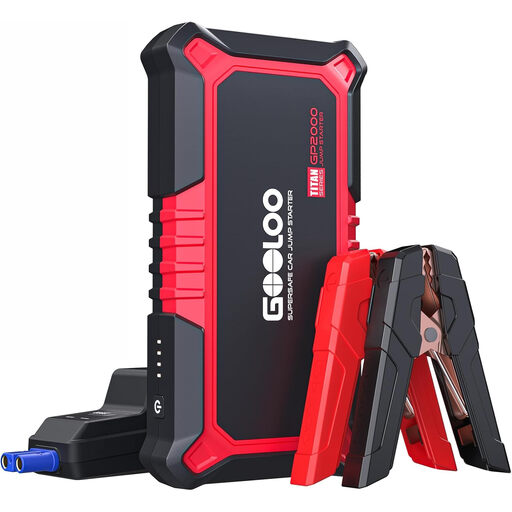
Why It Stands Out: The GP2000 strikes an excellent balance between power and affordability. It provides enough cranking power for the majority of cars and mid-sized SUVs on UK roads, all within a compact and lightweight design.
Pros:
Who is it for? This is a great all-round choice for daily commuters and families with standard petrol or mid-sized diesel vehicles. It’s a reliable and straightforward emergency car battery pack for common roadside situations.
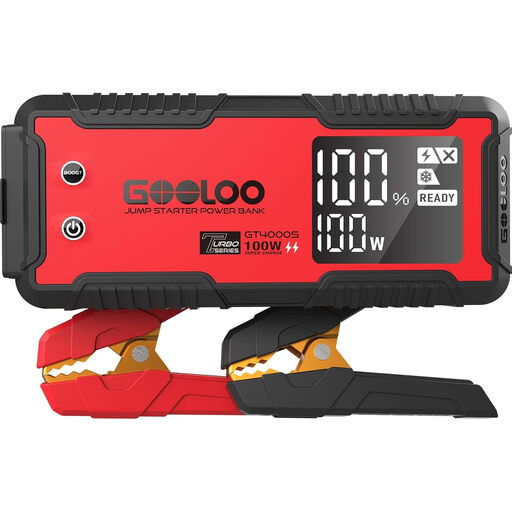
Why It Stands Out: The GT4000S is defined by its immense power and rapid charging capabilities. The 100W two-way fast-charging means the unit itself can be recharged very quickly, and it can even power demanding devices like laptops.
Pros:
Who is it for? This heavy-duty portable jump starter is ideal for owners of large vehicles, commercial vans or anyone who values speed and power. If you rely on your vehicle for work or travel extensively, the GT4000S offers serious performance.
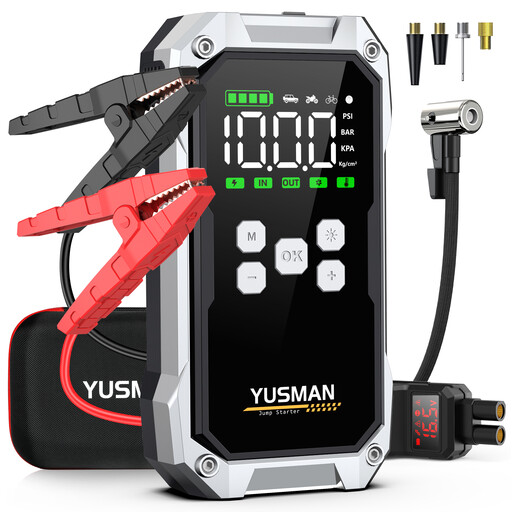
Why It Stands Out: The YUSMAN F04 is the ultimate all-in-one roadside tool. It combines an extremely powerful jump starter with a built-in air compressor, consolidating two essential pieces of emergency equipment into a single, portable case.
Pros:
Who is it for? This is for the motorist who wants to be prepared for anything. If you value maximum utility and want a single device to handle both a dead battery and a flat tyre, this jump starter with air compressor is an excellent choice.
While these three models cover a wide range of needs, the right choice always depends on your specific vehicle and preferences. If you're looking for different power levels or feature combinations, you can find more choices in our complete collection.
Explore our full range of Car jump starter battery products to find the perfect fit for your vehicle.
This depends on your engine. For most small-to-medium petrol cars, 1000A is more than enough. For larger petrol SUVs, vans or small diesel cars, look for 1500A-2000A. For large trucks and diesel engines (over 3.0L), a unit with 2500A or more is recommended for reliable performance, especially in cold weather. Always check your vehicle's manual for specific recommendations if available.
Yes, that is their primary function. A car battery booster works by delivering a powerful, short burst of electricity directly to your battery, providing the necessary cranking amps to start the engine when the battery itself has insufficient charge.
Most modern lithium car starter units have a very low self-discharge rate and can hold their charge for many months. Some manufacturers claim a standby time of up to 24 months. However, for peace of mind and to ensure it's ready when you need it, it is good practice to check the charge level and top it up every 3 to 4 months.