
24/7 Customer Support

Free returns

Same-day & Next-day Delivery

Quality Guaranteed

Unlock Your Welcome Offers: FREE Delivery | Up to 80% OFF | Free 30-day JoyPlus trial
Download the APP
For any professional carpenter, joiner or dedicated DIY enthusiast, the right marking tool is as fundamental as a saw or a hammer. A standard graphite pencil might suffice for a shopping list, but on a dusty worksite or when marking rough-sawn timber, it simply doesn't hold up. The lead snaps, the round body rolls off the nearest surface and the faint line disappears under a layer of sawdust.
This guide is designed to cut through the clutter and help you select the right carpenters pencils for your specific tasks. We will explore the key features to look for, from lead hardness to body shape, ensuring your marks are clear, accurate and reliable every time.
Selecting the appropriate builders pencils goes beyond just grabbing the first one you see. The right choice depends on the material you are marking and the precision you require.
The core of any pencil is its lead, and for woodworking pencils, the grade of that lead is critical. It determines the visibility and durability of your mark.
There is a practical reason why joiners pencils are not round. The distinctive rectangular or oval profile, known as flat carpenters pencils, serves two key purposes. Firstly, it prevents the pencil from rolling off sloped or uneven surfaces like a roof or workbench. Secondly, it provides a wider, more stable grip, which is more comfortable to hold, especially when wearing gloves.
The body of the pencil should be made from durable wood that can withstand the knocks and drops of a busy worksite. This robust construction ensures the lead core is protected and the pencil remains a reliable tool for a long time.
Based on these practical considerations, we have selected a range of Blackedge pencils that cater to different professional and DIY needs.
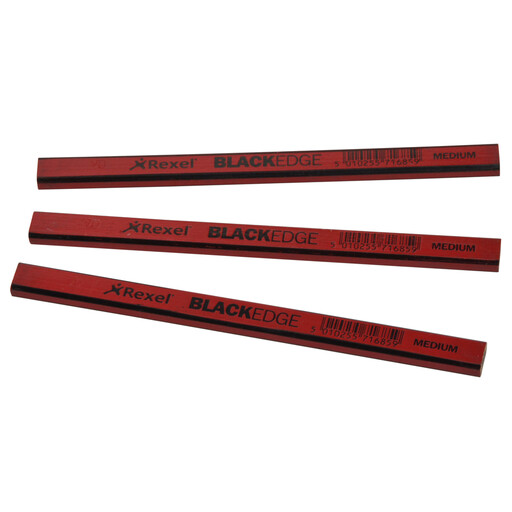
Why It Stands Out: This pack is a dependable all-rounder. The medium grade lead provides a perfect equilibrium, delivering clear marks on most common construction materials without excessive smudging. It is an excellent choice for those who need a single, reliable marking tool for a variety of jobs.
Pros:
Who is it for? This is the ideal choice for general builders, carpenters and DIY enthusiasts looking for a versatile and reliable pencil for everyday marking tasks.
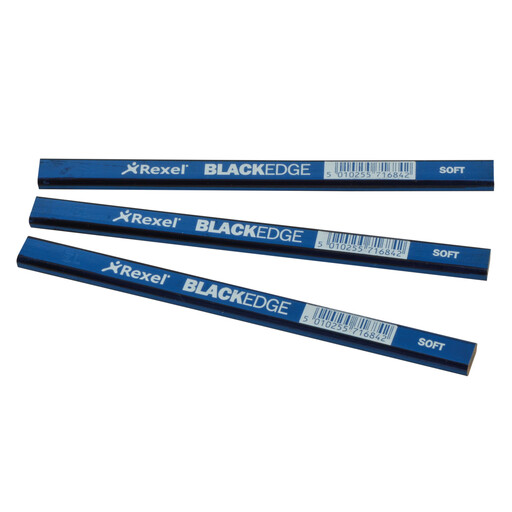
Why It Stands Out: When visibility is paramount, these soft lead carpenters pencils excel. They lay down a dark, bold line that stands out clearly on rough-sawn timber, brickwork and other challenging surfaces where a finer line might get lost.
Pros:
Who is it for? Tradespeople working with unfinished materials, such as framers, roofers and general builders, will find these pencils invaluable for making clear, unambiguous marks.
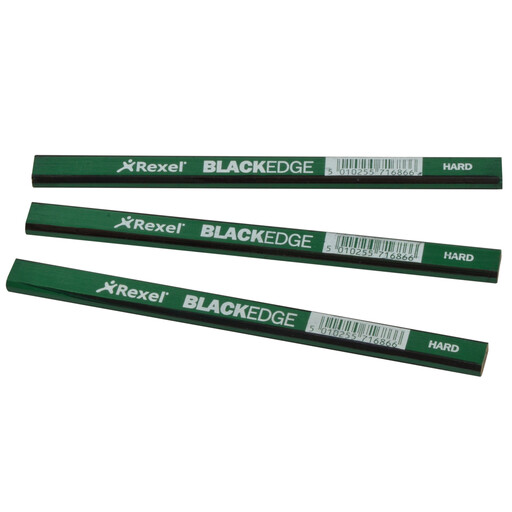
Why It Stands Out: For work that demands precision, these hard lead carpenters pencils are the right tool. The hard lead maintains a sharper point for longer, allowing for the creation of fine, clean lines essential for detailed joinery, cabinet making and marking out on smooth surfaces.
Pros:
Who is it for? Joiners, cabinet makers, metalworkers and any craftsperson who requires high levels of accuracy for finishing work will appreciate the clean lines these pencils provide.
A precise mark is only as good as the measurement that precedes it. A quality pencil is a vital part of a tradesperson's toolkit, but it works best alongside other accurate instruments. For accurate measurements to go with your precise marks, explore our selection of professional measuring tapes.
1. Why are carpenters pencils flat? The flat, rectangular shape of carpenters pencils serves two practical functions. It stops the pencil from rolling away on angled or uneven surfaces, such as a roof or workbench. It also provides a wider, more stable grip, which is easier to hold securely, especially when wearing work gloves.
2. What is the difference between a carpenter's pencil and a regular pencil?Carpenters pencils are purpose-built for construction and workshop environments. They feature a much stronger and more durable lead core and a robust wooden body designed to withstand rough handling. Their specific shape and lead compositions are optimised as pencils for marking wood, concrete and metal, whereas standard round pencils are designed for writing on paper and have fragile lead.
3. How do you sharpen a flat carpenter's pencil? You can use a dedicated carpenter's pencil sharpener, which is designed to accommodate the rectangular shape and maintain the flat lead profile. Alternatively, many tradespeople prefer to use a sharp utility knife to carefully shave the wood away, allowing them to shape the lead into a fine point for thin lines or a flat chisel edge for broader marks.