
24/7 Customer Support

Free returns

Same-day & Next-day Delivery

Quality Guaranteed

Unlock Your Welcome Offers: FREE Delivery | Up to 80% OFF | Free 30-day JoyPlus trial
Download the APP
As a cat owner in the UK, navigating the aisles of cat food can feel overwhelming. With packaging covered in appealing images and compelling claims, it’s difficult to know what’s genuinely beneficial for your feline companion and what’s just clever marketing. As the Joybuy Product Recommendation Officer, my role is to help you see past the hype and make informed choices. Let's look at some common pitfalls and how to avoid them.
Many well-intentioned owners fall into traps that can be costly and not always in their cat's best interest.
grain free cat food has become a huge marketing buzzword. While essential for cats with specific grain allergies or sensitivities, it's not automatically a superior choice for every cat. Many cats digest high-quality grains perfectly well. Some grain-free formulas simply replace grains with other starches like potato or peas, which may not be any better and can still contribute to weight gain if overfed.wet cat food) is designed to be fed alongside a complete meal and is not nutritionally sufficient on its own. Feeding a complementary food as a main diet can lead to serious nutritional deficiencies.To choose wisely, focus on the facts on the label. Here are the key parameters to analyse.
The ingredients are listed in order of weight, so the first few items make up the bulk of the food. Look for a named protein source as the first ingredient, such as "Chicken," "Turkey" or "Salmon Meal." This is a clearer indicator of quality than generic terms. High-quality dry cat food and wet food will both prioritise clear, specific protein sources.
A one-size-fits-all approach doesn't work for cat nutrition. Their needs change dramatically as they age.
cat food for indoor cats often have adjusted calorie levels and fibre to help manage hairballs.senior cat food. These formulas often contain fewer calories to prevent weight gain in less active cats and may include supplements like glucosamine and chondroitin to support ageing joints.If your cat has particular health concerns, a specialised diet can provide targeted support.
weight control cat food with a lower fat content and higher fibre can help them feel full while consuming fewer calories.Based on these practical criteria, here are a few options tailored to specific types of cat owners.
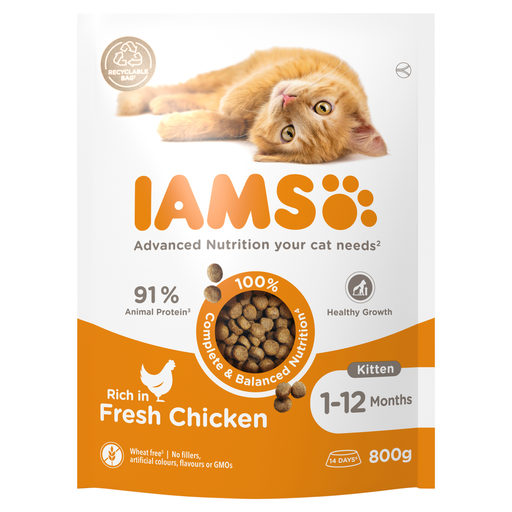
Why This Fits Their Persona: You want to give your new kitten a strong start in life. This formula is specifically designed for their high-energy needs, focusing on healthy development from the very beginning.
This is a complete kitten food with a high percentage of animal protein (91% of total protein) from clearly named sources like chicken and turkey, avoiding vague labelling.
It contains DHA to support brain and vision development, along with an antioxidant blend to help build a strong immune system.

Why This Fits Their Persona: You live with your cat indoors and are familiar with the challenges of hairballs, weight management and litter box odour. This food is formulated to address those specific issues directly.
Instead of following general trends, this is a targeted formula. It uses specific ingredients like vegetable fibre and chicory root for functional benefits, not just marketing appeal.
It contains fibre to help move hair through the digestive system, reducing hairballs. According to Purina's research, it also helps reduce litter box odour in 14 days.
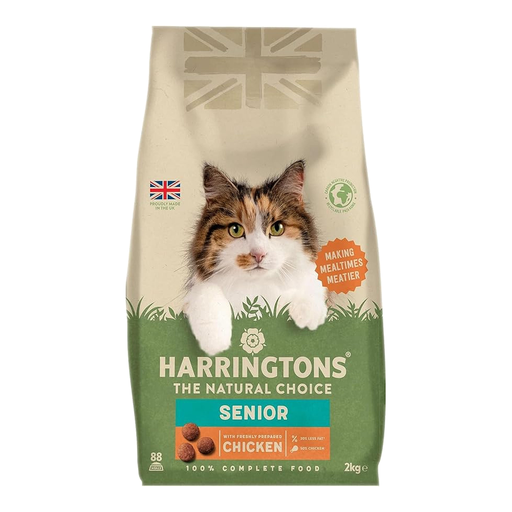
Why This Fits Their Persona: Your cat is entering their golden years (8+), and you want to support their changing needs, particularly concerning mobility and digestion.
This is a complete senior food, ensuring your older cat gets a balanced diet. It's also a grain-free formula, which can be beneficial for some seniors with more delicate digestive systems.
It is specifically formulated with glucosamine and chondroitin to provide support for ageing joints, a key concern for senior cat health.
We have compiled a complete, real-time list of products that fully satisfy these strict selection criteria and UK safety regulations.
1. How do I safely switch my cat to a new food? To avoid digestive upset, you should transition your cat to a new food gradually over 7-10 days. Start by mixing a small amount of the new food (around 25%) with their old food (75%). Every couple of days, increase the proportion of the new food until you have fully switched over. This is especially important for cats with a known sensitive stomach.
2. Is wet cat food or dry cat food better? Both have their advantages. Wet cat food has a high moisture content, which is great for hydration and can be beneficial for cats with urinary tract issues. Dry cat food (kibble) is convenient, often more cost-effective and its crunchy texture can help reduce tartar build-up on the teeth. Many owners choose to feed a combination of both.
3. How much should I feed my cat? The feeding guide on the packaging is your starting point. These amounts are based on an average cat's weight and activity level. You may need to adjust the portion size depending on whether your cat is an active outdoor explorer or a more sedentary indoor companion. Monitor your cat's body condition and adjust as needed to maintain a healthy, lean weight.