
24/7 Customer Support

Free returns

Same-day & Next-day Delivery

Quality Guaranteed

Unlock Your Welcome Offers: FREE Delivery | Up to 80% OFF | Free 30-day JoyPlus trial
Download the APP
Navigating the cat food aisle can feel overwhelming. With shelves packed with brightly coloured packaging and compelling claims, it’s easy to feel lost. As the Joybuy Product Recommendation Officer, my role is to help you see past the marketing clutter and make informed choices for your feline companion. Many UK cat owners find themselves paying a premium for features that offer little benefit, or worse, choosing a diet that isn't quite right for their pet's specific needs.
Before you add anything to your basket, let's look at a few common pitfalls that can lead to confusion and wasted money:
To choose the right cat food, you don't need a degree in animal nutrition. You just need to know what to look for. Focusing on these three core parameters will help you make a practical, effective choice.
A cat's nutritional needs change dramatically throughout its life. Always check that the food is specifically formulated for your cat's age and lifestyle.
The debate between wet cat food and dry cat food is common. Neither is inherently superior; they simply serve different purposes and many owners find a mixed-feeding approach works well.
Cats are obligate carnivores, meaning they must have meat in their diet. When you read the ingredients list, the first item should ideally be a named source of animal protein (e.g., chicken, salmon, turkey). This indicates that meat is the most plentiful ingredient by weight. While brands like Whiskas cat food and Purina ONE cat food offer a wide variety, always check the specific composition to ensure it aligns with your cat's needs.
Based on these practical criteria, here are a few options tailored to specific types of cat owners in the UK.
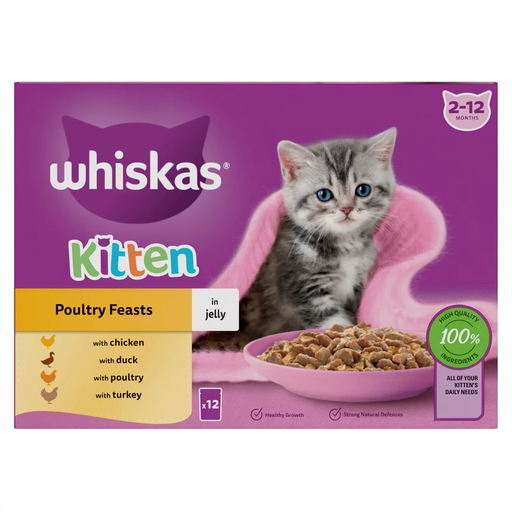
Why This Fits Their Persona: Perfect for new kitten owners seeking a convenient, complete meal. The wet texture is easy for young cats to eat and helps with hydration, while the pre-portioned pouches remove the guesswork from feeding times.
This food is specifically formulated for the "kitten" life stage, avoiding the one-size-fits-all trap by providing the right balance of calcium and protein for growth.
Contains taurine for heart and eye health and is made in small, easy-to-eat pieces. The multipack offers a variety of poultry flavours to keep things interesting.
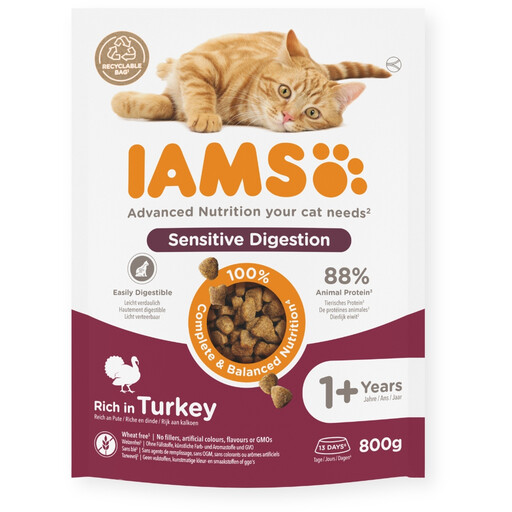
Why This Fits Their Persona: For owners whose cats have sensitive digestion, this formula is designed to be gentle on the stomach. It's a practical choice for those looking for a specialised diet without needing a prescription.
Instead of just being grain-free, this sensitive cat food focuses on highly digestible ingredients like turkey and rice and includes prebiotics (FOS) to actively support gut health.
Features a high percentage of animal protein (88% of total protein) to support lean muscles. The inclusion of fish oil provides omega-3 and -6 fatty acids for a healthy skin and coat.
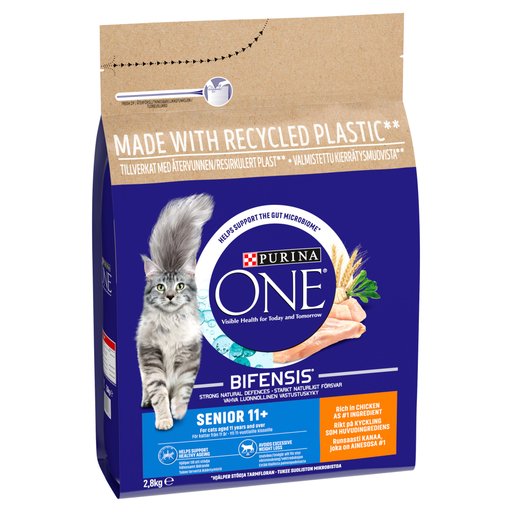
Why This Fits Their Persona: This is for the dedicated owner of a mature cat (11+ years). It addresses the specific needs of ageing, such as maintaining muscle mass and supporting organ function, in an easy-to-serve dry format.
This senior cat food has an adapted nutrient profile with an optimised protein-to-fat ratio specifically to help senior cats maintain a healthy body condition and avoid excessive weight loss.
Chicken is the #1 ingredient, providing high-quality protein. It also contains vitamins D & E and Omega 3 & 6 fatty acids to support vital functions, bones and mobility.
We have compiled a complete, real-time list of products that fully satisfy these strict selection criteria and UK safety regulations.
The correct portion size depends on your cat's age, weight, activity level and whether you are feeding wet, dry or mixed food. The feeding guide on the packaging is the best starting point. Adjust the amount as needed to maintain a lean, healthy body condition. If you are unsure, it is always a good idea to consult your vet.
Switching food suddenly can cause digestive upset. It is recommended to transition your cat to a new food gradually over a period of 7-10 days. Start by mixing a small amount of the new food (around 25%) with their old food and slowly increase the proportion of the new food each day until you have fully switched over.
Not necessarily. A grain free cat food diet is primarily for cats that have a specific allergy or intolerance to grains, which is relatively uncommon. For most cats, high-quality, digestible grains like rice or corn can be a valuable source of energy and nutrients as part of a balanced diet. If you suspect your cat has a food sensitivity, consult your vet for advice before making major dietary changes.