
24/7 Customer Support

Free returns

Same-day & Next-day Delivery

Quality Guaranteed

Unlock Your Welcome Offers: FREE Delivery | Up to 80% OFF | Free 30-day JoyPlus trial
Download the APP
As a cat owner in the UK, you know that providing a stimulating indoor environment is key to a happy pet. You've likely seen the tell-tale signs of a bored or instinct-driven cat: scratched furniture, impromptu climbing expeditions up the curtains or a general lack of a dedicated space to call their own. A well-chosen cat tree can solve these issues, offering your feline friend a personal haven for playing, scratching and napping.
This guide is designed to help you navigate the options and select a piece of indoor cat furniture that fits your home, your budget and, most importantly, your cat's needs. We'll walk through key considerations and highlight a few recommended models to get you started.
Choosing the right structure involves more than just picking a design you like. To ensure it's a lasting and well-loved addition to your home, consider these practical points.
A wobbly cat tree is a cat tree that won't be used. Look for a sturdy cat tree with a wide, heavy base that can withstand vigorous climbing and play. Many models include an anti-tip kit to secure the unit to a wall, which is highly recommended, especially in households with very active cats, multiple cats or children. The thickness of the support posts and the quality of the construction materials, like particleboard, are good indicators of overall stability.
The ideal cat play tower serves multiple functions. Sisal-wrapped posts are essential, providing a durable and satisfying cat scratching post that redirects natural scratching instincts away from your sofa. For resting, look for soft, plush-covered surfaces. Features like a high cat perch offer a great vantage point for surveying their territory (or watching birds out the window), while an enclosed cat condo provides a secure, private space for napping.
Consider the size and habits of your cat. A large breed, like a Maine Coon or Ragdoll, will need a large cat tree with bigger perches and a more robust frame. If you have several pets, a cat tree for multiple cats with various levels and resting spots will help prevent disputes over prime real estate. For smaller flats, a taller, more vertical multi-level cat tower can provide ample climbing space without taking up too much floor area.
Based on features, construction and suitability for different needs, here are our recommendations.
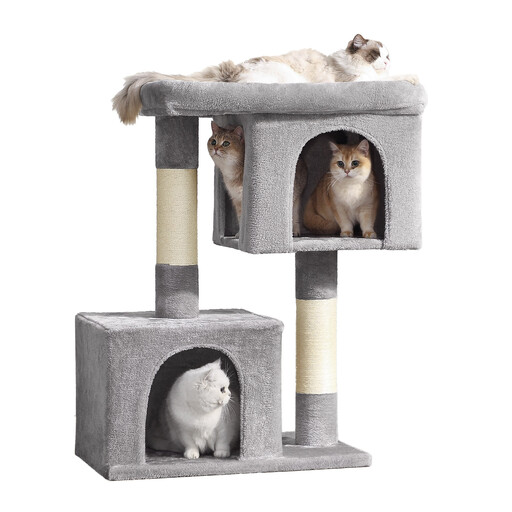
Why It Stands Out: This structure is specifically designed with larger or heavier cats in mind, supporting felines up to 20 kg. Its wide base and thick supports provide excellent stability. The top perch is generously sized with cushioned edges, creating a comfortable lounging spot, while two separate hideouts offer options for a quiet nap or a curious lookout post.
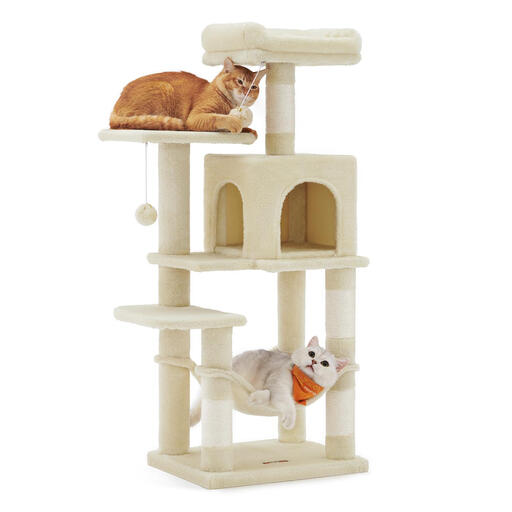
Why It Stands Out: This model is a versatile hub of activity, thoughtfully designed for multi-cat households. It packs a lot of features into a compact footprint, including two top platforms, an enclosed cave and a cosy hammock. A key feature is the addition of side steps, which make it easier for kittens, senior cats or those with mobility issues to climb.

Why It Stands Out: For cats that love to be up high, this tall, vertical structure is an excellent choice. At 150 cm, it satisfies a cat's natural climbing instinct. With dual perches and two spacious caves, it provides plenty of room for multiple cats to coexist peacefully. Its strong construction is designed to support up to four cats (7 kg each) and the included anti-tip kit ensures it stays securely in place.
If these specific models aren't quite what you're looking for, they represent just a sample of the available styles. Whether you need something more compact, a different colour or a unique combination of features, there's a solution out there. We invite you to explore our full collection of cat tree condos to find the perfect fit for your feline companion.
Introduce the tree slowly. Place it in a room where your cat already spends a lot of time. You can entice them by placing treats or a favourite toy on the different levels. Sprinkling a small amount of catnip on the perches can also attract their interest. Engage in play with a wand toy around the base and on the platforms to help them form positive associations.
Location is key. Most cats prefer to be in the centre of the action, so placing the tree in a corner of the living room is often a good choice. A spot near a secure window is also ideal, as it provides entertainment (what some call "cat TV"). Avoid placing it in a secluded, unused room or a busy hallway where it might be knocked.
Absolutely. For indoor cats, a cat tree is more than just furniture; it's an essential tool for their well-being. It provides vital physical exercise through climbing and stretching, and mental stimulation by offering new vantage points and textures. It also gives them a sense of security and ownership over their own space, all while helping to protect your furniture from scratching.