
24/7 Customer Support

Free returns

Same-day & Next-day Delivery

Quality Guaranteed

Unlock Your Welcome Offers: FREE Delivery | Up to 80% OFF | Free 30-day JoyPlus trial
Download the APP
As a cat owner in the UK, you know that providing a stimulating indoor environment is key to a happy pet. You've likely seen the tell-tale signs of a bored cat: scratched furniture, restless behaviour or a constant demand for attention. A well-chosen cat tree can be a game-changer, offering your feline friend a dedicated space to climb, scratch, play and rest.
However, with so many options on the market, finding the right one can feel overwhelming. This guide is designed to cut through the clutter, offering practical advice to help you select a durable and engaging piece of plush cat furniture that both you and your cat will appreciate. As your Joybuy Product Recommendation Officer, I've filtered the information to help you make a confident choice.
Before jumping into specific models, let's cover a few key considerations. Thinking about these points will help you narrow down the options and find a structure that fits your space and your cat's personality.
A wobbly cat tree is an unused cat tree. Cats are cautious creatures and will avoid anything that feels unsafe. Look for a sturdy cat activity centre with a wide, heavy base that prevents tipping, especially if you have a boisterous kitten or a large breed. Many quality models include an anti-tip kit to secure the unit to a wall, providing essential peace of mind. The materials matter, too; structures made from durable particleboard are generally more reliable than those made from lighter materials.
Consider the number, age and size of your cats.
A good cat tree serves multiple purposes. Ensure it includes at least one cat condo with a scratching post, preferably wrapped in durable sisal rope. This gives your cat an appropriate outlet for their natural scratching instinct, which helps maintain claw health and can save your sofa from destruction. Additionally, look for comfortable resting spots like enclosed caves for privacy or plush, high-sided perches for surveying their kingdom.
Based on features that address common cat owner needs, here are our recommendations for a variety of households.
Feandrea Cat Tree, Plush Multi-Level Cat Condo, 150cm, Smoky Grey

Feandrea Cat Tree, Multi-Level Plush Cat Condo, 112cm, Beige
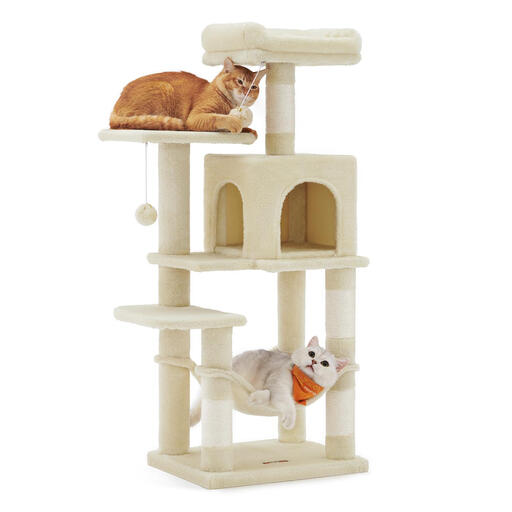
Feandrea Cat Tree, 2 Cat Caves, 101cm, Smoky Grey

While these models cover a range of common needs, every cat and home is unique. If you're looking for a different configuration, such as a model with an integrated bed or a specific colour scheme, there are many other styles to consider.
? Explore our wider collection of cat trees with beds to find the perfect fit.
Cats are social but also enjoy watching the world go by. The ideal spot is often in a corner of your main living area, near a window. This allows them to feel part of the family's activities while also providing visual stimulation from the outdoors. Avoid placing it in a narrow, high-traffic hallway where it might be constantly disturbed.
Introduce it slowly. Place the tree in an area your cat already frequents. You can entice them by sprinkling a small amount of catnip on the platforms, placing their favourite treats on different levels or engaging them in play with a wand toy on and around the structure. Positive association is key.
Yes, providing a dedicated scratching surface is highly recommended. Scratching is a natural and essential behaviour for cats; it helps them stretch their muscles, mark their territory and maintain their claws. A cat tree with integrated sisal posts directs this behaviour to an appropriate spot, which can help protect your carpets, curtains and furniture.