
24/7 Customer Support

Free returns

Same-day & Next-day Delivery

Quality Guaranteed

Unlock Your Welcome Offers: FREE Delivery | Up to 80% OFF | Free 30-day JoyPlus trial
Download the APP
Choosing the right food for your dog can feel overwhelming. The aisles are packed with bags all promising the perfect meal, but the marketing messages can be confusing. As a dog owner, you want to provide a nutritious, complete meal without falling for common marketing traps that don't benefit your pet. This guide will help you navigate the world of chicken dry dog food, breaking down what really matters so you can make a confident choice for your companion.
Before you even look at a specific brand, it's crucial to understand the frequent pitfalls that lead to poor choices and wasted money.
The Vague "Meat" Ingredient: Many labels use generic terms like "meat and animal derivatives." This can be a red flag. While not always a sign of poor quality, it lacks transparency. You don't know the exact source or quality of the protein. A high-quality food will clearly state its primary protein, such as "freshly prepared chicken," "dried chicken," or "chicken meal." This specificity indicates a more consistent and identifiable protein source.
The "Grain-Free" Misconception: The trend for grain free dog food has exploded, but it isn't automatically the superior choice for every dog. While essential for dogs with diagnosed grain allergies or sensitivities, many dogs digest wholesome grains like rice and oats perfectly well. A well-formulated chicken and rice dog food can be an excellent, easily digestible option. The key is choosing a food that suits your individual dog's digestive health, not just following a trend.
Over-reliance on the "Natural" Label: The term "natural dog food" can be used quite loosely. Instead of being swayed by this single word, look for what it implies in practice. A truly natural-focused product will be free from artificial colours, flavours and preservatives. Check the ingredient list for recognisable components and a clear "free from" statement.
To choose a complete dog food that genuinely meets your dog's needs, focus on these three core parameters.
The ingredients are listed by weight, so the first few items make up the bulk of the food. For a high protein dog food, look for a named chicken source at the top of the list.
A single formula rarely fits all. Your dog's age, size and activity level dictate their nutritional requirements.
Most dry dog food is made through extrusion, where ingredients are cooked at high pressure and temperature. However, an alternative is gaining popularity:
Here are a few options that align with different needs, helping you sidestep the common pitfalls.
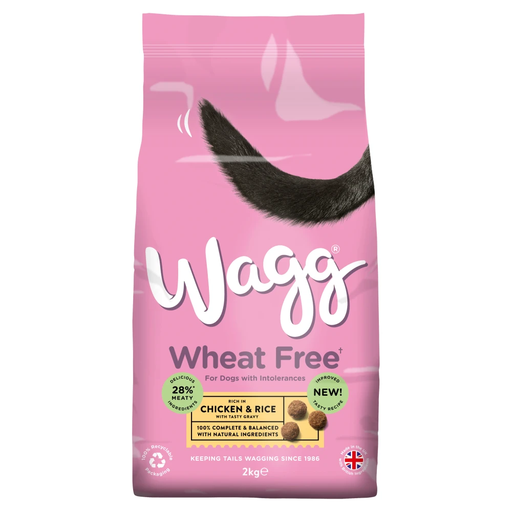
Why This Fits Their Persona: This is a practical choice for UK households with a dog that has a wheat intolerance but doesn't require a fully grain-free diet. It provides a complete, balanced meal without the premium price tag.
It avoids the "grain-free" hype by targeting a specific issue (wheat intolerance) and uses a clear, digestible combination of chicken and rice. The ingredients are specified, not hidden behind vague terms.
Formulated without wheat to aid digestion. Contains chicory root, a natural prebiotic, to support gut health.
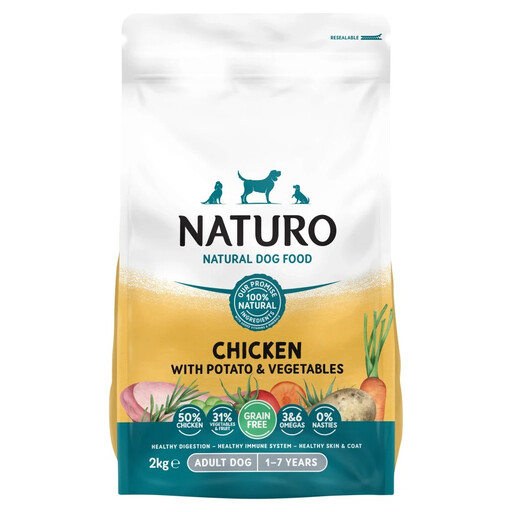
Why This Fits Their Persona: For the owner who reads every label and prioritises clean, recognisable ingredients. This recipe is built around a high meat content and is free from common allergens and artificial additives.
The "natural" claim is substantiated by a transparent ingredient list: 50% chicken and 31% vegetables and fruit. It clearly states it is free from artificial colours, flavours or preservatives.
High protein content (30%) from a 50% chicken recipe. Grain-free formula with added prebiotics (MOS & FOS) to support healthy digestion.
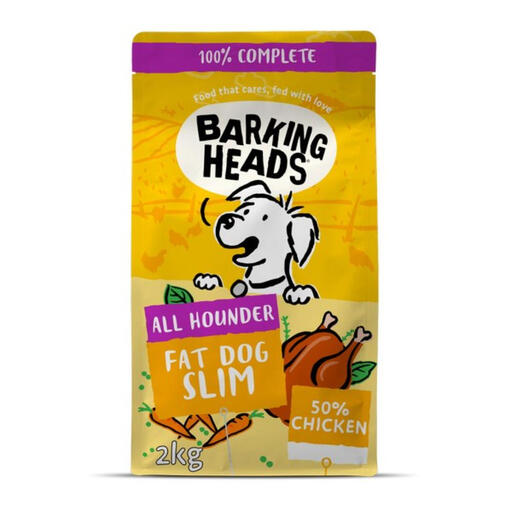
Why This Fits Their Persona: This is for the owner of a dog that is prone to weight gain or is on a calorie-controlled diet. It provides a nutritionally complete meal that supports weight management without sacrificing protein quality.
Instead of just being a "low-fat" food, it's a functional diet. It includes L-Carnitine to specifically aid fatty acid metabolism, showing a more scientific approach to weight control.
Reduced fat recipe (9.5%) with added L-Carnitine. Still contains high-quality protein from 30% chicken and trout to help maintain lean muscle.
We have compiled a complete, real-time list of products that fully satisfy these strict selection criteria and UK safety regulations.
1. How do I switch my dog to a new chicken dry food? To prevent digestive upset, you should transition your dog gradually over 7-10 days. Start by mixing a small amount of the new food (around 25%) with their old food (75%). Every couple of days, increase the proportion of the new food until you have fully switched over.
2. Is a chicken and rice dog food a good choice? For many dogs, a chicken and rice dog food is an excellent choice. Chicken provides high-quality, lean protein, while rice is a carbohydrate that is generally easy to digest, providing a good source of energy. It's a classic combination that is often well-tolerated, particularly by dogs without specific grain sensitivities.
3. How much dry food should I feed my dog? The correct amount depends on the specific food's calorie content and your dog's age, breed, weight and daily activity level. Always start by consulting the feeding guide on the packaging. Monitor your dog's body condition and adjust the portion size up or down as needed to maintain a healthy weight. If you are mixing dry food with wet food, remember to reduce the amount of kibble accordingly.