
24/7 Customer Support

Free returns

Same-day & Next-day Delivery

Quality Guaranteed

Unlock Your Welcome Offers: FREE Delivery | Up to 80% OFF | Free 30-day JoyPlus trial
Download the APP
The world of Asian kitchen knives can seem complex, especially when it comes to the versatile Chinese chef knife, or cai dao. A common misconception is that these large, rectangular blades are all heavy-duty meat cleavers designed for hacking through bone. While some are, many are surprisingly nimble tools crafted for precision slicing and dicing.
Choosing the wrong type can lead to frustration in the kitchen—a heavy bone chopper will crush delicate vegetables, while a thin slicing cleaver could be damaged by tough bones. This guide is designed to cut through the clutter. As a Joybuy Product Recommendation Officer, my role is to provide clear, practical advice to help you select the right knife for your culinary needs, ensuring you get a tool that performs exactly as you expect.
Before we look at specific models, understanding a few key features will help you make a more informed decision. These are the factors that separate a general-purpose tool from a specialised instrument.
Not all Chinese cleavers are created equal. They generally fall into three categories, each designed for different tasks.
The material of the blade is crucial for performance and maintenance. Most quality professional kitchen knives use high-carbon stainless steel kitchen knife blades. This offers a great balance, holding a sharp edge for longer while still providing good resistance to rust and corrosion.
Also, look for a full-tang construction. This means the steel from the blade runs all the way through the handle in a single piece. A full tang provides superior balance, strength and durability, making the knife feel like a solid extension of your hand.
A knife should feel comfortable and secure in your grip. An ergonomic handle reduces hand fatigue during long prep sessions and provides better control for both powerful chops and precise cuts. The balance point of the knife—where the blade meets the handle—should feel natural, allowing you to work efficiently and safely.
Based on their features, materials and intended use, here are our recommendations for home cooks looking to add a high-performance Chinese chef knife to their collection.
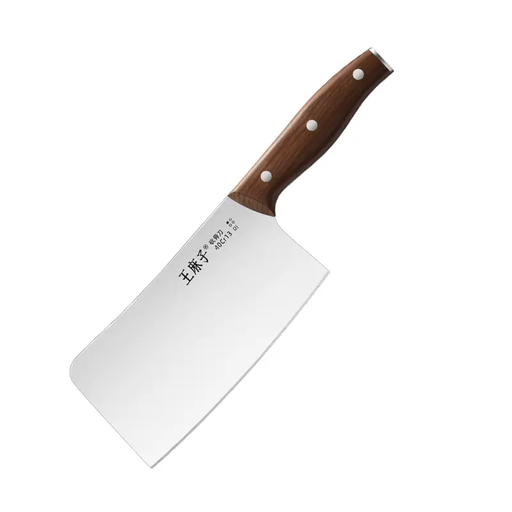
WANGMAZI Household Kitchen knife Forging and Chopping Bones Chopping Pork Ribs
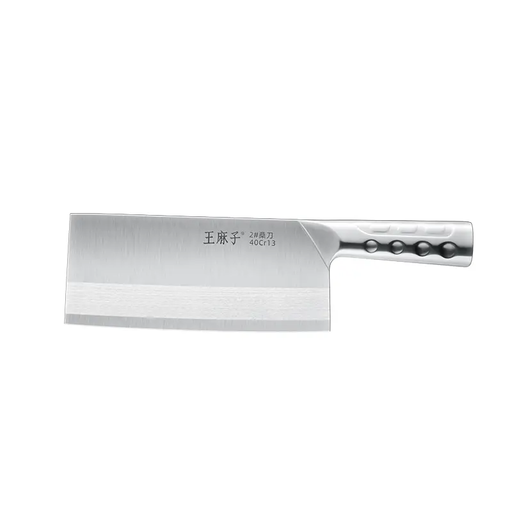
WANGMAZI Kitchen Knife Chef Knife Mulberry Knife Household sharp stainless Steel Meat Cutting
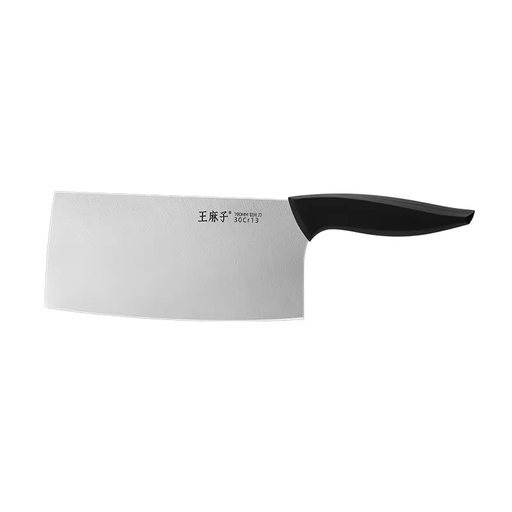
WANGMAZI Slicing Knife Cleaver - Shenmo Series · Two - 190 mm
These three recommendations cover a range of specific needs, but the world of Asian kitchen knives is vast. If you're looking for a different style, a complete knife set or simply wish to browse more options, you can find a wider selection in our main category.
Explore our full collection of cutlery knives to find the perfect tools for your kitchen. [https://www.joybuy.co.uk/explore/cutlery-knives/JKhsULU2]
1. Can you use a Chinese chef knife for everything? While the all-purpose chopper is very versatile, it's generally better to use the right tool for the job. A dedicated slicing cleaver offers more precision for delicate work, while only a heavy-duty bone chopper should be used on thick bones to avoid damaging the blade of a finer knife.
2. How do you maintain a Chinese chef knife? Proper care is simple but important. Always hand wash your knife with warm, soapy water and dry it immediately after use—never leave it to soak or put it in the dishwasher. This is especially critical for high-carbon steel blades to prevent rust. Honing the blade regularly will maintain its edge, and it should be professionally sharpened when it becomes dull.
3. What is the difference between a Chinese cleaver and a Western meat cleaver? A Western meat cleaver is typically a very heavy, thick, single-purpose tool designed for butchery and hacking through large bones. A Chinese chef knife, or cai dao, is a more general term for a family of knives. While this family includes heavy bone cleavers, it also includes much lighter and thinner blades designed for slicing and general-purpose kitchen work, making them far more versatile than their Western counterparts.