
24/7 Customer Support

Free returns

Same-day & Next-day Delivery

Quality Guaranteed

Unlock Your Welcome Offers: FREE Delivery | Up to 80% OFF | Free 30-day JoyPlus trial
Download the APP
Drying laundry in the UK can feel like a constant battle against the elements. With unpredictable weather and rising energy bills, relying on a tumble dryer isn't always practical or affordable. For many of us, especially those in flats or homes without outdoor space, a reliable indoor clothes airer is an essential household item.
But with so many types available—from large tiered racks to compact over-door models—choosing the right one can be confusing. This guide is designed to help you navigate the options and find a practical solution that fits your space, budget and laundry needs. We will look at key features to consider and highlight a few recommended models that offer great utility.
Before you buy, thinking about your specific needs will ensure you get a laundry airer that works for you, not against you.
The first step is to assess how much laundry you typically dry at once and the space you have available. A large family will need a high-capacity indoor drying rack, while someone living alone in a small flat might prioritise a compact design.
The choice between a standard airer and a heated clothes airer often comes down to drying speed and running costs.
If floor space is at a premium, look for clever designs that make use of otherwise wasted areas. An over the door drying rack is a perfect example, offering valuable drying space without cluttering your living area. These are ideal for student accommodation, small flats, or for drying a few items in a bathroom or utility room.
Here are a few standout options that cater to different needs, from saving space to tackling large family-sized laundry loads.
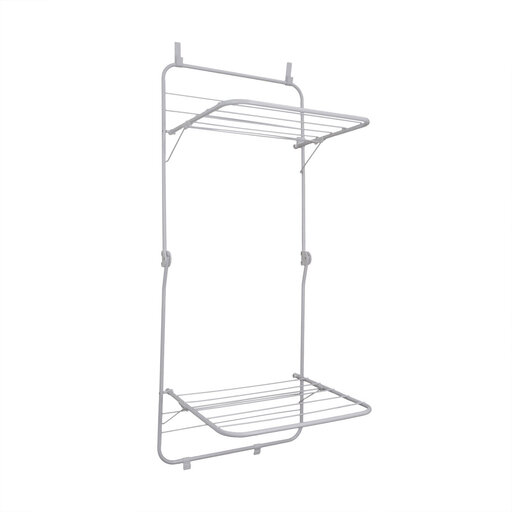
Why It Stands Out This airer is a brilliant solution for anyone short on floor space. It hooks securely over a standard internal door, instantly creating drying space out of thin air. Its two-tier design is surprisingly versatile, allowing you to dry smaller items or hang longer garments like towels from the top shelf.
Pros
Who is it for? This is an excellent choice for those living in flats, student halls, or any home where floor space is precious. It’s perfect for small, regular wash loads.
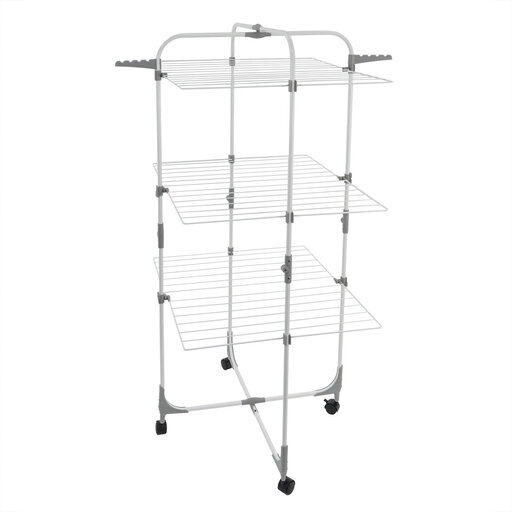
Why It Stands Out When capacity is your main concern, this three-tier airer delivers. It provides a massive 28 metres of drying space, making it suitable for large families or for drying bulky items like bedding. The shelves can be folded down independently to make room for long garments, and the wheels make it easy to move from room to room, even when fully loaded.
Pros
Who is it for? Ideal for families or households that regularly deal with large volumes of laundry. If you need a high-capacity indoor drying rack that can handle everything at once, this is a strong contender.
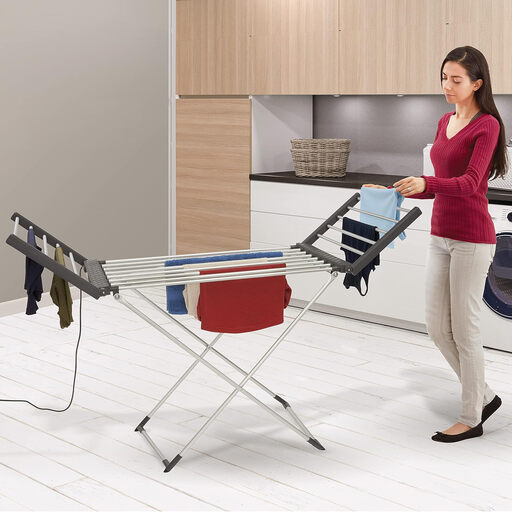
Why It Stands Out This heated clothes airer from BLACK+DECKER is a cost-effective way to speed up laundry day. It combines the classic winged clothes horse design with heated bars, including on the wings, for more effective drying. It offers a practical middle ground between a non-heated airer and an energy-hungry tumble dryer.
Pros
Who is it for? This is for anyone looking to reduce their reliance on a tumble dryer and save on energy bills. It’s especially useful during the colder, wetter months when clothes take a long time to dry naturally.
These recommendations cover some of the most common needs, but every home is different. If these models aren't quite what you're looking for, there are many other styles to consider. From different-sized heated airers to wall-mounted racks, you can find a solution that is the perfect fit for your home.
Explore our full range of Clothes Drying Rails to see more.
The running cost of an electric clothes airer depends on its power rating (wattage) and your electricity tariff. However, they are designed to be low-energy appliances. For example, some models like the BLACK+DECKER airer mentioned above can cost as little as 6-7p per hour to run, which is substantially less than a typical tumble dryer cycle that can cost over ?1.50.
A damp, musty smell occurs when clothes take too long to dry. To prevent this, ensure good air circulation in the room by opening a window slightly or using a dehumidifier. Don't overload your clothes airer; leave space between items for air to flow. Using a heated clothes airer can also help significantly by reducing the overall drying time.
It depends on your priorities. Tumble dryers offer speed and convenience that is hard to beat. However, a clothes airer is a far more economical and energy-efficient choice. It is also much gentler on fabrics, helping your clothes last longer. For many households, especially those looking to reduce their carbon footprint and energy spending, a good quality airer—particularly a heated model—is a more practical everyday solution.