
24/7 Customer Support

Free returns

Same-day & Next-day Delivery

Quality Guaranteed

Unlock Your Welcome Offers: FREE Delivery | Up to 80% OFF | Free 30-day JoyPlus trial
Download the APP
A clothes steamer can be a practical alternative to setting up an ironing board, particularly when you need to refresh a work shirt before leaving home or remove creases from hanging curtains. However, the right choice depends on more than wattage or a polished product photograph.
The phrase “best clothes steamer” often hides three common buying traps:
Before choosing a handheld clothes steamer, compare the specifications that affect real household use.
Steam output is usually expressed in grams per minute (g/min). A higher figure can provide more moisture to help relax creases, but it should be considered alongside heat-up time and the steamer’s ability to deliver steam consistently.
For occasional touch-ups, a portable clothes steamer that heats in around 30 seconds may be more convenient than a larger appliance. For heavier garments, linen or denim, look for adjustable steam settings or a stronger output. A vertical garment steamer with a stable stand can also be easier to use across several items.
Tank size determines how often you need to stop and refill:
A clothes steamer with a large water tank takes up more storage space, so measure your cupboard or utility area before buying. Always follow the manufacturer’s water and descaling instructions, especially in hard-water areas.
A handheld garment steamer should be comfortable to hold, with a manageable weight, a sufficiently long cord and controls that are easy to reach. Foldable designs can be useful for suitcases, although compact models may have shorter run times.
Useful safety features include automatic shut-off, overheat protection, anti-drip systems and a locking steam trigger. Check that the product has a suitable UK plug or clearly stated UK electrical compatibility. Hot steam can cause burns, so keep the appliance away from children, use it upright where instructed and allow it to cool before storing.
A steamer is not always a complete replacement for a steam iron. An iron applies pressure through a soleplate, which can create sharper trouser creases and flatter collars. A steam generator iron generally offers a larger tank and stronger continuous steam, but requires more storage space and a firm ironing surface.
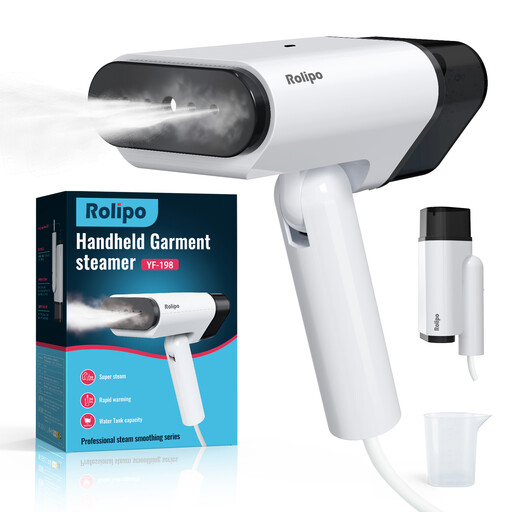
Why This Fits Their Persona: Its foldable handheld format suits UK renters, students and occasional users who want a compact appliance for shirts, dresses and quick clothing refreshes.
The foldable design and integrated anti-leak water tank address two common problems with compact travel steamers: difficult storage and water spills.
Foldable portable construction; one-button operation; designed for home, office and travel use.
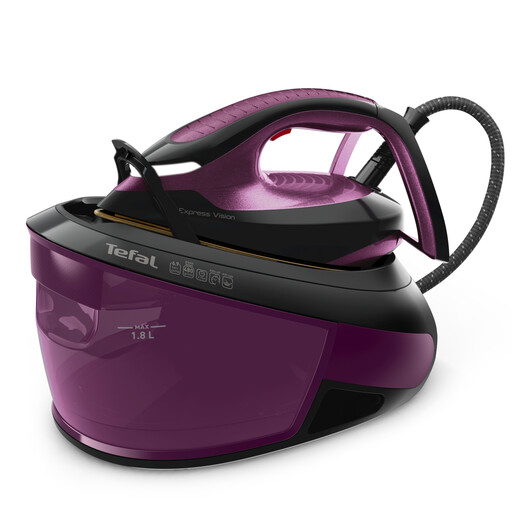
Why This Fits Their Persona: This suits households that iron larger laundry loads and prefer the structured finish of an iron alongside vertical steaming for hanging garments and curtains.
Its 1.8-litre removable tank is more appropriate for extended sessions than a small handheld tank, while the anti-scale system helps manage mineral build-up.
2800W power; 6.9-bar pump pressure; 130g/min continuous steam; 480g/min steam boost; auto shut-off and safety lock.
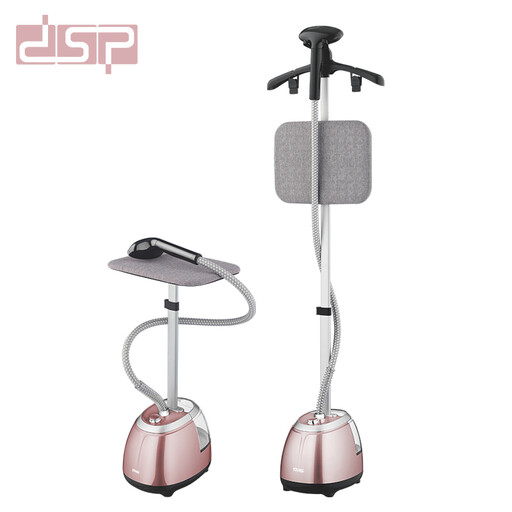
Why This Fits Their Persona: Its floor-standing format is aimed at busy families and users steaming several garments, thicker materials, curtains or upholstery in one session.
The 2.1-litre tank reduces repeated refilling, while 10 steam settings provide more control than a single-output appliance. Storage space remains an important consideration.
2000W power; listed steam output of 40g/min; 2.1-litre water tank; stainless steel nozzle; trouser clip and steam brush included.
A Tower garment steamer can be a sensible middle ground between a travel appliance and a full-size stand steamer. The Tower Ceraglide handheld models have a 260 ml tank, 1400W power, ceramic soleplate, brush attachment, continuous steam, anti-drip protection and automatic shut-off. The black and red version is available here, while the black and teal version is listed here.
For travellers, compare folded dimensions, weight and cord storage rather than relying only on “portable” wording. For home use, check whether the steamer includes a hanger, trouser clip or brush. These accessories can improve handling, but they do not remove the need to check each fabric’s care label.
We have compiled a complete, real-time list of products that fully satisfy these strict selection criteria and UK safety regulations.
Running cost depends on wattage, heating time and how long the appliance is used. A handheld steamer may use less total energy for a quick touch-up, while an iron or steam generator iron can be more suitable for processing a large load efficiently. Use the appliance only as long as necessary and select an Eco mode where available.
It is generally sensible to empty the tank after use, following the manufacturer’s instructions. Standing water may contribute to mineral deposits or stale odours. Allow the appliance to cool first, then store it upright and complete any recommended descaling routine.
Lifespan varies with construction, frequency of use, water quality and maintenance. Emptying the tank, keeping vents clear and following descaling guidance can help maintain steam flow. Before purchase, check the warranty, replacement-part information and safety instructions rather than judging durability from appearance alone.