
24/7 Customer Support

Free returns

Same-day & Next-day Delivery

Quality Guaranteed

Unlock Your Welcome Offers: FREE Delivery | Up to 80% OFF | Free 30-day JoyPlus trial
Download the APP
Choosing the “best coffee machine for home” depends less on headline pressure figures and more on how you drink coffee every day. A compact espresso coffee machine may suit someone who enjoys learning to tamp and steam milk, while a pod coffee machine can be more practical for a busy household.
Before buying, look beyond polished product photography and check the brewing system, drink types, cleaning requirements, capacity and available worktop space.
Many machines advertise 15, 19 or 20-bar pumps. This figure describes the pump’s maximum capability, not necessarily the pressure used throughout extraction. A sensible comparison should also consider temperature control, the filter or capsule system, dose settings and the quality of the coffee input.
For a home barista, a semi-automatic coffee machine with a portafilter provides more control. However, it also requires grinding, dosing, tamping and cleaning after each use.
A pod coffee machine is convenient, consistent and usually quick to operate. However, capsules create a continuing consumable cost and can limit you to compatible pod formats. Check whether the machine accepts standard capsules, larger double-shot capsules or only a proprietary system.
If you prefer choosing fresh roasts from a local UK coffee shop or supermarket, a ground-coffee or bean-to-cup coffee machine may offer more flexibility.
A steam wand can produce textured milk but takes practice and needs wiping and purging after use. An integrated frother is simpler for cappuccinos and lattes, but it may involve additional removable parts to rinse.
Also check whether the machine supports cold frothing if you regularly make iced lattes. Not every coffee machine with milk frother is designed for both hot and cold milk preparation.
There are three main options:
Some machines, such as the De’Longhi Stilosa, accept both ground espresso and ESE pods. This can be useful if you want a gentler introduction to manual brewing.
A tank around 1.0 to 1.5 litres is generally practical for individual use or a couple. A larger 1.8-litre water tank is more suitable for several drinks a day, although it increases the machine’s footprint.
Capacity does not equal usable convenience. Removable tanks are easier to fill at a kitchen tap, while visible water levels help prevent interruptions. For a bean-to-cup model, also check the hopper capacity and whether the grinder can be adjusted for different roasts.
Measure the available worktop depth, width and height, including space needed to remove the water tank or open the bean hopper. A compact coffee machine may fit neatly beneath cupboards but still need clearance above it for refilling.
For UK homes, confirm that the product specification supports 220–240V mains electricity and follow the supplied safety instructions. Place the machine on a stable, heat-resistant surface, keep cords away from water and take care around hot parts and steam.
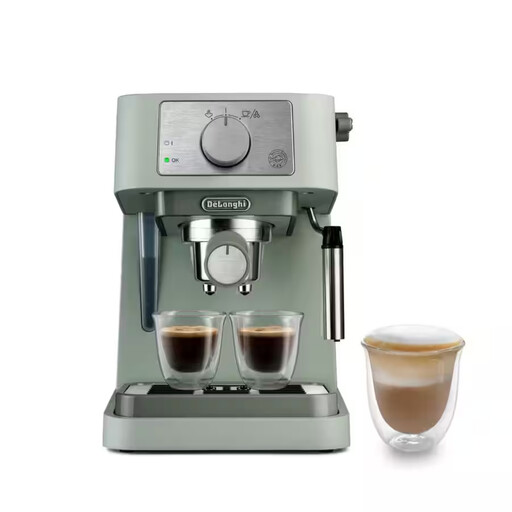
Why This Fits Their Persona: A practical starting point for UK shoppers who want espresso, cappuccino or latte drinks without committing to a bean-to-cup system.
It does not rely on capsules alone: it accepts ground espresso and ESE pods, helping users compare convenience with fresher coffee options.
15-bar pump, manual stainless-steel steam wand, removable drip tray and a two-tier tray for cups up to 110mm tall.

Why This Fits Their Persona: Suits households wanting one-touch milk drinks, a refined worktop design and iced latte preparation with minimal manual work.
Its hot-and-cold milk frother addresses the common mismatch between a standard steam wand and cold coffee recipes.
One-touch recipes, 1.1-litre water tank, glass mug included, approximately 28-second heat-up and stated operating noise below 43dB.
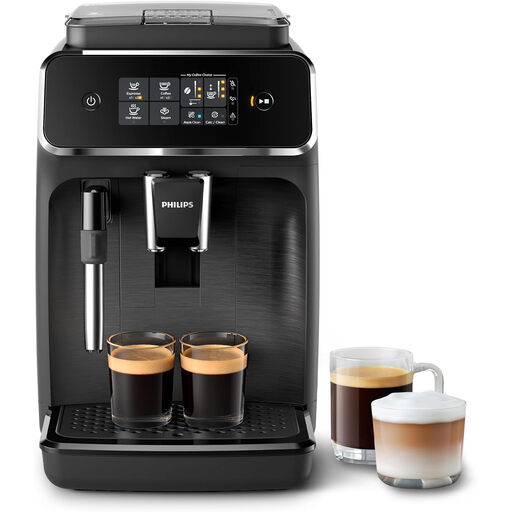
Why This Fits Their Persona: Designed for frequent drinkers who want whole-bean coffee, repeatable controls and two coffee drinks at the touch of a button.
The 1.8-litre removable tank and bean hopper reduce frequent refilling, while the removable brew group makes routine cleaning more accessible.
Ceramic grinder with 12 settings, three aroma-strength options, classic milk frother, AquaClean filter support and dishwasher-safe parts.
We have compiled a complete, real-time list of products that fully satisfy these strict selection criteria and UK safety regulations.
Allow space around the machine for ventilation and tank removal. Rinse the system before first use and clean the steam wand immediately after frothing milk. Descale according to the manual and local water conditions; hard water in some UK areas can increase maintenance needs.
For running costs, compare coffee beans or ground coffee with capsule prices, filter replacements and descaling products. A pod machine may reduce preparation time, while a bean-to-cup coffee machine can make whole-bean brewing more economical for frequent users, depending on the coffee chosen.
A fully automatic or pod coffee machine usually involves fewer steps than a manual espresso machine. Pod models are particularly straightforward, while bean-to-cup machines add grinding but can provide fresh-bean coffee with one-touch operation.
Lifespan depends on usage, water hardness, cleaning and correct handling. Removable tanks, drip trays and brew groups can make regular maintenance simpler. Always follow the manufacturer’s cleaning and descaling instructions rather than relying on pressure marketing.
The main ongoing costs are coffee, milk, capsules, water filters and descaler. Capsule systems can have a higher per-drink consumable cost, whereas ground coffee and beans offer more choice when bought in larger packs. Compare the machine’s required consumables with your expected weekly usage before purchasing.