
24/7 Customer Support

Free returns

Same-day & Next-day Delivery

Quality Guaranteed

Unlock Your Welcome Offers: FREE Delivery | Up to 80% OFF | Free 30-day JoyPlus trial
Download the APP
Finding the right coffee machine can feel like a daunting task. The market is filled with countless models, each promising the perfect cup. But what does "perfect" mean for you? Is it a large, aromatic pot of filter coffee to start your morning, or a rich, creamy espresso to rival your favourite café?
As the Joybuy Product Recommendation Officer, my role is to help you navigate these choices. This guide is designed to cut through the clutter, offering clear, practical advice to help you find a coffee machine that fits your lifestyle, kitchen and coffee preferences. We will explore the key differences between machine types and highlight a few standout models that deliver on performance and quality.
Before diving into specific models, let's cover a few essential points. Understanding these will make your decision much easier.
The first and most important question is what kind of coffee you enjoy most.
Once you know your preferred style, look for features that indicate quality and performance.
Finally, think about the practicalities. Measure your countertop space, as some machines can be quite large. Consider the water tank capacity—a larger tank means fewer refills. Also, look for features that simplify cleaning, such as removable drip trays and accessible parts.
Based on features, build quality and user-focused design, here are three models that cater to different coffee lovers.
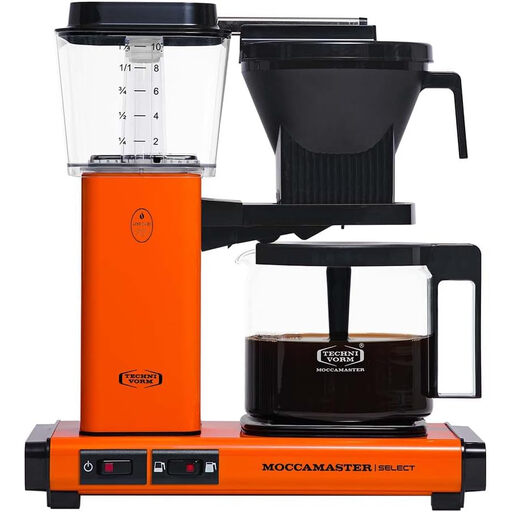
Why It Stands Out: The Moccamaster KBG Select is an icon in the world of filter coffee. Handmade in the Netherlands, it is engineered for one purpose: to brew exceptional coffee with precision. Its copper heating element maintains the water at an optimal 92–96°C throughout the brewing cycle, a standard certified by the European Coffee Brewing Centre (ECBC).
Pros:
Who is it for? The coffee purist who values the craft of filter coffee and wants a reliable, stylish machine that will perform consistently for years. It's an investment in quality for those who appreciate a truly superior cup of drip coffee.
View the Moccamaster KBG Select

Why It Stands Out: The Gastroback Piccolo Pro packs professional features into an impressively compact frame. At just 15 cm wide, it’s an excellent choice for kitchens where counter space is at a premium. It features a professional 15 bar ULKA pump and a built-in pressure gauge (manometer), giving you the feedback needed to perfect your espresso extraction.
Pros:
Who is it for? The aspiring home barista with limited space. It offers the hands-on experience of a traditional espresso machine, making it a great starting point for anyone wanting to move beyond pods and learn the art of espresso making.
View the GASTROBACK Design Espresso Piccolo Pro
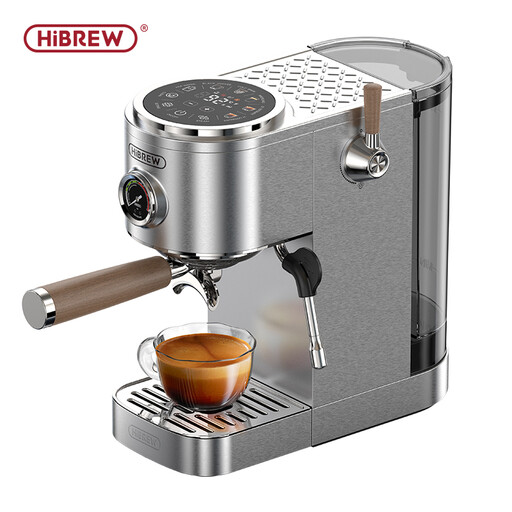
Why It Stands Out: The HiBREW H13 brings high-end features to the home kitchen. Its standout feature is the dual-boiler system, which allows you to brew espresso and steam milk simultaneously—a function typically found on much more expensive commercial machines. Combined with an intuitive touchscreen and a professional-grade 58mm portafilter, it offers remarkable control and efficiency.
Pros:
Who is it for? The serious coffee enthusiast who wants to replicate the full café experience at home. If you value efficiency, customisation and the ability to produce high-quality milk-based drinks quickly, the H13 is a compelling option.
View the HiBREW H13 Dual-Boiler Espresso Machine
If these models aren't quite what you're looking for, or if you'd like to explore different designs and feature sets, we have more to see. Our curated collection includes a wide variety of machines to suit every taste and kitchen aesthetic.
Explore Our Full Range of Designer Coffee Machines
While a higher number might seem better, the ideal pressure for extracting espresso is widely accepted to be around 9 bars at the group head. Both 15-bar and 20-bar pumps are more than capable of generating this pressure. The key is a machine with an Over Pressure Valve (OPV) that regulates the pressure to a stable 9 bars, preventing over-extraction and bitter flavours. Both the GASTROBACK and HiBREW models are designed to achieve this optimal pressure.
Yes, but the grind size is critical. For a filter coffee machine, you should use a medium-to-coarse grind, similar to the consistency of granulated sugar. For an espresso machine, you need a much finer grind, almost like a powder. Using the wrong grind size will result in either a weak, under-extracted coffee or a bitter, over-extracted one.
Regular cleaning is essential for both taste and longevity. For espresso machines, you should rinse the portafilter and purge the steam wand after every use. For all machines, it's good practice to empty the grounds and rinse removable parts daily. Descaling—the process of removing mineral build-up—should be done every 1-3 months, depending on the hardness of the water in your area.