
24/7 Customer Support

Free returns

Same-day & Next-day Delivery

Quality Guaranteed

Unlock Your Welcome Offers: FREE Delivery | Up to 80% OFF | Free 30-day JoyPlus trial
Download the APP
Bringing the rich aroma and satisfying taste of a café-quality coffee into your home is an appealing thought. Yet, the journey to find the right coffee machine is often cluttered with confusing marketing claims and technical jargon. Many find themselves with a machine that is either too complicated, too costly to run or simply fails to deliver the coffee they were hoping for.
As a Joybuy Product Recommendation Officer, my role is to help you navigate this landscape. Before you invest, let's look at a few common pitfalls that can lead to buyer's remorse.
To make a confident choice, it helps to understand what a few key specifications actually mean for your daily coffee ritual.
The first decision is choosing the right type of home coffee machine for your lifestyle.
If you enjoy lattes, cappuccinos or flat whites, the milk system is crucial.
Based on these practical considerations, here are a few options tailored to different user needs.
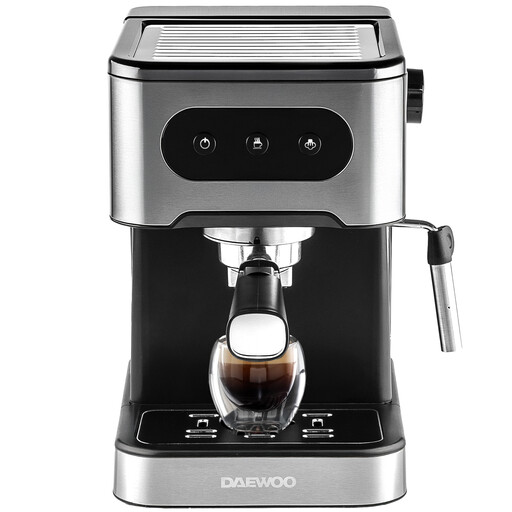
Why This Fits Their Persona: This machine is an excellent entry point into the world of real espresso. It provides the essential tools—a portafilter for ground coffee and a manual steam wand—without an overwhelming price tag, making it ideal for someone in the UK wanting to move beyond instant coffee without a large financial commitment.
By using ground coffee, it completely sidesteps the high long-term running costs associated with pod systems. You are free to buy any coffee beans you like, offering both savings and variety.
The manual steam wand gives you hands-on control to learn how to texture milk properly. Its compact design is also well-suited for smaller UK kitchens where counter space is at a premium.

Why This Fits Their Persona: For the busy professional or family who wants fresh, café-style drinks without any of the work. This machine grinds fresh beans and prepares a range of drinks, including cappuccinos and lattes, with a single touch. It's the definition of set-and-forget quality coffee.
It tackles the "automatic cleaning chore" pitfall head-on. The LatteCrema milk carafe has an integrated cleaning function and can be stored in the fridge, while other key components are removable for easy maintenance.
The combination of a built-in grinder with 13 settings and seven one-touch recipes (including Espresso, Cappuccino and Latte Macchiato) provides both freshness and effortless variety.
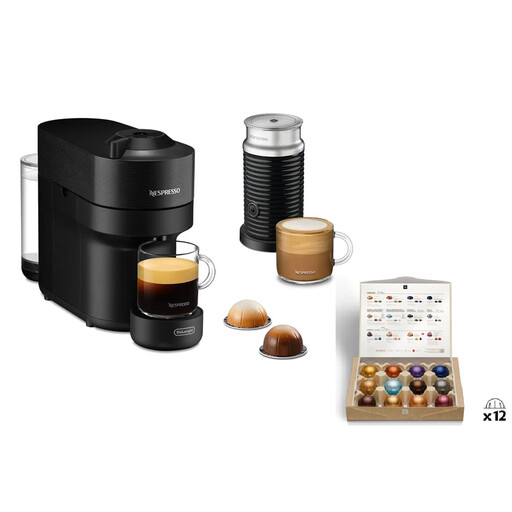
Why This Fits Their Persona: This is for the user who prioritises speed, variety and a compact footprint. The Vertuo Pop is incredibly simple to use and, with the included Aeroccino, makes it a capable iced coffee maker and latte machine with zero learning curve. Its small size is perfect for modern flats.
While it is a pod machine, its intelligent barcode system optimises brewing for each specific capsule, ensuring a better-than-average result and reducing the risk of a poor-tasting cup. The included Aeroccino frother is also separate, making it exceptionally easy to clean.
The "Coffee Creations" mode is a standout feature, brewing a more concentrated shot that stands up to ice and milk without tasting diluted. The fast 30-second heat-up time means coffee is ready almost instantly.
We have compiled a complete, real-time list of products that fully satisfy these strict selection criteria and UK safety regulations.
How often should I descale my coffee machine in the UK? This largely depends on where you live. Many areas in the UK, particularly in the South and East of England, have very hard water. In these areas, it's advisable to descale your machine every 1-2 months to prevent limescale build-up, which can affect performance and taste. In soft water areas, every 3-4 months is usually sufficient. Most modern machines will have an indicator light to remind you.
Is a 20-bar pressure coffee machine really better than a 15-bar one? Not necessarily. As mentioned, the ideal pressure at the group head for a balanced espresso shot is around 9 bars. Both 15-bar and 20-bar machines are designed to achieve this optimal pressure during extraction. The higher number is more of a marketing figure representing the pump's maximum potential power, not the pressure used to brew your coffee. Focus more on features like temperature stability and grinder quality, as they have a much greater impact on the final taste.
What's the real running cost of a pod machine vs a bean-to-cup? A bean-to-cup machine has a higher initial purchase price, but the running cost is lower. A 1kg bag of quality coffee beans can cost between ?15-?25 and yield approximately 120-140 single shots, working out to roughly 10-20p per coffee. Pods typically cost between 35p and 60p each. While a pod machine is cheaper to buy, a bean-to-cup machine will almost always be more economical in the long run if you drink coffee daily.