
24/7 Customer Support

Free returns

Same-day & Next-day Delivery

Quality Guaranteed

Unlock Your Welcome Offers: FREE Delivery | Up to 80% OFF | Free 30-day JoyPlus trial
Download the APP
Choosing the best coffee machine is less about selecting the model with the most buttons and more about matching the brewing method to your routine. UK shoppers are often comparing a bean-to-cup coffee machine, espresso coffee machine, pod coffee machine and automatic coffee machine without fully considering ongoing costs, cleaning or available worktop space.
A useful shortlist should reflect how you actually drink coffee: a quick espresso before work, freshly ground coffee at weekends, milk-based drinks for the household or iced coffee during warmer weather.
Pump pressure is frequently used as a headline specification. However, a 15-bar or 20-bar pump rating does not by itself guarantee a better espresso. Brewing depends on the coffee dose, grind, tamping, temperature and the machine’s ability to deliver water consistently.
Treat pressure as one specification rather than a quality guarantee. A machine that allows sensible control over extraction and uses suitable filter baskets may be more useful than one promoted mainly around a large pressure number.
A pod coffee machine can be fast and tidy, but you are committing to a particular capsule system. Before buying, check capsule availability, price per serving and recycling arrangements. For example, the Lavazza A Modo Mio Deséa is designed for A Modo Mio capsules, so it is worth confirming that the available blends suit everyone in your household.
A bean-to-cup coffee machine usually requires whole beans, while a manual espresso machine requires ground coffee or a separate grinder. Each option involves a different balance of convenience, freshness and preparation time.
Milk systems, steam wands, drip trays and brewing groups all need regular care. A coffee machine with milk frother may make cappuccinos and lattes convenient, but milk residue must be cleaned promptly. Look for removable parts, accessible trays and clear descaling instructions.
Also check the machine’s dimensions, including space above it for a bean hopper or water tank. A machine that fits the worktop but cannot be opened comfortably may quickly become frustrating.
If you mainly drink black coffee, a simple espresso coffee machine may be sufficient. If the household prefers cappuccino, latte or flat white, prioritise a reliable milk system.
A 1-litre tank may suit occasional users, while capacities of 1.5 to 1.8 litres reduce refilling for several daily drinks. Measure width, depth and height, then allow room to remove the tank or add beans.
Owners of smaller kitchens should pay particular attention to machines with a small footprint, narrow bodies and adjustable drip trays. These features can matter more in daily use than decorative finishes.
A manual steam wand can create textured milk, but it takes technique and cleaning after every use. Automatic frothing is simpler for repeatable drinks. If iced coffee matters, check whether the machine supports cold frothing, cold extraction or simply produces hot espresso to pour over ice.
A dedicated iced coffee machine is not essential for every household. Many espresso and pod machines can make an iced latte or iced Americano, provided you use enough ice and avoid excessively large, watery coffee volumes.
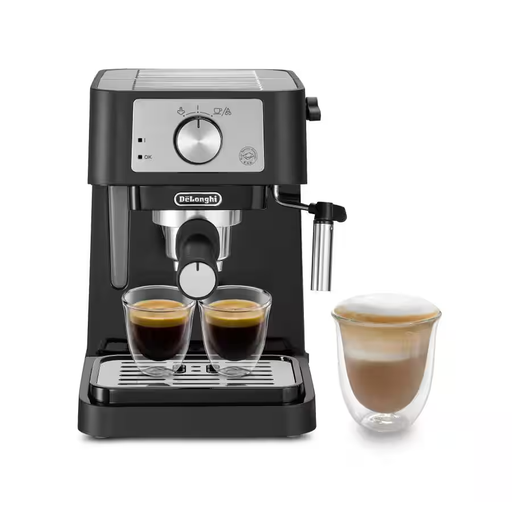
Why This Fits Their Persona: A compact option for first-time home coffee machine buyers who want espresso, cappuccino and iced drinks without an integrated grinder.
Its 150mm-wide body is suited to smaller worktops, and it accepts both ground coffee and ESE pods, offering flexibility without locking you into one capsule range.
15-bar pump, manual stainless-steel steam wand, removable drip tray and 1-litre water tank.
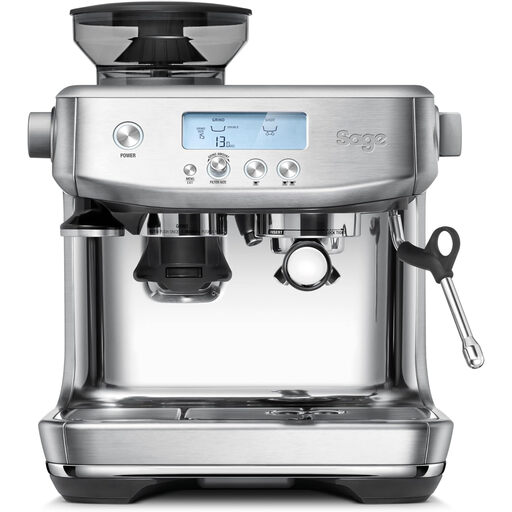
Why This Fits Their Persona: Designed for home baristas who enjoy adjusting the grind, dose and milk texture rather than relying entirely on one-touch recipes.
It does not rely only on a pressure headline: the integrated grinder provides 30 grind settings, while the interface supports one-, two-shot and manual control.
ThermoJet heating system, 54mm portafilter, 30 grind settings and a manual steam wand for microfoam.
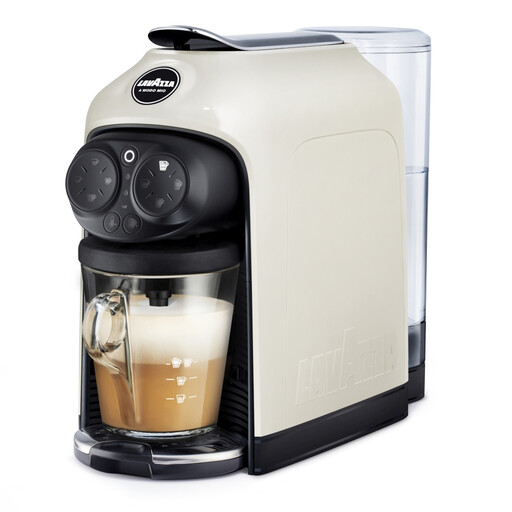
Why This Fits Their Persona: A practical match for households wanting quick pod drinks, hot or cold milk froth and simple iced latte preparation.
Its cold-frothing function is more directly suited to iced latte recipes than a standard hot-only milk wand, while removable parts support routine cleaning.
Four coffee sizes, five milk-based recipes, integrated hot and cold frother, 1.1-litre tank and approximately 28-second heat-up.
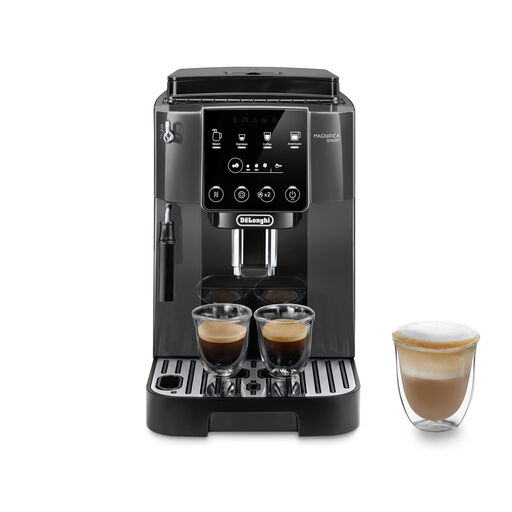
Why This Fits Their Persona: Suitable for several daily coffees when different people want adjustable strength, espresso, coffee or Americano at the touch of a button.
Its built-in grinder avoids the need for a separate grinder, while the removable 1.8-litre tank and adjustable settings make repeated use more manageable.
13 grinder settings, three strength choices, one-touch coffee selections and a manual steam wand.
We have compiled a complete, real-time list of products that fully satisfy these strict selection criteria and UK safety regulations.
Running costs depend on bean and capsule prices, drink volume and maintenance. Beans can offer a lower cost per drink in some households, but a pod machine may reduce preparation time and waste from unused coffee. Compare the typical price of your preferred beans or capsules before purchasing.
Lifespan depends on construction, water hardness, frequency of use and maintenance. Empty the drip tray and grounds container as instructed, clean milk components after use and descale according to the manufacturer’s guidance. In hard-water areas, using the specified water filter or descaling routine can be particularly important.
Confirm that the machine is suitable for the UK’s 220–240V supply, has an appropriate UK plug or approved adaptor arrangement and comes with clear operating and safety instructions. Place it on a stable, heat-resistant surface with ventilation space. Never handle a steam wand or portafilter immediately after use, as hot water, steam and residual pressure can cause injury.