
24/7 Customer Support

Free returns

Same-day & Next-day Delivery

Quality Guaranteed

Unlock Your Welcome Offers: FREE Delivery | Up to 80% OFF | Free 30-day JoyPlus trial
Download the APP
Choosing the right set of artist coloured pencils can feel overwhelming. With so many options available, it’s difficult to know which will deliver the rich colours, smooth application and durability your artwork deserves. A poor choice can lead to frustrating breakage, colours that don't blend and finished pieces that fade over time.
This guide is designed to help you navigate the choices. As a Joybuy Product Recommendation Officer, my role is to provide clear, practical information to help you select the right tools for your creative projects, whether you're an art student, a dedicated hobbyist or a professional illustrator. We will look at key features to consider and highlight a few standout options available in the UK.
Before looking at specific products, understanding a few key characteristics will help you make a more informed decision.
The core, or 'lead', of a coloured pencil determines its performance. The three main types are wax-based, oil-based and pastel.
For artists who intend to display or sell their work, lightfastness is a critical factor. This term refers to a pigment's resistance to fading when exposed to light. A set of lightfast coloured pencils ensures your artwork remains vibrant for years. Ratings are often provided by manufacturers, typically using a star system or a standardised scale like the ASTM (American Society for Testing and Materials) or Blue Wool Scale. For professional drawing pencils, a high lightfastness rating is non-negotiable.
An art pencils set can range from a basic 12-colour tin to a comprehensive collection of over 100 pencils. For drawing pencils for students or those just starting, a well-curated set of 24 to 36 colours provides a good palette without being overwhelming. Professionals may prefer larger sets for a wider range of hues, but a smaller, high-quality set is often a better investment than a large, low-quality one.
Based on their features, materials and suitability for different artists, here are our recommendations.
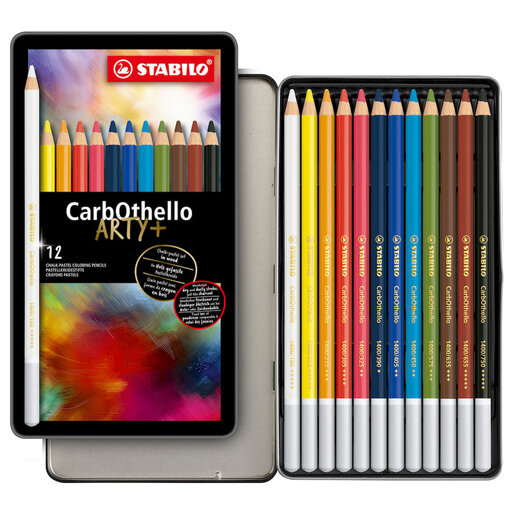
Why It Stands Out: These chalk pastel pencils offer the best of both worlds: the rich, powdery texture of traditional chalks with the fine control of a pencil. The high pigmentation delivers brilliant colour and the lead can be blended or smudged with a finger or stump. They are also partially water-soluble, opening up further creative techniques.
Pros:
Who is it for: Artists who love the texture of pastels but require more precision for detailed work. It's an excellent choice for portrait artists, illustrators and those working on toned paper.

Why It Stands Out: This set from Faber-Castell coloured pencils is a dependable workhorse. The pencils are designed for durability, featuring a special bonding process (SV) that makes the leads highly break-resistant. This makes them a practical choice for younger artists or for use in a busy classroom or studio.
Pros:
Who is it for: Art students, hobbyists and anyone in need of a reliable and robust set of coloured pencils for everyday drawing and colouring.
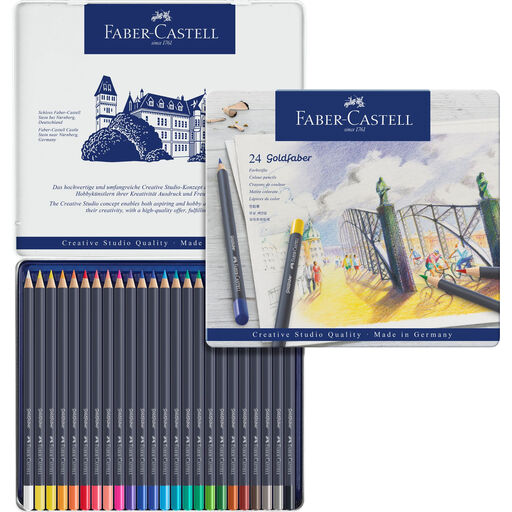
Why It Stands Out: The Goldfaber range represents a significant step up in quality, bridging the gap between student and professional grades. The 3.3 mm lead is highly pigmented, allowing for intense colour laydown with minimal pressure. The formulation also provides good lightfastness, ensuring your artwork lasts.
Pros:
Who is it for: Serious hobby artists and art students looking to elevate their work with a higher-quality pencil that offers features found in more expensive professional drawing pencils.
If you're still exploring or need a different set size, our full collection of art colouring pencils offers a wider variety to suit every artist's palette. Browse the range to find your perfect match.
Explore Our Full Range of Art Colouring Pencils
The primary differences lie in the quality of the materials. Artist-grade pencils use higher concentrations of finer pigments, resulting in richer colours and superior lightfastness. They also tend to have better-quality binders, which makes them smoother to use and blend. Student-grade pencils are more affordable and often have harder leads to resist breakage, but their colour intensity and permanence may be lower.
There are several effective methods for blending. Layering involves applying light layers of different colours on top of each other to create a new hue. Burnishing is a technique where you apply a light-coloured pencil or a colourless blender with heavy pressure to mix the layers underneath into a smooth, photo-realistic finish. You can also use solvents or special blending pencils for drawing to dissolve the binders and merge the colours.
This depends on your goals. For professional artists or anyone creating work for sale or display, investing in a high-quality, lightfast set is essential for archival purposes. For hobbyists and students, a good mid-range set like the Faber-Castell Goldfaber offers an excellent balance of performance and value. While more expensive pencils offer superior performance, you can still create beautiful art with a more affordable set.