
24/7 Customer Support

Free returns

Same-day & Next-day Delivery

Quality Guaranteed

Unlock Your Welcome Offers: FREE Delivery | Up to 80% OFF | Free 30-day JoyPlus trial
Download the APP
Navigating the world of coloured pens and markers can feel overwhelming. Whether you're a student preparing for exams, an artist bringing ideas to life or a professional organising your workflow, the right tools are essential. However, the market is filled with bold claims and clever marketing that can lead to disappointing purchases. As a Joybuy Product Recommendation Officer, my role is to help you sidestep these issues and find products that genuinely meet your needs.
Before you add another set of pens to your basket, let's look at the common pitfalls that cause frustration and waste money.
The "No-Bleed" Promise That Ruins Your Notebook: Many brands advertise their pens as having no-bleed ink. In reality, whether ink bleeds through depends heavily on the paper's weight and quality (measured in gsm). A pen that works perfectly on thick cardstock might ghost or bleed through a standard 80gsm notebook page, rendering the other side unusable. This is a frequent issue for those looking for bullet journal pens uk.
The Cap-Off Catastrophe: We've all done it – left the cap off a felt-tip for a few minutes, only to return to a dry, useless nib. While many products now claim "anti-dry-out" technology, the duration and conditions for this feature can be vague. A pen that survives an hour uncapped in a humid room may not last ten minutes in a dry, air-conditioned office.
The "One-Size-Fits-All" Tip: Marketers often promote a single pen for everything from fine writing to broad colouring. However, a standard bullet tip is rarely suitable for the nuanced strokes required in calligraphy, and a wide chisel tip is clumsy for detailed notes. This mismatch leads to frustration and a stationery drawer full of tools that don't quite do the job.
To avoid these traps, focus on the core specifications that determine a pen's performance. Understanding these will help you select the right art pens set or highlighters for studying for your specific tasks.
The tip is the most critical part of any pen. Choosing the right one is the first step to getting the results you want.
brush pens for calligraphy and expressive hand lettering pens.STABILO Boss is a prime example.dual tip markers offer a practical solution, combining two different nibs (often a brush and a fine tip) in one pen. This provides versatility without cluttering your pencil case.The ink inside the pen dictates its behaviour on the page, its colour vibrancy and its permanence.
watercolour pens use a special water-based formula that can be blended with a wet brush to create soft, artistic washes.Pastel felt tips and muted tones, like those in the popular Zebra Mildliner set, are easier on the eyes and offer a more subtle way to organise notes.Based on these practical considerations, here are a few recommendations from our catalogue, matched to different user needs.
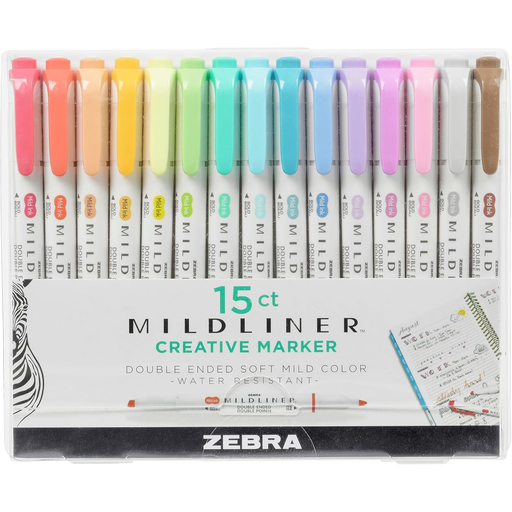
Why This Fits Their Persona: Ideal for students and journal enthusiasts in the UK who need to organise notes without harsh, distracting colours. The soft, translucent ink is gentle on the eyes during long study sessions, and the dual-tip design offers both broad highlighting and precise underlining for detailed planners.
It directly counters the "no-bleed" myth by using a water-resistant pigment ink formulated to minimise bleed-through on most journal and textbook papers. The dual-tip design also avoids the "one-size-fits-all" problem.
Features a versatile chisel tip and fine bullet tip in one pen. The ink is acid-free and archival quality, ensuring notes last.
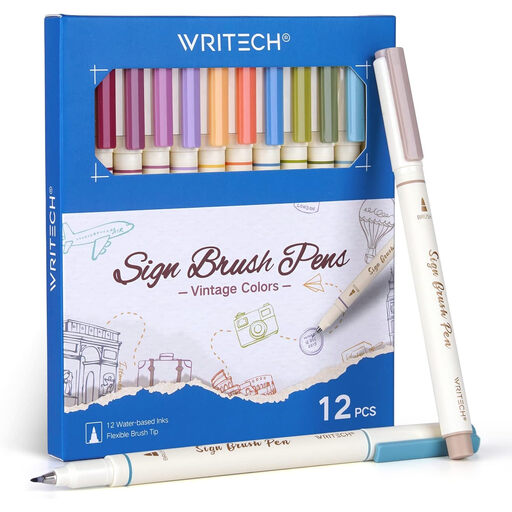
Why This Fits Their Persona: Perfect for beginners in the UK exploring hand lettering or watercolour effects. The flexible brush tip is user-friendly and pressure-sensitive, making it easy to practise varied strokes. The vintage colour palette offers a sophisticated alternative to bright neons.
This pen avoids the "one-size-fits-all" tip trap by offering a specialised, flexible brush nib designed specifically for artistic line variation, rather than a generic writing point.
The water-based ink is blendable, allowing for watercolour-style gradients. The pressure-sensitive felt tip is wear-resistant and offers excellent control for beginners.
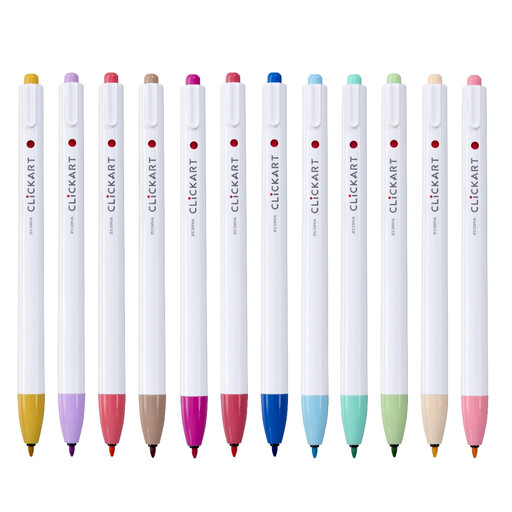
Why This Fits Their Persona: For the UK professional, teacher or anyone juggling multiple tasks, convenience is key. The retractable, capless design eliminates the hassle of lost caps and allows for quick, one-handed use during meetings or planning sessions.
This pen is a direct solution to the "cap-off catastrophe." Its "Moist Keep Ink" technology is designed to absorb moisture from the air, preventing the tip from drying out without a cap, a more advanced solution than simple time-limited claims.
The main advantage is its capless, retractable design for ultimate convenience. The ink is also smudge-resistant and the 0.6mm fine point is versatile for both writing and colour-coding.
We have compiled a complete, real-time list of products that fully satisfy these strict selection criteria and UK safety regulations.
Smearing often happens when highlighting over fresh ink, especially from gel or fountain pens. The best practice is to highlight the text first, then write over or around it with your pen. If you must highlight over existing notes, ensure the ink is completely dry. Using a pen with quick-drying or waterproof ink can also help, as can choosing a highlighter with a drier, pigment-based formula.
Water-based markers, like most highlighters and children's felt tips, use ink suspended in water. They have little to no odour, are easy to clean and are less likely to bleed through standard paper. They are ideal for stationery for students and general use. Alcohol-based markers, favoured by professional artists, use ink suspended in alcohol. They blend very smoothly, produce vibrant colours, but have a strong smell, are more expensive and will bleed through most papers unless you use specialised marker paper.
brush pens for calligraphy will allow you to master the basic techniques of pressure control and stroke variation. Once you have developed your skills and understand your preferences for nib flexibility and ink flow, you can then invest in a larger set with confidence.