
24/7 Customer Support

Free returns

Same-day & Next-day Delivery

Quality Guaranteed

Unlock Your Welcome Offers: FREE Delivery | Up to 80% OFF | Free 30-day JoyPlus trial
Download the APP
From a child’s first scribbles to a professional artist’s detailed illustration, a good set of colouring pencils is a fundamental tool. Yet, the market is saturated with options that often fail to deliver on their promises. Choosing the right set can feel overwhelming, and it is easy to end up with pencils that frustrate rather than inspire. This guide cuts through the marketing clutter to help you identify the key features that matter, ensuring your next purchase is a worthwhile one.
Before we explore what makes a great pencil, let's look at the common pitfalls that lead to disappointment and wasted money.
To avoid these issues, it pays to understand a few core parameters. Analysing these details will help you select a quality pencil set that performs as expected.
The durability of a pencil is not just about the wood. It is about how well the lead is secured within it. Look for manufacturers that specify their bonding process. For instance, some brands use a Secural Bonding (SV) process, which involves gluing the entire length of the lead to the wood casing. This makes the core far more resilient to drops and the pressure of sharpening, creating genuinely break-resistant pencils.
The quality of a pencil's colour comes down to its core composition. The two main types are wax-based and oil-based.
Pay attention to the lead diameter. A thicker lead (e.g., 3.3mm or 4.2mm) is generally stronger and better for covering large areas, making it a good choice for children. A standard lead (around 2.8mm) is versatile for general drawing pencils.
For anyone who spends significant time drawing and especially for children developing their motor skills, ergonomics are crucial. A truly ergonomic pencil goes beyond a basic shape.
Based on these practical criteria, we have matched several products to different user needs.
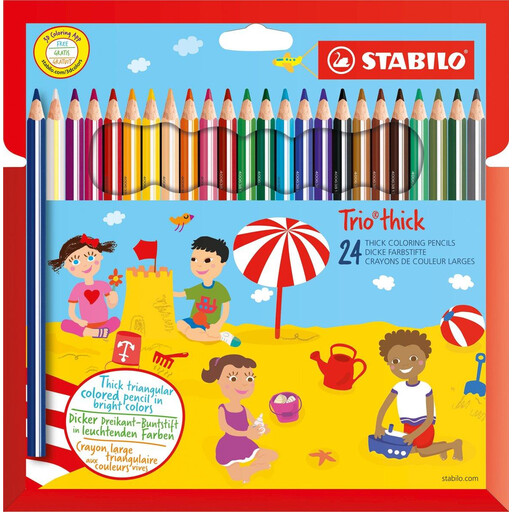
Why This Fits Their Persona: This set is designed specifically for young children. The chunky triangular shape is ideal for small hands learning to hold a pencil correctly, making it a practical choice for use at home or in the classroom.
It directly counters the 'snapping lead' pitfall with its extra-thick 4.2mm lead, which is robust enough to withstand the pressure from enthusiastic young artists. The functional ergonomic shape avoids the 'superficial ergonomics' trap.
The ergonomic triangular design promotes a proper grip for developing fine motor skills. Its rich colour application inspires creativity without requiring heavy pressure.
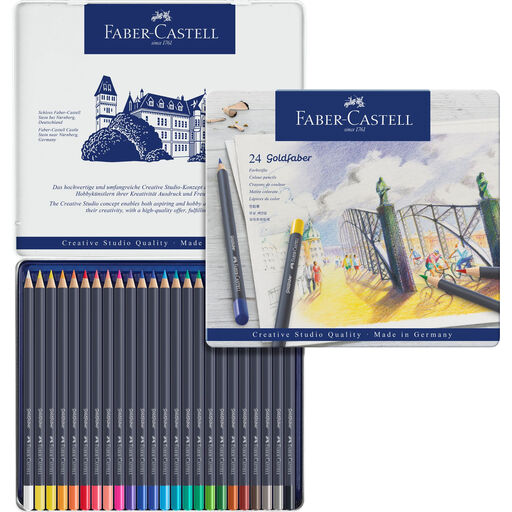
Why This Fits Their Persona: For the hobbyist or art student ready to move beyond basic sets, the Goldfaber range offers a noticeable step up in quality. These pencils are versatile enough for various drawing techniques, from layering to detailed sketching.
It solves the 'faint colour' problem with a highly pigmented 3.3mm lead that delivers outstanding colour brilliance. The lead also has excellent lightfastness, ensuring artwork does not fade over time.
The lead is smudge-resistant and water-resistant, which is ideal for clean, detailed work. The maximum break resistance ensures reliability during use.
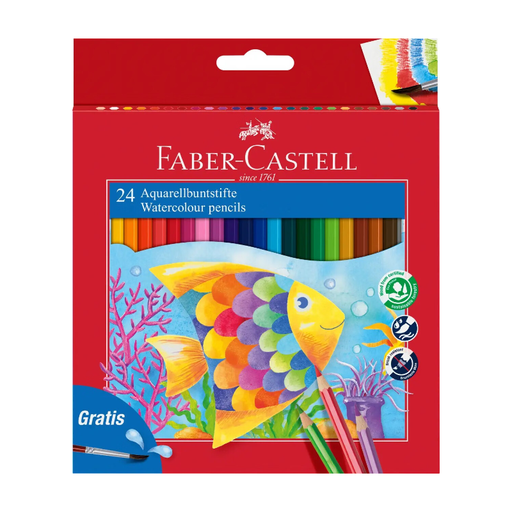
Why This Fits Their Persona: These are for the artist who wants the precision of a pencil combined with the fluid effects of watercolour paint. They offer a gateway to mixed media art without the need for a full paint set.
Unlike standard pencils that simply resist water, these have a fully water-soluble lead. This allows you to draw first and then transform the lines into paint with a wet brush, creating genuine watercolour effects rather than a smudged mess.
The set includes a brush, providing everything needed to start experimenting. The SV bonding ensures the leads are break-resistant, even when using different techniques.
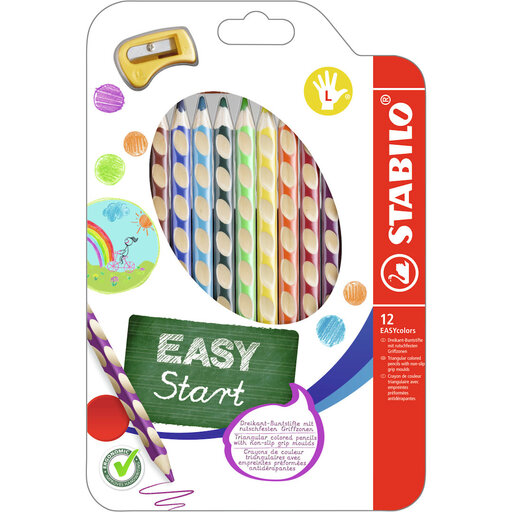
Why This Fits Their Persona: This set is a thoughtful solution for left-handed children who struggle with standard pencils. It provides a tool designed specifically for their needs, promoting comfort and correct grip from an early age.
This product is the antidote to the 'superficial ergonomics' pitfall. Instead of a generic shape, it features non-slip grip zones moulded specifically for a left-hander's grip, ensuring genuine ergonomic support.
The design encourages a relaxed hand posture and the recommended dynamic tripod grip. The pencils are made from 100% PEFC certified wood.
We have compiled a complete, real-time list of products that fully satisfy these strict selection criteria and UK safety regulations.
The key difference is the binder in the lead. Regular colouring pencils use a wax or oil-based binder that is water-resistant. Watercolour pencils use a water-soluble binder. This means you can use them dry, like a normal pencil, and then go over your drawing with a wet brush to dissolve the pigment and create a paint-like effect.
First, choose pencils with a strong lead bonding process, such as SV bonding. Second, use a sharp, high-quality pencil sharpener. A dull or poorly made sharpener can crack the wood and fracture the lead. Avoid dropping your pencils, as the impact can cause internal breaks in the lead that only become apparent when you sharpen them.
Not at all. While professional art supplies offer superior performance in areas like lightfastness and pigment purity, a good-quality student or hobbyist-grade set is more than sufficient for beginners. It is more important to start with a reliable set that has decent colour payoff and durability, like the ones mentioned above, to build skills and confidence without the high initial cost.