Party batch baker
You need space for several biscotti trays before guests arrive. Check documented multi-level fan baking and the usable shelf layout, rather than choosing by the number of cooking modes alone.


Choose an oven with enough usable tray space for your biscotti batch, and check whether the exact model supports fan baking on the number of levels you plan to use. A built-in single oven suits a kitchen with compatible housing; a double oven is worth considering if you regularly need separate cooking space for other dishes. If built-in installation is not an option, a countertop oven depends on the size of your trays, available worktop space and a suitable electrical connection.
You need space for several biscotti trays before guests arrive. Check documented multi-level fan baking and the usable shelf layout, rather than choosing by the number of cooking modes alone.
You want a permanent oven for biscotti and everyday meals. Cabinet dimensions and the electrical connection need checking before capacity or cleaning features can influence your choice.
You are considering a countertop oven because built-in space is unavailable. Its internal tray size, worktop footprint and electrical requirements determine whether it can handle your planned batch.
Start with the space your biscotti trays need, then match the oven format and installation requirements to your kitchen.
Consider it: When you have compatible housing and want one permanent oven for party baking and everyday cooking.
Trade-off: Capacity, multi-level performance claims and connection arrangements vary by model.
Consider it: When you frequently cook for groups and want space for other party food while biscotti occupies one oven.
Trade-off: It needs a suitable installation space and may be unnecessary if a single oven accommodates your usual batch.
Consider it: When built-in installation is not possible or you need an additional oven for occasional trays.
Trade-off: Its internal tray space must accommodate the batch you intend to bake.
| Concern | What to check | Who this matters to |
|---|---|---|
| Multi-tray baking and drying | Check the exact model’s fan mode and stated number of supported baking levels; shelf rails alone do not establish multi-level baking capability. | If several biscotti trays must bake and dry before the party, consistent results across levels are my priority. Roughly 31% of consumers would put multi-tray results first. |
| Batch capacity | Compare internal tray dimensions and supplied shelves with your baking sheets; cavity volume alone does not show how many trays fit. | When the guest list calls for repeated trays, I want to know how much biscotti I can bake in each round. Around 31% of consumers would make batch capacity their primary concern. |
| Kitchen and electrical fit | Compare the manufacturer’s installation requirements with your space and confirm the exact model’s plug or fixed-connection requirements. | Before choosing cooking features, I need an oven that can be installed and connected in my kitchen. For about 25% of consumers, compatibility would come first. |
| Cleaning and timing | Check the exact model’s timer and cleaning features, then read its maintenance instructions. | After a party bake, I would value help with timing and clean-up once the essential baking requirements are met. Cleaning and timing would lead the decision for approximately 13% of consumers. |
A nominal appliance width does not establish the required housing dimensions or ventilation space for a particular built-in model.
Measure the opening and compare it with that model’s installation instructions before ordering.
An incompatible opening can require cabinet alterations or installation work.
Physical shelf positions do not show whether several loaded trays can bake as the manufacturer intends. Bosch’s 3D Hotair and NEFF’s CircoTherm claims apply to their stated models and conditions.
Check the exact model’s documented multi-level capability and the number of levels covered by that claim.
The Bosch HHF113BR0B lists a GB plug, while the NEFF B1GCC0AN0B specifies connection by an electrician. Electrical Safety First advises checking an oven’s power requirements before purchase.
Compare the chosen model’s connection instructions with your existing kitchen setup.
A different connection arrangement can mean arranging electrical work before installation.
A countertop oven may fit the worktop yet be too small for the biscotti trays you intend to use. Overloading an extension lead with kitchen appliances also presents a fire risk.
Check internal dimensions, supplied trays, required clearances and the manufacturer’s electrical instructions before relying on it for the whole batch.
A reference point for full-size built-in ovens with model-specific multi-level hot-air features.
Relevant if you are comparing a full-size built-in single fan oven with a stated cavity capacity.
Relevant when documented multi-level baking is a priority in a built-in oven.
Relevant if you want to consider multi-level cooking alongside a cleaning programme in a built-in oven.
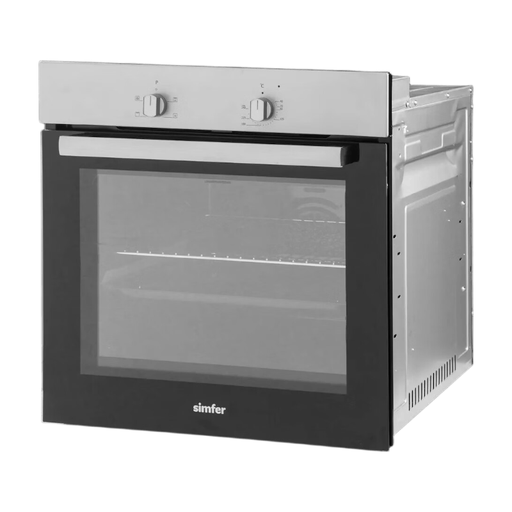
This built-in single fan oven is a choice to examine if you have suitable housing. Confirm its installation requirements and usable tray space before planning a multi-tray biscotti batch around it.
 No image available
Consider this built-in fan oven if your kitchen has suitable housing for a permanent oven. Check its installation instructions, electrical connection and usable tray dimensions against your kitchen and planned biscotti batch; confirm multi-level baking capability if you intend to use several trays at once.
A fan-oven label alone does not establish multi-level baking capability. Bosch states that the HHF113BR0B’s 3D Hotair supports up to three levels, and NEFF makes an up-to-three-level claim for the B1GCC0AN0B’s CircoTherm; check the statement for the exact model you choose.
Not necessarily: the Bosch HHF113BR0B lists a GB plug, whereas the NEFF B1GCC0AN0B requires connection by an electrician. Read the exact model’s installation instructions and check your kitchen’s electrical setup before buying.
Do not assume an extension lead is suitable, particularly if other high-power kitchen appliances would share it. Electrical Safety First advises checking an oven’s power requirements; follow the model’s electrical instructions and seek qualified advice if your socket arrangement is uncertain.
Check the model’s installation and electrical instructions, and use a qualified installer where required. Electrical Safety First advises reviewing power requirements before purchase; the Great Britain guidance from GOV.UK’s Office for Product Safety and Standards covers electrical equipment supplied in or into Great Britain.