
24/7 Customer Support

Free returns

Same-day & Next-day Delivery

Quality Guaranteed

Unlock Your Welcome Offers: FREE Delivery | Up to 80% OFF | Free 30-day JoyPlus trial
Download the APP
As a Joybuy Product Recommendation Officer, I often speak with parents and grandparents searching for that perfect toy. When it comes to interactive dolls, the Cry Babies range frequently comes up. With their big eyes and signature real tears, they have become a firm favourite in many UK households. However, the collection has grown, and choosing between a doll that walks, one that has interactive meal times or a softer, cuddlier version can be a challenge.
This guide is designed to help you navigate the options. We will look at the key features of different Cry Babies dolls to help you find a companion that will delight your child and encourage positive, nurturing play.
With various models available, keeping a few key points in mind can simplify your decision. Here are some practical considerations to help you select a suitable doll for your little one.
Think about how your child prefers to play. Are they gentle and caring, enjoying quiet moments with their toys? If so, a doll that encourages nurturing play might be a great fit. These often have softer bodies and simpler functions. Alternatively, if your child thrives on action and reaction, a more interactive baby doll with features like walking or responsive feeding could provide hours of engagement.
Cry Babies are generally designed as baby dolls for toddlers, but their features can appeal to different developmental stages. For younger children (around 18 months to 2 years), a simpler doll like a Cry Babies Tiny Cuddles model is often ideal. They are soft, easy to hold and introduce the core concept of caring for a doll. For slightly older children (3+), a walking baby doll or one with more complex sound and light features can offer a more stimulating challenge that helps them understand cause and effect.
The original feature that made these dolls famous was being a doll that cries real tears. This is still a central part of their appeal. However, newer models have expanded on this. Some now feature LED or light up crying doll effects, while others, like Cry Babies Meal Time, react to specific accessories. Understanding these different interactive functions will help you choose a doll with play patterns that best match your child's interests.
Based on their features and play value, here are a few standout models from the Cry Babies collection that are popular with families.
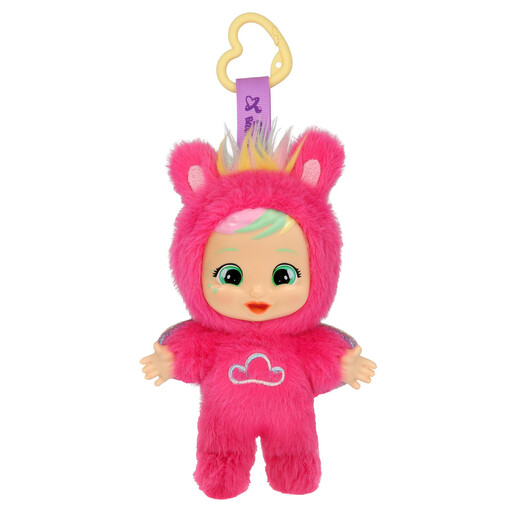
Why It Stands Out: Hannah combines the classic Cry Babies crying feature with a soft, plush body, making her wonderfully cuddly. Her unique astronaut-pegasus theme encourages imaginative storytelling, setting her apart from more traditional baby dolls.
Pros:
Who is it for: This doll is an excellent starting point for younger toddlers (18 months and up) who would appreciate a softer toy. Its simple mechanics and cuddly nature make it a comforting first interactive doll.
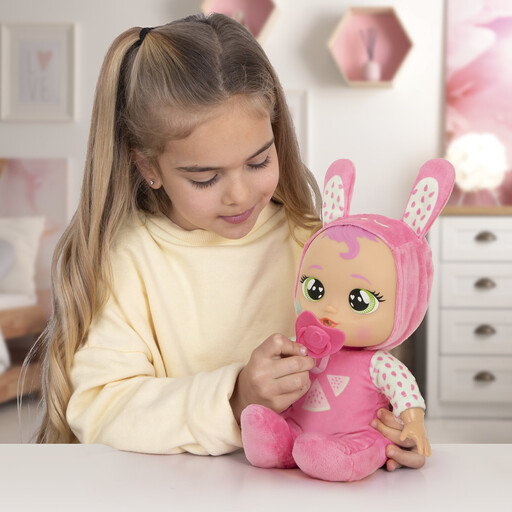
Why It Stands Out: Meal Time Julie takes interactivity to the next level. She is designed to react to her food accessories, happily accepting some while playfully spitting out others. This, combined with her light-up tears and extensive sound library, creates a highly engaging play experience.
Pros:
Who is it for: Julie is ideal for children who enjoy pretend play and are ready for a doll that offers more responsive feedback. Her mealtime theme is great for fostering imaginative scenarios around caring and feeding.
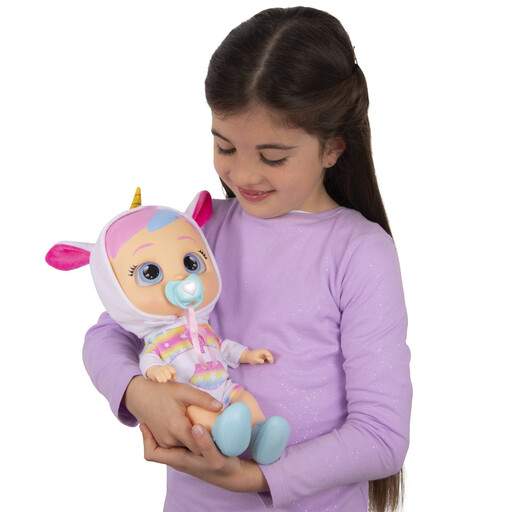
Why It Stands Out: As a walking baby doll, Dreamy brings an element of physical activity to playtime. Children can hold her hands and guide her as she takes her first steps, and she responds with sounds as she moves. This model, featuring the popular character Cry Babies Dreamy, also cries bright LED tears.
Pros:
Who is it for: This doll is a fantastic choice for active toddlers who love to be on the move. It combines the nurturing aspects of a baby doll with the excitement of a toy that can walk and interact physically.
The Cry Babies universe is always expanding with new characters and themes. The models highlighted here are just a snapshot of the available range. If you would like to see more characters or explore other types of interactive toys, feel free to browse our complete collection.
Explore our full range of Play Figures & Accessories.
The mechanism is straightforward. You fill a small reservoir, usually located in the back of the doll's head, with clean water. Once the dummy is removed, the doll will begin to cry tears. On some models, you may need to gently press a button or the doll's head to activate the tears.
Many Cry Babies dolls are rated for children aged 18 months and up, making them suitable for two-year-olds. For this age group, models with simpler features and softer bodies, such as the Cry Babies Tiny Cuddles line, are often a great introduction. It is always important to check the manufacturer's age recommendation on the specific product and supervise play, especially due to small accessories like dummies.
No, walking is a special feature found in specific lines, such as the Cry Babies My First Steps series. The classic and most common feature across the range is the ability to be a doll that cries real tears. If you are looking for a walking function, be sure to select a model that explicitly lists it as a feature.