
24/7 全天候客户支持

免费退货

当日/次日达

品质保障

开启新人专享福利: 全场免邮 | 低至 2 折 | 免费试用 30 天 JoyPlus 会员
下载 Joybuy
A crystal growing kit can be a fantastic way to introduce a child to the wonders of chemistry and geology, transforming a kitchen table into a sparkling science lab. However, the market is filled with options that can lead to frustration and disappointment. As a Joybuy Product Recommendation Officer, my role is to help you see past the flashy packaging and choose a kit that delivers a genuinely rewarding experience.
Before you buy, be aware of a few common pitfalls. Many parents find themselves caught out by:
To ensure you're buying a valuable educational geology toy and not just a box of disappointment, it pays to check a few core details.
Any crystal making kit for children sold in the UK should be CE marked, indicating it meets health, safety and environmental protection standards. Pay close attention to the recommended age range. A kit for a 10-year-old may contain different chemicals and have more complex instructions than one for an 8-year-old. Always look for clear warnings, such as "Adult supervision required," and ensure the kit includes basic safety equipment like goggles, or recommends their use. The instructions should provide clear, simple steps for handling the materials safely.
A good kit provides everything you need to get started straight away. Check the contents list to ensure it includes not just the crystal-forming powders (like Monoammonium Phosphate or Aluminium Potassium Sulphate) but also the necessary apparatus. This typically includes:
Kits that also include base rocks or plaster moulds for creating unique shapes offer an extra layer of creativity and value.
The difference between a simple toy and one of the better STEM science kits is the quality of the educational material. A worthwhile kit won't just tell you how to grow your own crystals; it will explain why it's happening. Look for an instruction booklet that delves into the science of solutions, saturation and crystal formation. This turns a fun activity into a memorable lesson that genuinely sparks curiosity.
To help you navigate the options, we've identified a couple of kits that align with our selection criteria, each suited to a different type of young scientist.
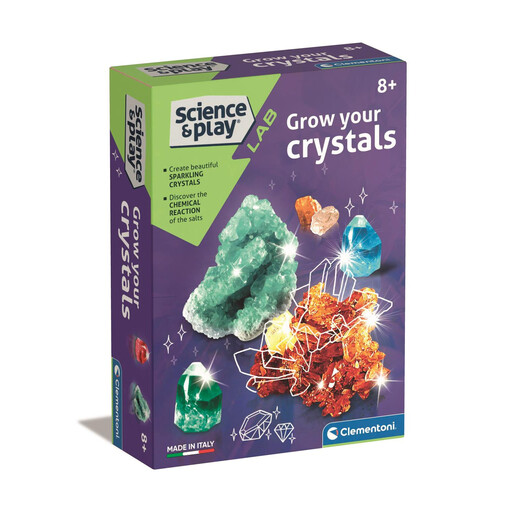
Why This Fits Their Persona: This kit is an excellent starting point for children at the younger end of the 8-14 age range. It focuses on creating visually impressive results, like a crystal-covered tree and a shimmering geode, which provides a satisfying and engaging introduction to chemistry.
It comes with a detailed, illustrated manual that guides children through the experiments safely, avoiding the trap of vague instructions. The inclusion of plaster moulds and all necessary materials means you won't be hunting for extra parts.
The focus on creating unique shapes with plaster and special paper adds a creative, hands-on element that goes beyond simply mixing liquids in a beaker.
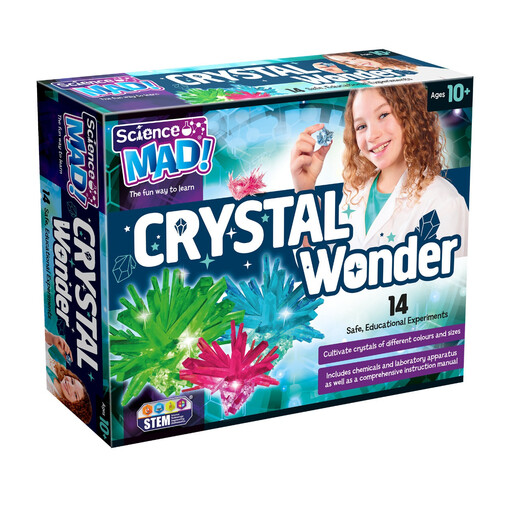
Why This Fits Their Persona: Ideal for older children (10+) or those with a keen interest in science, this kit offers a more in-depth experience with 14 different experiments. It's designed to feel more like a real laboratory project, focusing on the scientific principles at play.
This set avoids disappointment by providing a comprehensive manual that explains the real science, setting realistic expectations. The clear instructions and warnings for its more advanced chemicals ensure experiments are conducted safely.
It extends its value by teaching children how to grow additional crystals using common household items like sugar and salt, encouraging further independent exploration.
We have compiled a complete, real-time list of products that fully satisfy these strict selection criteria and UK safety regulations.
Patience is part of the scientific process. While you might see the first tiny crystals forming within a few hours, it typically takes several days for them to grow to an impressive size. Most kits suggest leaving the solution undisturbed for 3 to 7 days for the best results. The exact time depends on the chemicals used and the ambient temperature of the room.
When used correctly and with adult supervision, they are safe. These kits are designed as educational tools and come with specific safety instructions. It is crucial to follow the age recommendations and ensure an adult is present to supervise, especially when handling the chemical powders and hot water that is often required. Always ensure the work area is clear and that hands are washed thoroughly before and after the experiment.
Once your crystals are fully grown and have been carefully removed from the solution and dried, they make a wonderful display. Many kits come with a display stand or container for this purpose. They serve as a proud reminder of a successful scientific experiment and can be the start of a cool geology collection. Just remember they are fragile and should be handled with care.