Choosing a new dartboard can feel surprisingly complex. Whether you're looking for a safe way to entertain the family, setting up a games corner in your home, or honing your skills for league night, the options are vast. From materials to wiring, finding the right board depends entirely on your needs.
This guide is designed to help you navigate the choices. We'll break down the key features to look for in a dart board for home use and highlight a few carefully selected options for different types of players, from aspiring youngsters to serious competitors.
Your Dartboard Buying Guide
Before you decide, consider these key factors. Understanding them will help you select a board that offers the right balance of durability, performance and safety for your situation.
1. Material Matters: Bristle (Sisal) vs. Safety Boards
The playing surface is the most critical part of a dartboard. The two main types you'll encounter are bristle and safety boards.
- Bristle Dartboards: Often referred to as a sisal dartboard, this is the standard for pubs, competitions and serious home play. They are made from compressed sisal fibres. When a steel-tip dart enters the board, the fibres part and then close up again after the dart is removed. This "self-healing" property gives the board its longevity. A quality bristle dartboard provides a satisfying thud and holds darts securely.
- Kids Safety Dartboards: For families with older children (typically 14+) or for use in areas where wall damage is a concern, a safety board is a practical choice. These boards are designed to be used with plastic or magnetic-tipped darts, significantly reducing the risk of injury or damage to surroundings. A children's dartboard is an excellent way to introduce the game and help develop hand-eye coordination in a controlled environment.
2. The Wiring System: Round vs. Blade
The metal web that separates the scoring segments is another crucial feature. The thickness and shape of this wiring can directly impact your game by influencing "bounce-outs"—when a dart hits the wire and falls to the floor.
- Round Wire: This is the traditional, more common type of wiring found on many entry-level and recreational boards. While perfectly functional for casual play, the rounded shape presents a larger surface area, slightly increasing the chance of bounce-outs.
- Blade or Angled Wire: Found on a professional dartboard or competition dartboard, this system uses ultra-thin, angled steel blades. This design dramatically reduces the surface area of the wire, deflecting incoming darts into the scoring segments rather than away from the board. This maximises your scoring potential and is the preferred choice for dedicated players.
3. The Complete Package: Board Only or a Dartboard Set?
Finally, consider what's included. If you're starting from scratch, a dartboard set that includes a board and darts offers great convenience and value. These kits provide everything you need to start playing immediately. If you're an experienced player looking to upgrade your board or already have a preferred set of darts, purchasing the board on its own makes more sense.
Our Top Product Recommendations
Based on features, intended use and overall construction, here are our recommendations to help you find a suitable dartboard.
For the Aspiring Competitor: Hy-Pro Dartboard Apex Professional
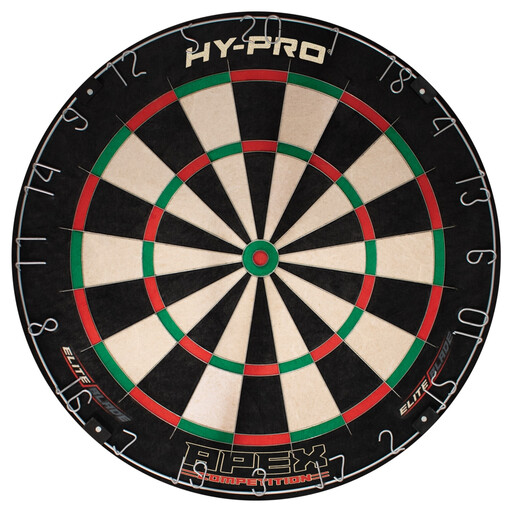
- Why It Stands Out: This board is built for performance. Its key features are the ultra-thin blade wiring and a staple-free sisal surface. This combination is engineered to minimise bounce-outs and maximise the available scoring area, helping you to achieve greater accuracy.
- Pros:
- Constructed from premium, self-healing Grade A sisal fibres for durability.
- Blade wiring system helps guide darts into scoring zones.
- Staple-free construction provides a clean playing surface.
- Who is it for? This is an excellent choice for serious amateur players, those in a darts league or anyone looking to upgrade their home setup to a competition-standard board for focused practice.
For Casual Home Play: Hy-Pro Dartboard & Darts x 6 Set
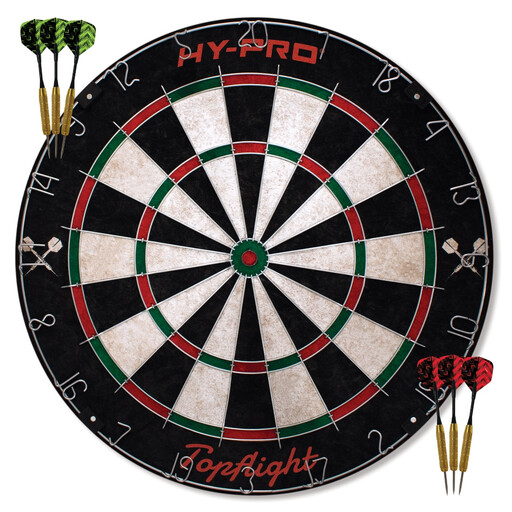
- Why It Stands Out: This is a complete dartboard and darts package, offering everything you need to get a game started straight out of the box. The board is made from high-density bristle (sisal) and features a traditional round wire layout, making it a durable and reliable option for recreational fun.
- Pros:
- Complete set includes a bristle dartboard and six steel-tip darts.
- Durable, self-healing sisal construction for lasting use.
- Represents great value for a full home setup.
- Who is it for? Ideal for families, beginners or anyone wanting a no-fuss, all-in-one solution for adding a classic game to their home or garage.
For Safe Family Fun: Hedstrom Kids Safety Dartboard & Darts Set
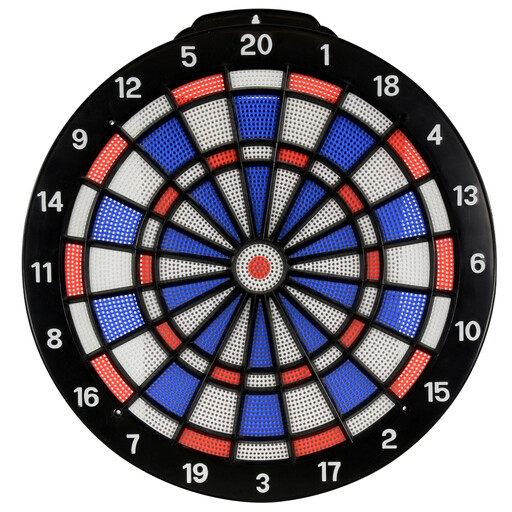
- Why It Stands Out: Safety is the primary focus of this set. It uses darts with soft, plastic points instead of sharp steel tips, making it a suitable choice for younger enthusiasts (ages 14 and up) under adult supervision. It’s EN71 tested and CE UKCA compliant, offering peace of mind.
- Pros:
- Includes safety darts to prevent injury and protect walls.
- Helps develop coordination and introduces the sport safely.
- Lightweight and easy to hang in a bedroom or playroom.
- Who is it for? Parents looking for a safe indoor activity for older children (14+). It’s a great way to enjoy a version of the game without the risks associated with steel-tip darts.
Looking for More Options?
If these selections aren't quite what you're looking for, there are many other styles and accessories to explore. From different board designs to dart flights and stems, you can find everything you need to complete your setup.
Browse our full collection of dart cards to see more.
Frequently Asked Questions
1. What is the official height and distance for a dartboard? For a standard game of darts, the board should be hung so that the centre of the bullseye is 1.73 metres (5 feet, 8 inches) from the floor. The throwing line, or oche, should be marked at 2.37 metres (7 feet, 9.25 inches) from the face of the dartboard.
2. How do I look after my bristle dartboard? To ensure your sisal dartboard wears evenly and lasts as long as possible, it's important to rotate it regularly. Most boards have a moveable number ring. Simply remove the ring, turn the board so a new, less-worn black segment is at the top (in the '20' position), and replace the ring. Also, keep the board in a dry environment, as moisture can damage the sisal fibres.
3. What is the difference between a sisal and a bristle dartboard? There is no functional difference; the terms are often used interchangeably. "Bristle" is the traditional name for this type of board, while "sisal" refers to the specific plant fibre used to make modern, high-quality bristle dartboards. If you see a board described as either, you can expect it to be a self-healing board designed for steel-tip darts.


