For a single-screen music-production desk, a 27-inch 4K monitor is a useful starting point when you want a DAW, sample browser and file manager visible together; 4K is not essential for every workflow. Prioritise USB-C charging only if your laptop and cable support the connection, and consider colour-focused features if you also make visual assets. Screen placement matters during long sessions, while judging sound still calls for a separate audio-monitoring setup.
Who this monitor choice suits
Sample-library organisers using one screen
If you keep a DAW, folder tree, tags and waveform or browser panels open while building an audio library, visible workspace is a priority. A 27-inch 4K display is one option; storage capacity and computer performance remain separate decisions.
Laptop-based producers reducing desk cables
If your DAW and library run on a USB-C laptop, a monitor that handles display output, data and charging through one cable may simplify the desk. Check that the laptop port, cable and monitor support the functions you need.
Creators working with audio and visuals
If the library project also involves cover art, video or other colour-sensitive deliverables, documented colour coverage and a suitable calibration workflow become more relevant than they are for audio-file organisation alone.
What to check before buying
Decide how much of your sample-library workflow needs to stay visible at once, then check laptop connections, any visual-output requirements and where the screen will sit on your desk.
| Concern |
What to check |
Who this matters to |
| Room for library and DAW panels |
Compare 27-inch QHD and 4K at your viewing distance; check graphics output and whether display scaling keeps text comfortable. |
If I organise samples while editing in a DAW, I want the browser and file manager in view without constant window switching. Roughly 31% of consumers put visible workspace first. |
| One-cable laptop connection |
Check the laptop’s display-output mode, the cable and the monitor’s power-delivery limit against the laptop’s charging needs. |
With a laptop at the centre of my desk, I would rather connect its display and peripherals without juggling cables. Around 31% of consumers make laptop integration their primary concern. |
| Colour for visual deliverables |
Check the exact model’s colour-space claim and calibration support against the requirements of your artwork or video workflow. |
When my sample library also needs artwork or video, consistent colour matters to the finished visual work, not to how the samples sound. About 23% of consumers place that visual need first. |
| Positioning for long sessions |
Check stand adjustment or compatible VESA mounting, alongside desk depth and your usual screen position. |
During extended cataloguing sessions, I need to position the display without working around a fixed stand. Roughly 15% of consumers prioritise adjustable placement. |
Common buying pitfalls
-
Treating a display as an audio-monitoring upgrade
A monitor’s screen, speakers or USB hub does not establish accurate audio monitoring or lower playback latency. Focusrite advises connecting headphones or external studio monitors directly to an audio interface for proper monitoring.
Choose the display for visual work, and plan the audio interface and listening equipment separately when critical auditioning matters.
-
Assuming every USB-C connection does the same job
A USB-C connector alone does not establish that a laptop can send video, transfer data and receive enough power through the monitor.
Check the laptop’s display-output support, its charging requirement and the monitor’s port and cable specifications before relying on one cable.
Depending on that setup, you may still need a separate charger, dock, cable or adapter.
-
Choosing colour features for audio-only work
Colour-space coverage can matter for artwork or video, but it does not tell you how accurately you will hear a sample.
If your work is audio-only, assess usable screen space, connections and placement before colour-oriented features. If you also deliver visuals, check the colour space and calibration workflow those deliverables require.
-
Planning resolution but not screen position
A higher-resolution screen does not by itself make a workstation comfortable. The Health and Safety Executive advises placing the screen directly in front of you, with its top around eye level and the screen about an arm’s length away.
Check desk depth and available height, then choose an adjustable stand or compatible mount if your setup needs one.
An arm or a change to the desk arrangement may be needed to achieve a suitable position.
Relevant monitor brands
Dell
Dell’s UltraSharp U2725QE is a 27-inch 4K hub-monitor option for a laptop-based desk.
- Dell UK lists an IPS Black panel, height adjustment, a 120 Hz refresh rate and up to 140 W power delivery for the U2725QE.
- Those display and hub features are not an audio-conversion or listening upgrade; check whether your laptop can use the connections you want.
LG
LG’s 27UP850K-W is a 27-inch 4K IPS option for a compatible USB-C laptop setup.
- LG UK lists display, data and charging through USB-C, with charging up to 90 W, plus height, pivot and tilt adjustment.
- One-cable use depends on the laptop and cable. LG says Calibration Studio software is not included with this model.
BenQ
BenQ’s PD2705U is a 27-inch 4K option when music-production work also includes colour-managed visuals.
- BenQ lists 99% sRGB and 99% Rec.709 coverage, a calibration report, a KVM switch, VESA mounting and USB-C power delivery up to 65 W.
- Check whether 65 W meets your laptop’s needs. Its colour specifications do not replace an audio interface or listening equipment.
Joybuy monitors for this workspace
These 4K monitor choices relate to keeping sample-library and production windows visible on one screen. Their display types, connections and positioning features differ, so check the particular model against your laptop and desk setup; colour-focused or gaming features do not establish an audio benefit.
 No image available
BenQ MA270UP Nano Glossy 27-inch 4K USB-C monitor
Consider this for a single-screen library and DAW desk if USB-C connection is also useful to your laptop setup.
The product name specifies an IPS panel, a glossy finish and a height-adjustable stand. Check the laptop port, cable and charging requirement before depending on USB-C for the whole desk.
View on Joybuy
 No image available
ASUS ProArt PA27DCE-K 4K UHD OLED monitor
This 4K option is worth considering if your sample-library work also involves visual deliverables.
It uses an OLED display. If DAW or library controls remain static for long periods, account for the listing’s burn-in caution; check laptop charging separately before planning a one-cable setup.
View on Joybuy
 No image available
iiyama ProLite XUB2792UHSU-B6 27-inch 4K UHD monitor
The 27-inch 4K format suits a desk where you want library and DAW windows in view together.
The product name identifies a matte-black variant. If laptop charging or a particular port arrangement matters, confirm those connections for this model before purchase.
View on Joybuy
 No image available
LG 27UP650K 27-inch 4K IPS monitor, white
This is another 27-inch 4K format to consider for organising samples alongside production software.
The product name lists a 60 Hz refresh rate, HDMI and DisplayPort, plus height, tilt and pivot adjustment. Confirm the exact port count if several devices must stay connected, and check USB-C requirements separately.
View on Joybuy
 No image available
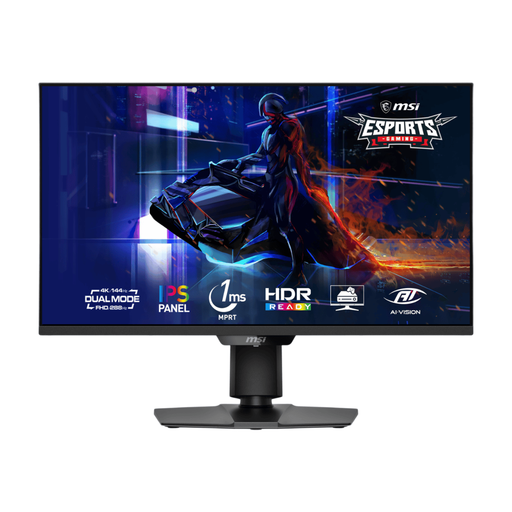
MSI MAG 275UPD E14 27-inch 4K UHD dual-mode gaming monitor
Its 27-inch 4K format can serve a sample-browser and DAW workspace if it also suits your other display uses.
The named dual modes are UHD at 144 Hz and FHD at 288 Hz. Higher gaming refresh rates do not establish a benefit for auditioning audio; check the connections you need for a laptop desk.
View on Joybuy
Frequently asked questions
Will a better computer monitor help me hear samples more accurately?
No: changing the display does not improve the audio conversion or listening equipment used to judge samples. Focusrite advises connecting headphones or external studio monitors directly to an audio interface for proper monitoring.
Do I need a 4K screen for a sample library and DAW?
Not necessarily. Ableton recommends a display resolution of 1920 × 1080 or higher for Live; 4K is worth considering when you want more library, file-management and DAW panels visible together. Check your computer’s display output and choose scaling that keeps text comfortable.
Will any USB-C laptop work with a USB-C monitor?
No: the laptop port must support the required display-output mode, and the monitor’s power delivery must suit the laptop if you want charging through the same cable. Check cable requirements for the exact model too; LG specifies use of the included USB-C cable for the 27UP850K-W’s intended USB-C operation.
How should I position a screen for long cataloguing sessions?
Place the screen directly in front of you, with its top around eye level and the screen about an arm’s length away, as advised by the Health and Safety Executive. An adjustable stand or compatible arm can help, but desk, chair and keyboard positions matter as well.


