Espresso and moka drinkers
If you are switching to decaf, look for preparation guidance that names your espresso equipment or moka pot. A ground coffee labelled for filter brewing alone does not establish that it suits your usual method.


Choose decaf ground coffee by brewing method before choosing a brand: illy identifies its ground decaf for Italian espresso, Lavazza lists moka, filter and French press preparation, and Rombouts specifies a medium grind for filter and cafetière use. Then compare the stated flavour notes, decaffeination details and storage instructions; decaf does not necessarily mean caffeine-free.
If you are switching to decaf, look for preparation guidance that names your espresso equipment or moka pot. A ground coffee labelled for filter brewing alone does not establish that it suits your usual method.
Check the stated grind and brewing directions. Rombouts names cafetières, filter machines and filter cones for its medium-ground decaf, while other products give different preparation guidance.
Tesco Finest and Sainsbury's Taste the Difference have Colombian ground-decaf options. Their stated brewing methods, coffee details and storage instructions offer more useful points of comparison than the word “decaf” alone.
Start with the brewer you own, then narrow the choice by the coffee's stated character and the way you will store an opened pack.
| Priority | What to check | Your needs |
|---|---|---|
| Brewing method | Look for your brewer in the product's preparation guidance. illy names Italian espresso; Lavazza lists moka, filter and French press; Rombouts specifies medium-ground coffee for cafetières, filter machines and filter cones. | I use the same brewer most days, so I want the ground coffee's stated preparation method to match it. |
| Flavour profile | Compare stated roast and tasting notes rather than assuming all decaf tastes alike. Tesco Finest lists caramel and blood-orange notes; Taylors describes caramel and malt notes. | A dark-roast description may appeal to me more than caramel-and-malt notes, or the reverse. I want to choose from the flavour descriptions actually given. |
| Decaffeination details | Check whether the product states a process or residual-caffeine information. Lavazza describes a carbon-dioxide process, Taylors names its Pure Water Process, and illy states that its ground espresso decaf contains no more than 0.1% caffeine. | If the process or residual caffeine matters to me, I need a statement for the particular coffee. The British Coffee Association explains that decaf is not necessarily caffeine-free. |
| Pack and storage | Check pack size, packaging and the exact post-opening directions. Rombouts describes a vacuum-packed 250 g pack; Sainsbury's gives refrigeration and use-within-two-weeks directions for its Taste the Difference Colombian decaf. | I drink decaf occasionally, so I want a pack and storage routine I can follow after opening. |
The British Coffee Association says a small amount of caffeine remains in decaffeinated coffee.
Treat “decaf” as a description of reduced caffeine, and check the particular product's residual-caffeine statement if that distinction matters to you.
illy identifies its ground decaf for Italian espresso, whereas Lavazza lists moka, filter and French press and Rombouts names filter and cafetière use. These are different preparation directions.
Match the pack's guidance to your machine or brewer; do not assume that every ground coffee is intended for espresso.
Packaging and post-opening directions can differ. Sainsbury's Taste the Difference Colombian decaf, for example, gives a refrigerated use-within-two-weeks instruction.
Follow the directions on the exact pack you buy, particularly if you open it only occasionally.
These references describe particular decaf ground coffees, not every coffee sold under each name.
Lavazza's Decaf Ground Coffee lists moka, filter and French press preparation.
illy Ground Espresso Decaffeinated Coffee is a 250 g, 100% Arabica product described by illy as intended for Italian espresso.
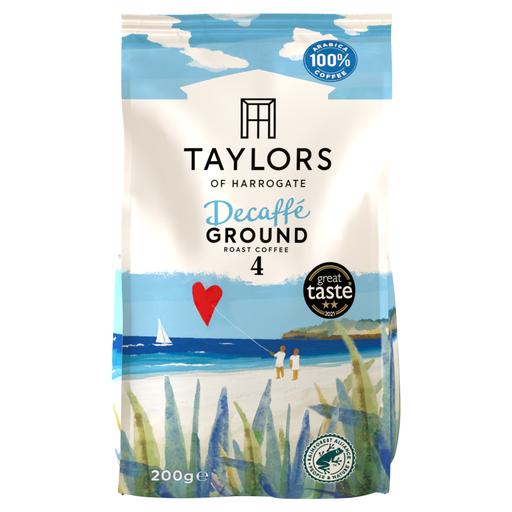
Taylors Decaffé is a 200 g ground coffee described with caramel and malt notes.
Rombouts Decaf Ground Coffee is a medium-ground, vacuum-packed 250 g option for filter machines, cafetières and filter cones.
Tesco Finest Decaffeinated Colombian Ground Coffee is a 227 g option with stated caramel and blood-orange notes.
Sainsbury's Fairtrade Colombian Decaff is a 227 g, single-origin, 100% Arabica ground coffee with filter-machine and cafetière directions.
These two Joybuy options are Taylors of Harrogate Decaf Ground Coffee and Lavazza Decaf Classico Ground Coffee. Check the preparation guidance for the exact pack against your brewer before choosing.
 No image available
Consider this ground decaf if a stated water-based decaffeination method and caramel-and-malt notes matter to you. Its product description also identifies 100% Arabica coffee; check the pack's preparation guidance for your brewer.
 No image available
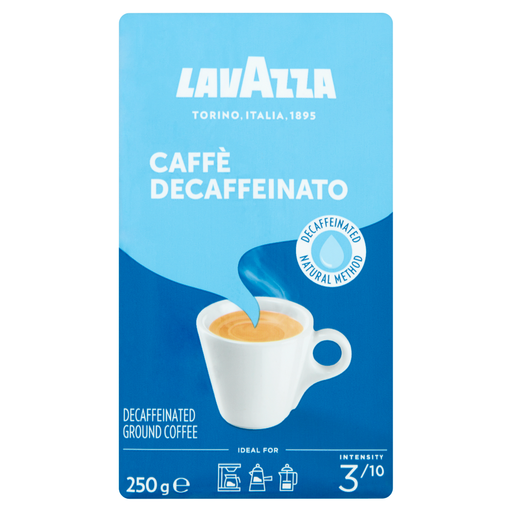
This is a 250 g ground-decaf option. Check the Decaf Classico pack for grind and preparation guidance before choosing it for a particular brewer; guidance for a differently named Lavazza decaf is not a substitute.
No. The British Coffee Association explains that a small amount of caffeine remains after decaffeination. If the residual amount matters to you, check whether the particular product states it.
Choose a product that names your method. Rombouts specifies cafetières and filter machines for its medium-ground decaf; Tesco Finest and Sainsbury's Taste the Difference also list both methods for the products described here.
Do not assume so. illy identifies its Ground Espresso Decaffeinated Coffee for Italian espresso, while Lavazza's Decaf Ground Coffee lists moka, filter and French press. Check the exact pack and your machine's guidance.
Follow the directions on the product you buy. Sainsbury's Taste the Difference Colombian decaf advises an airtight container and use within two weeks if refrigerated; that timing should not be applied to every coffee.