
24/7 Customer Support

Free returns

Same-day & Next-day Delivery

Quality Guaranteed

Unlock Your Welcome Offers: FREE Delivery | Up to 80% OFF | Free 30-day JoyPlus trial
Download the APP
Whether you're recovering from a tough gym session, seeking relief from a day spent hunched over a desk or simply trying to ease everyday aches, a muscle massager can feel like a lifesaver. But the market is flooded with options, from simple foam rollers to high-tech percussion massagers, all promising instant relief.
As a Product Recommendation Officer at Joybuy, I see how easily shoppers can be misled by marketing hype. Before you invest, it's crucial to understand the common pitfalls that lead to disappointing purchases.
By understanding what really matters, you can find a tool that provides genuine, lasting relief for sore muscle relief and post-workout recovery.
To choose a muscle massager that works for you, look past the headline claims and focus on these core parameters.
For a percussion massager, these two specifications are far more important than RPM.
Not all muscle recovery tools are created equal. The right choice depends entirely on your lifestyle and needs.
For electric massagers, convenience is key. A device with USB-C charging is a modern standard, allowing you to charge it with the same cables as your other devices. Check the battery capacity (measured in mAh) and look for realistic usage estimates rather than just the maximum possible runtime.
Here are a few options that align with different user needs, chosen for their practical features rather than marketing buzz.
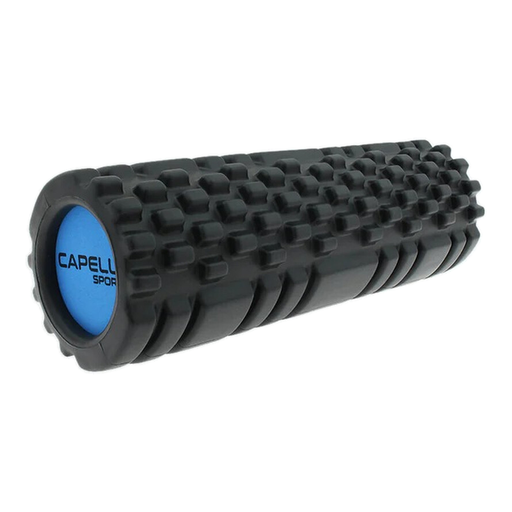
Why This Fits Their Persona: An excellent entry point into muscle recovery. This compact foam roller is perfect for home users and gym-goers who want an effective, no-frills tool for targeting large muscle groups without a significant financial commitment.
As a manual tool, it sidesteps the misleading electronic specs trap entirely. Its effectiveness is based on proven physiotherapy principles and user technique, not a motor with questionable power or battery life.
Made from high-density PVC and PE materials to maintain its shape. It's lightweight, highly portable and comes with a carry bag for easy transport to the gym.
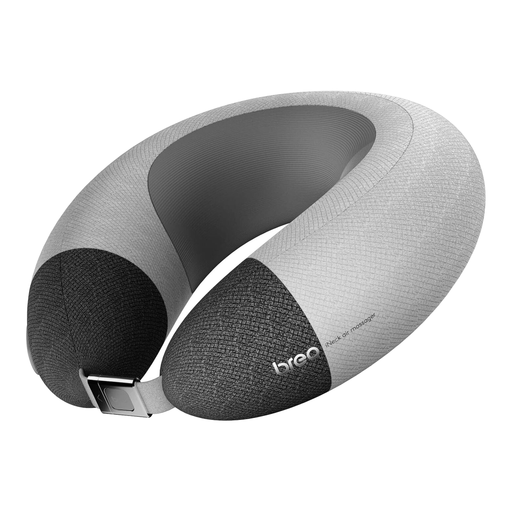
Why This Fits Their Persona: Specifically designed for those who suffer from neck stiffness on planes, trains or at their desk. Its unique inflatable design makes it exceptionally portable, fitting easily into a carry-on or work bag.
It avoids the "one-size-fits-all" trap by being a highly specialised tool. It doesn't pretend to be a full-body massager; it excels at providing targeted neck relief with an ergonomic U-shape that general-purpose guns can't match.
Inflates and deflates with the touch of a button for superior portability. It also features a soothing heat function and is rechargeable via a standard USB port.
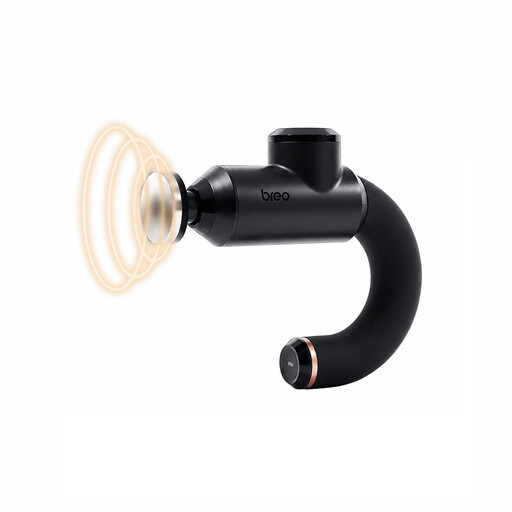
Why This Fits Their Persona: For athletes and dedicated gym-goers who require powerful post-workout recovery. This user needs a device that can deliver genuine deep tissue therapy to aid muscle repair and reduce soreness effectively.
It focuses on the metrics that matter: a 12 mm amplitude for true deep tissue reach and a high stall force of up to 19 kg. This demonstrates it's a serious tool built for performance, not just high RPM numbers.
Features a fast-heating head that warms up in 5 seconds for combined heat and percussion therapy. It also includes six specialised massage heads and convenient USB-C charging.
For most people, applying a percussion massager to a single muscle group for 30 seconds to 2 minutes is effective. It's important to keep the device moving and not press too hard. Listen to your body; if you feel sharp pain, stop immediately. Start on the lowest setting to see how your muscles react before increasing the intensity.
The key difference is the motion and depth. A percussion massager, like a massage gun, uses a head that moves back and forth in a rapid, piston-like motion, delivering deep pulses into the muscle tissue. This is ideal for breaking up knots and treating deep-seated tension. A vibration massager typically provides a more superficial, oscillating movement across the skin's surface, which can be soothing but doesn't offer the same deep tissue benefits.
While some people use the smaller attachments of a massage gun on the arch of their foot, a dedicated electric foot massager is often a more appropriate and effective tool. These devices are ergonomically designed to conform to the shape of the foot, using a combination of rollers, kneading discs and air compression to specifically target the plantar fascia and surrounding muscles. For any chronic pain, it is always advisable to consult a healthcare professional for a proper diagnosis and treatment plan.