
24/7 Customer Support

Free returns

Same-day & Next-day Delivery

Quality Guaranteed

Unlock Your Welcome Offers: FREE Delivery | Up to 80% OFF | Free 30-day JoyPlus trial
Download the APP
Waking up to streaming condensation on your windows is a familiar sight for many in the UK. That persistent damp feeling in the air, the musty smell in wardrobes and the struggle to dry laundry indoors can make a home feel less than comfortable. These are all signs of excess humidity, which can lead to bigger problems like mould and damage to your property.
A good home dehumidifier is a practical and effective way to tackle these issues head-on. However, with so many types, sizes and features available, choosing the right one can feel overwhelming. This guide is designed to cut through the clutter, explaining the key things you need to consider and highlighting some recommended models to help you find a suitable solution to reduce humidity at home.
Before you start browsing, understanding a few key differences between models will help you narrow down your search and find a machine that truly fits your needs.
The first major choice is the type of technology the dehumidifier uses.
Dehumidifier capacity is measured in how many litres of water it can extract per day (L/day). This figure is usually based on specific test conditions (e.g., 30°C and 80% humidity), so real-world performance will vary.
Here are a few standout options that cater to different needs and spaces.
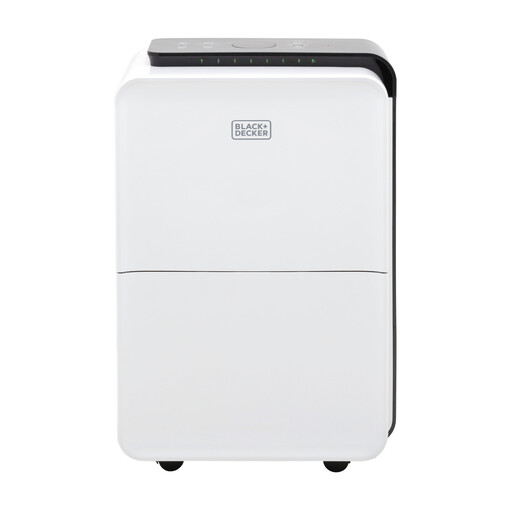
Why It Stands Out: This is a powerful compressor unit designed for tackling significant humidity in larger areas. Its high extraction rate of up to 30 litres per day makes it a formidable tool against persistent damp and condensation. The 4-in-1 functionality adds great versatility, with modes for automatic dehumidifying, continuous drying, laundry and even air refreshing with its active carbon filter.
Pros:
Who is it for? Households with large, open-plan spaces, basements or persistent damp issues that require a high-performance solution.
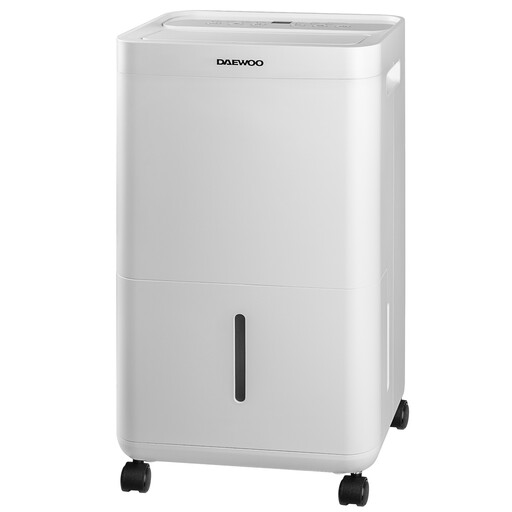
Why It Stands Out: This Daewoo model offers a fantastic balance of performance and features. With a solid 16-litre per day extraction rate, it's well-suited for most UK rooms. Its standout feature is the integrated air purifier with a carbon filter, which helps remove odours and particles from the air while it dehumidifies.
Pros:
Who is it for? Anyone looking for a versatile, mid-capacity unit for a bedroom or living room, who would also benefit from improved air quality.
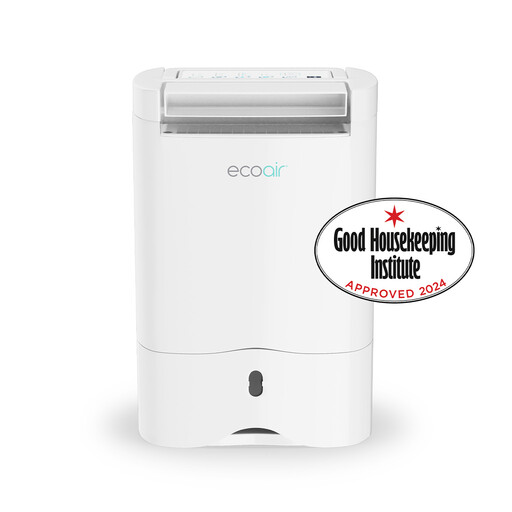
Why It Stands Out: As a desiccant dehumidifier, the EcoAir DD3 Slimline excels where compressor models falter: in the cold. It maintains strong performance in temperatures below 15°C, making it the perfect choice for a garage, boat, caravan or unheated conservatory. Its slim profile also allows it to fit into tighter spaces.
Pros:
Who is it for? Those needing to control damp in colder environments like garages, utility rooms or workshops where a compressor model would be less effective.

Why It Stands Out: This mini dehumidifier uses Peltier (thermo-electric) technology, which makes it incredibly compact and quiet. It's not designed to dry a whole room, but it's a brilliant solution for targeting small, enclosed spaces where mustiness can build up.
Pros:
Who is it for? People looking for a discreet solution to tackle damp in very small spaces like wardrobes, cupboards, small bathrooms or on a windowsill to stop condensation.
If our top picks don't quite match what you're looking for or you'd like to explore a wider range of features, we have more to see. Browse our full collection of automatic dehumidifier models to find the perfect fit for your home.
Where is the best place to put a dehumidifier? For best results, place your dehumidifier on a flat, stable surface with at least 50cm of clearance around it for good airflow. If you're targeting a specific issue like window condensation, place it nearby. For general humidity control in a larger area, a central location like a landing or hallway can be effective.
How long should I run a dehumidifier each day? This depends on your home's humidity. Many modern units feature a humidistat that lets you set a target humidity (e.g., 50%). The machine will then cycle on and off automatically to maintain this level, which is the most efficient way to run it. If using it manually for a damp problem, you might run it for 8-12 hours a day until the issue is under control.
Do dehumidifiers use a lot of electricity? Energy use varies by type and size. Generally, a dehumidifier's running cost is comparable to that of a refrigerator. To keep costs down, choose a model with the right capacity for your space and use features like a humidistat or timer to ensure it only runs when necessary. Mini Peltier models use very little power, while larger compressor or desiccant units will use more.