Waking up to windows streaming with condensation, spotting the first signs of mould in the corners of a room or dealing with that persistent musty smell are common frustrations in many UK homes. Excess indoor humidity is not just uncomfortable; it can also contribute to property damage and a less healthy living environment. A quality dehumidifier is a straightforward and effective tool for managing this, but with so many types, sizes and features, choosing the right one can feel overwhelming.
As a Joybuy Product Recommendation Officer, my role is to help you understand the key considerations for selecting an appliance that genuinely suits your needs. This guide cuts through the marketing clutter to provide clear, practical advice on finding the right dehumidifier for your home, whether you're tackling serious damp or simply want to speed up laundry drying on a rainy day.
Key Considerations Before You Buy a Dehumidifier
Making the right choice comes down to understanding your specific environment and needs. Here are a few crucial factors to consider.
1. Compressor vs. Desiccant: Understanding the Technology
The most significant choice you'll make is between a compressor (or refrigerant) and a desiccant dehumidifier. They work differently and are suited to different conditions.
- Compressor Dehumidifiers: These work much like a mini-fridge. They draw in air, cool it to condense the moisture and collect the water in a tank. They are most energy-efficient in warmer, heated parts of the home where the temperature is consistently above 15-20°C. They are a popular choice for main living areas and bedrooms during most of the year.
- Desiccant Dehumidifiers: These use a special moisture-absorbing material (the desiccant) to extract water from the air. They are not reliant on temperature and perform consistently well even in cooler environments. This makes a desiccant dehumidifier an excellent option for unheated spaces like garages, conservatories, utility rooms or for use during colder winter months. They also tend to be lighter and quieter than compressor models of a similar capacity.
2. Capacity and Sizing: Matching the Machine to the Room
A dehumidifier's power is measured by its extraction rate, stated in litres per day (e.g., 10L/day). It's important to know that this figure is typically measured under ideal laboratory conditions (e.g., 30°C and 80% humidity), so real-world performance will vary. However, it serves as a useful guide:
- Small Spaces (up to 15m?): For wardrobes, small bedrooms or utility cupboards, a compact or mini portable dehumidifier with an extraction rate under 10L/day is usually sufficient.
- Medium Rooms (15-25m?): For average-sized living rooms or master bedrooms, a model in the 10-20L/day range offers a good balance of performance and efficiency for general condensation control.
- Large Areas or High Humidity (25m?+): For open-plan spaces, large basements or homes with significant issues with damp, a high-capacity unit of 20L/day or more will be far more effective.
3. Essential Features for Convenience and Efficiency
Beyond the core technology, certain features can make a big difference to your daily use.
- Laundry Mode: A dedicated setting that runs the fan at high speed and directs airflow to help with drying clothes indoors, a common need in the UK.
- Humidistat: This allows you to set a target humidity level (e.g., 50%). The machine will then automatically switch on and off to maintain it, saving energy and preventing the air from becoming too dry.
- Continuous Drain: If you don't want to empty the water tank manually, look for a model with a continuous drain outlet. You can attach a hose to direct the collected water straight into a sink or drain.
- Timer: A programmable timer lets you schedule when the unit operates, which is useful for running it during off-peak electricity hours or when you are out of the house.
- Quiet Operation: If the unit is for a bedroom or living area, check the noise level, measured in decibels (dB). A quiet dehumidifier will typically operate below 45dB on its lower settings.
Top Product Recommendations
Here are a few models that stand out for their features and suitability for common UK household scenarios.
BLACK+DECKER 30 L Smart Dehumidifier
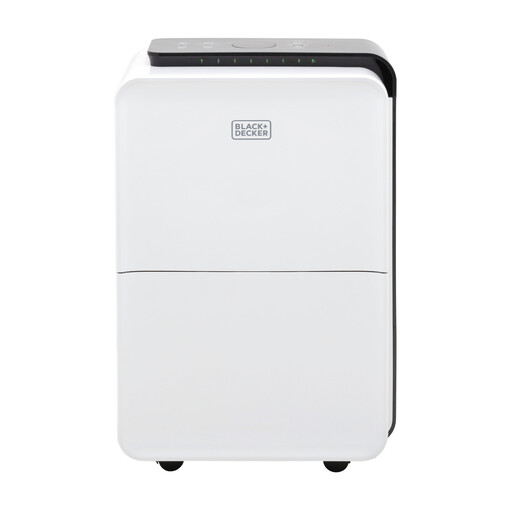
- Why It Stands Out: This is a powerful compressor model designed for tackling significant humidity problems in larger spaces. Its high extraction rate and versatile 4-in-1 functionality make it a comprehensive solution for air quality management in a busy dehumidifier for home setting. The digital controls and timer add a layer of modern convenience.
- Pros:
- High extraction capacity of up to 30 litres per day.
- Large 4-litre water tank with auto shut-off and continuous drain option.
- Four modes: Auto, Continuous, Clothes Drying and Air Refresh with a carbon filter.
- Adjustable humidistat and a 24-hour programmable timer.
- Who is it for? Ideal for those with large, open-plan living areas, damp basements or entire homes prone to persistent condensation and damp.
ecoair DD3 Slimline Desiccant Dehumidifier
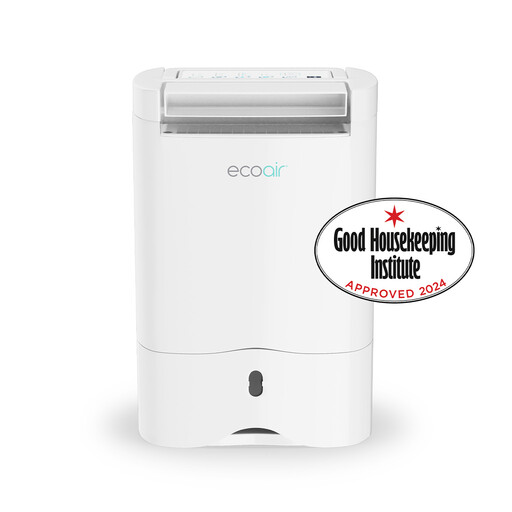
- Why It Stands Out: As a desiccant dehumidifier, the DD3 Slimline's key advantage is its excellent performance in cooler temperatures where compressor models struggle. Its slim profile and quiet operation make it highly adaptable for various rooms, including those where noise is a concern.
- Pros:
- Desiccant technology provides consistent extraction in low temperatures.
- Extraction rate of up to 10 litres per day.
- Dedicated Laundry Mode for efficient clothes drying.
- Slim, lightweight and relatively quiet operation.
- Who is it for? A great choice for bedrooms, home offices or for use in unheated spaces like utility rooms, garages or boats during the colder months.
ecoair Vesto Specialist Dehumidifier
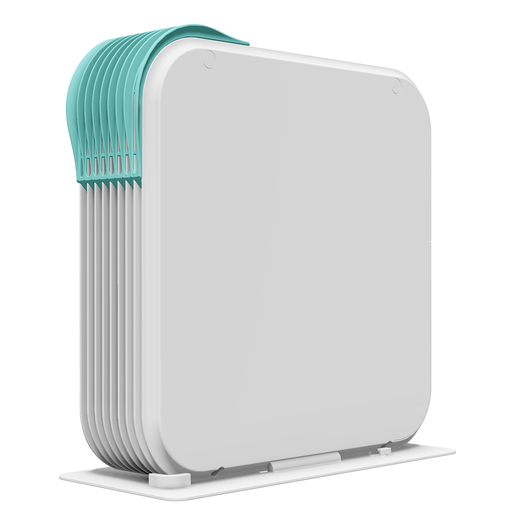
- Why It Stands Out: The Vesto uses thermoelectric (Peltier) technology, which means it has no compressor and is exceptionally quiet and compact. It's not designed for large rooms but excels at targeted mould prevention and moisture control in small, enclosed spaces.
- Pros:
- Very quiet thermoelectric technology.
- Extremely compact and portable dehumidifier design.
- Low energy consumption.
- Simple one-touch operation with auto shut-off.
- Who is it for? Perfect for placing inside a wardrobe, a small utility cupboard, a box room or on a desk in a home office to manage localised humidity.
Looking for Other Options?
The models above cover some of the most common needs, but every home is different. If you're looking for different capacities, specific features or accessories, you can explore our wider selection of dehumidifiers and accessories to find the perfect fit for your space.
Frequently Asked Questions
Where is the best place to put a dehumidifier?
For optimal performance, place your dehumidifier on a flat, stable surface with at least 20-50cm of clear space around it to ensure good airflow. If you're targeting a single room, the centre is often best. For tackling general humidity in a flat or house, a central location like a landing or hallway can be effective.
Should I run a dehumidifier all the time?
It's often not necessary. Most modern dehumidifiers feature a humidistat, which allows you to set a desired humidity level (40-50% is generally recommended for comfort and mould prevention). The unit will then cycle on and off automatically to maintain this level, which is the most energy-efficient way to operate it. You may wish to run it continuously when first tackling a severe damp problem or when using a laundry mode.
How do I know what size dehumidifier I need?
This depends on your room size and the level of humidity. As a general rule: use a compact model (under 10L/day) for small, single rooms or cupboards; a mid-range model (10-20L/day) for average living rooms or bedrooms; and a large-capacity model (20L/day or more) for open-plan areas, basements or homes with persistent dehumidifier for damp issues.


