
24/7 Customer Support

Free returns

Same-day & Next-day Delivery

Quality Guaranteed

Unlock Your Welcome Offers: FREE Delivery | Up to 80% OFF | Free 30-day JoyPlus trial
Download the APP
Waking up to windows streaming with condensation, spotting the first signs of damp on a wall or struggling to get laundry dry indoors are familiar challenges in many UK homes. Excess moisture in the air not only feels uncomfortable but can also lead to musty odours and create the perfect conditions for mould to grow. A quality dehumidifier is an effective tool for managing indoor humidity, helping to protect your home and improve your living environment.
As the Joybuy Product Recommendation Officer, my role is to help you navigate the options available. This guide cuts through the technical jargon to explain what really matters when choosing a dehumidifier, ensuring you find a model that suits your specific needs, from tackling a damp patch in a small bedroom to drying a full load of laundry on a rainy day.
Selecting the right appliance can feel overwhelming with so many types and features on the market. Focusing on these key considerations will help you make a practical choice.
The first major decision is the type of technology the dehumidifier uses, as this determines where it will perform most effectively.
A dehumidifier's power is measured by its extraction rate, stated in litres per day (e.g., 10L/day). This figure represents the maximum amount of water the unit can collect in 24 hours under specific test conditions (typically around 30°C and 80% humidity).
For a small, enclosed space like a wardrobe or a box room with minor condensation, a small dehumidifier with a low extraction rate (under 5L/day) may be sufficient. For a medium-to-large bedroom or living room experiencing persistent damp, a model with a 10-16L/day capacity is more appropriate. For very large, damp areas like basements or open-plan homes, you might consider units with a capacity of 20L/day or more.
Beyond the core technology, certain features can significantly enhance a dehumidifier's convenience and effectiveness.
Based on their features and suitability for common UK household needs, here are some standout models to consider.
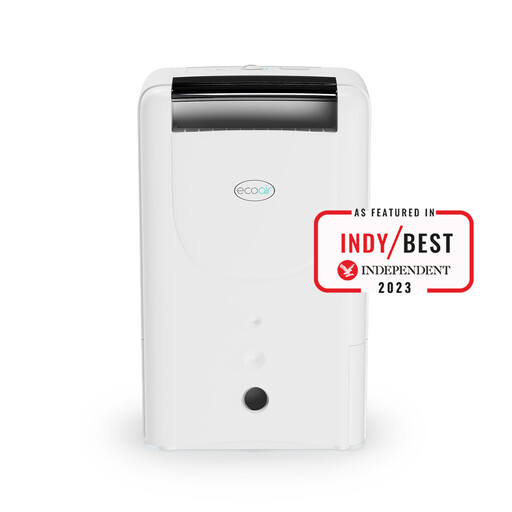
Why It Stands Out: As a desiccant model, the EcoAir DD1 excels where many compressor units falter: in the cold. It maintains strong performance in unheated rooms, making it a versatile workhorse for garages, utility rooms and chilly bedrooms. Its straightforward rotary controls and dedicated laundry mode add to its practical, no-fuss appeal.
Pros:
Who is it for?: Anyone needing to tackle damp in cooler parts of the home or looking for a reliable appliance to help with indoor laundry drying throughout the year.
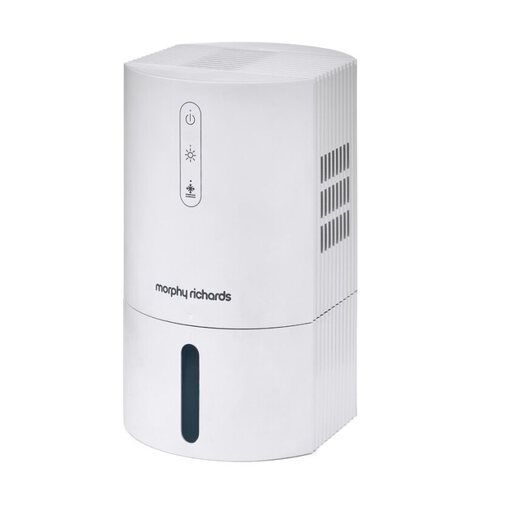
Why It Stands Out: This compact unit is designed for targeted dehumidification in small spaces. With its very low power consumption (approx. 23 W) and near-silent operation (approx. 38 dB), it's perfect for placing in a bedroom, a small home office or inside a wardrobe to prevent mustiness without being intrusive.
Pros:
Who is it for?: Those needing to stop condensation and dampness in a specific, small area like an en-suite bathroom, wardrobe, or on a windowsill in a compact room.
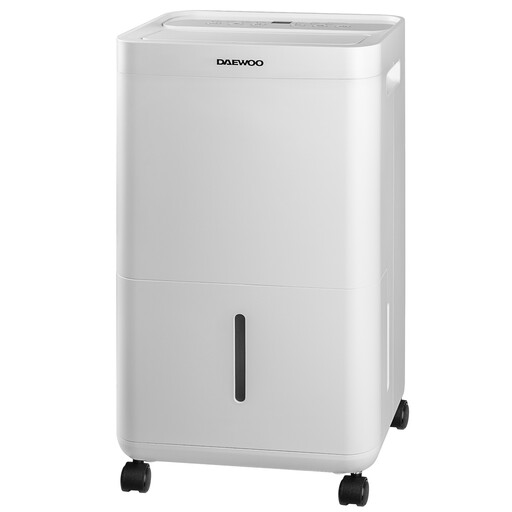
Why It Stands Out: This Daewoo model is a powerful 2-in-1 solution, combining a high-capacity 16L/day compressor dehumidifier with an integrated air purifier. It's built for larger living spaces and offers excellent flexibility with four operating modes, including a quiet mode and a laundry setting. The digital display and continuous drain option make it a convenient, modern appliance.
Pros:
Who is it for?: Homeowners dealing with significant humidity issues in main living areas or open-plan layouts, who also want the added benefit of cleaner air.
While these recommendations cover a range of common needs, every home is unique. You may require a model with specific dimensions for a kitchen countertop or a different capacity for a large basement.
If you're looking for a model specifically for your kitchen or want to browse a wider selection, explore our full range of kitchen dehumidifiers.
What is the ideal humidity level for a home in the UK? For comfort and to prevent issues like mould, the ideal relative humidity level in a home is generally between 40% and 60%. Many dehumidifiers with a built-in humidistat can be set to automatically maintain this range, operating only when needed.
How much does it cost to run a dehumidifier? Running costs vary depending on the unit's power rating (in watts), the price of your electricity and how long it runs. To keep costs down, choose an energy efficient dehumidifier that is correctly sized for your room and use a model with a humidistat. Desiccant models may use more energy than compressor types in warm rooms, but they are far more effective in the cold, making them a more efficient choice for unheated spaces.
Can a dehumidifier help with mould? Yes, a dehumidifier is a crucial tool in the fight against mould. Mould thrives in damp conditions. By reducing the moisture in the air, a dehumidifier helps to stop condensation and creates an environment where it is difficult for mould to grow and spread. While it will not remove existing mould (which should be cleaned away safely), it is highly effective at preventing its return.