
24/7 Customer Support

Free returns

Same-day & Next-day Delivery

Quality Guaranteed

Unlock Your Welcome Offers: FREE Delivery | Up to 80% OFF | Free 30-day JoyPlus trial
Download the APP
Waking up to condensation streaming down your windows is a familiar sight in many UK homes. That persistent damp feeling in the air, the musty smell in wardrobes and the slow, frustrating process of drying laundry indoors are all signs of excess humidity. Left unchecked, this can lead to more serious issues with damp and mould.
A quality dehumidifier is a straightforward and effective tool for managing moisture levels, creating a healthier and more comfortable living environment. But with so many types and sizes available, choosing the right one can feel overwhelming. This guide is designed to cut through the clutter, explaining the key features to look for and highlighting a few models suited to different needs and spaces across the UK.
Before looking at specific models, it helps to understand the core differences and features that will impact performance in your home.
There are three main technologies, each with its own strengths:
Here are our recommendations, selected to cover a range of common household needs.

Why It Stands Out: This unit uses ultra-quiet Peltier technology, making it perfect for spaces where noise is a concern. Its tiny footprint allows it to be placed discreetly in the smallest of areas where a conventional dehumidifier would be too bulky.
Pros:
Who is it for?: Anyone needing a mini dehumidifier to tackle mustiness in a wardrobe, a small utility cupboard or a compact bathroom. Its quiet performance also makes it a good choice as a dehumidifier for a bedroom or nursery where only minor moisture control is needed.
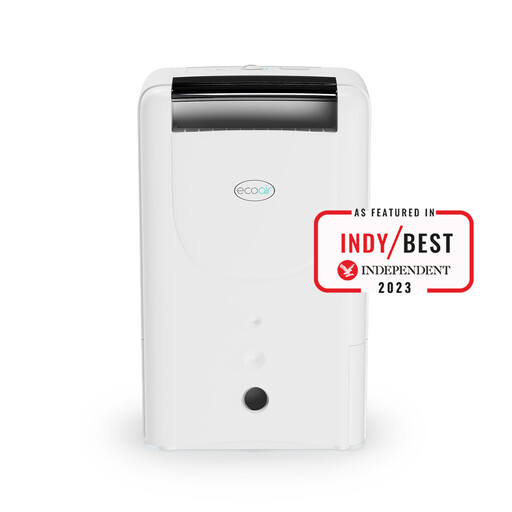
Why It Stands Out: As a desiccant dehumidifier, the EcoAir DD1 excels where many others fail: in the cold. It maintains strong performance in unheated rooms and its dedicated laundry mode is a standout feature for UK households struggling to dry clothes indoors during winter.
Pros:
Who is it for?: This is an excellent all-rounder for flats and smaller houses, particularly for those without a tumble dryer. If you need an effective dehumidifier for damp in a cool conservatory, utility room or bedroom, this model is a strong contender.
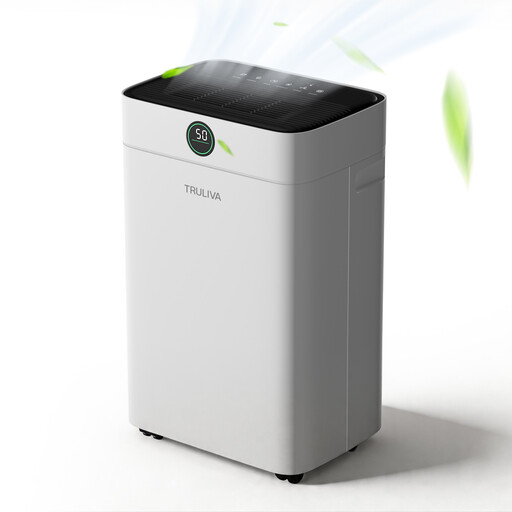
Why It Stands Out: This is a high-capacity compressor model built for tackling significant humidity. With an impressive extraction rate of up to 25 litres per day and the option for continuous drainage, it’s a set-and-forget solution for the most demanding environments.
Pros:
Who is it for?: Homeowners dealing with serious damp in basements, large open-plan spaces or following a leak or flood. Its power and continuous drain function make it a reliable workhorse for maintaining a dry environment in larger properties.
If your main concern is preventing musty odours in drawers or keeping clothes fresh inside a sealed wardrobe, a full-sized electric unit may be more than you need. For these very specific, enclosed spaces, other moisture-absorbing products can be a practical choice.
For targeted moisture control in smaller enclosed spaces, explore our range of Wardrobe Dehumidifiers.
1. How do I know if I need a dehumidifier? Common signs of excess humidity in a home include persistent condensation on the inside of windows, black mould spots appearing on walls or sealant, a lingering musty smell and wallpaper beginning to peel.
2. How much does it cost to run a dehumidifier in the UK? Running costs depend on the unit's power consumption (measured in watts), how many hours a day it runs and your electricity tariff. Desiccant models can have a higher wattage but may resolve damp issues faster in cold rooms, while modern compressor models are generally very energy-efficient in heated homes. Look for models with an auto-humidity sensor (humidistat), which turns the unit off once the desired humidity is reached, saving energy.
3. Can a dehumidifier help with drying clothes indoors? Absolutely. Using a dehumidifier for drying clothes is one of their most popular uses. Many models feature a 'laundry mode' that runs the fan at high speed for faster drying. A desiccant dehumidifier is particularly good for this, as the slightly warm air it expels helps to dry clothes even more quickly, often proving more cost-effective than a tumble dryer.