
24/7 Customer Support

Free returns

Same-day & Next-day Delivery

Quality Guaranteed

Unlock Your Welcome Offers: FREE Delivery | Up to 80% OFF | Free 30-day JoyPlus trial
Download the APP
Choosing a first camera can be surprisingly difficult. Product pages often lead with large megapixel figures, “5K” recording and long zoom numbers, yet these specifications do not always indicate how useful a camera will be in everyday UK conditions.
A suitable beginner camera should be straightforward to operate, portable enough to carry regularly and matched to how you actually plan to shoot. A student taking photos around campus has different needs from a traveller, family user or aspiring vlogger.
A 64MP or 80MP label may sound impressive, but resolution is only one part of image quality. Sensor size, lens quality, focus performance, lighting and image processing also affect the final result. High-resolution modes can create larger files without producing noticeably better detail in low light.
For casual photography, check whether the camera offers reliable autofocus, sensible image sizes and easy file transfer rather than focusing only on the headline pixel count.
A camera with optical zoom uses the lens to magnify the subject before the image is recorded. Digital zoom enlarges part of the image electronically and can reduce detail or make camera shake more obvious.
When comparing a compact digital camera, check whether the listing clearly identifies the zoom as optical, digital or a combination of both. For travel, family events and outdoor photography, genuine optical zoom is generally more useful than a large digital zoom number.
Many cameras are not waterproof without a dedicated housing. Some action cameras are water-resistant only when their supplied case is correctly sealed, while ordinary point-and-shoot cameras should be kept away from rain and splashes.
Always check the exact waterproof conditions, depth rating and whether a case is included. A waterproof action camera also needs its seals kept clean and its ports properly closed before entering water.
For a digital camera for photography, still-image resolution matters, but it should be considered alongside the sensor and lens. For video, 4K provides more detail than 1080p, while frame rate affects motion. A 30fps mode suits general recording; 60fps can look smoother for movement, and higher frame rates may be useful for slow motion.
Do not assume every advertised “5K” or “4K” mode offers the same quality. Check the frame rate, available storage and whether the camera may crop the image at higher settings.
Electronic image stabilisation (EIS) can reduce the appearance of small movements in handheld footage. Mechanical systems, such as a 3-axis gimbal, physically stabilise the camera and can be particularly useful for walking videos and vlogging.
Stabilisation does not replace good technique or a tripod. It can also use additional processing or crop the image, so compare the stabilisation type and recording modes rather than relying on the label alone.
Most beginner cameras use a microSD or SD card. Check the supported capacity and speed rating. For demanding 4K recording, a card rated U3 or V30 may be required to reduce recording interruptions, although the camera manual should take priority.
Wi-Fi can simplify transfers to a phone, but it may consume battery power. Consider carrying a spare battery or power bank, particularly on day trips. In the UK, use the supplied or compatible 5V charging equipment where specified, and avoid unsuitable high-wattage chargers.

Why This Fits Their Persona: A simple option for students, teenagers and first-time buyers wanting a traditional compact camera for everyday photos and videos.
Its listed 8X optical zoom is distinct from digital enlargement, while EIS is specified for handheld video. It is not waterproof, so the weather limitation is clear.
64MP still images, 5K/25fps video, front and rear lenses, autofocus and Wi-Fi connectivity.
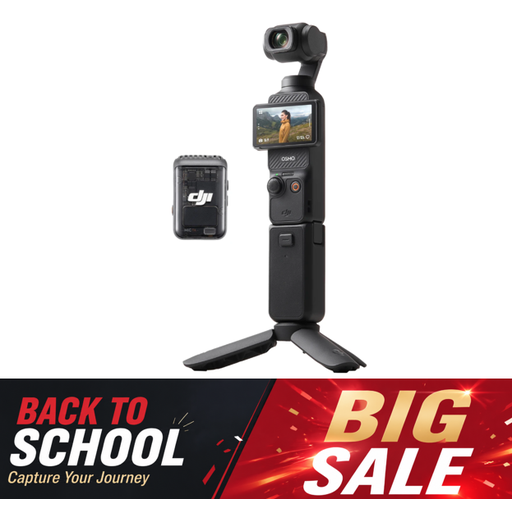
Why This Fits Their Persona: Suited to aspiring vloggers, travel creators and users who prioritise smooth footage and integrated audio over a conventional camera shape.
The 3-axis mechanical stabilisation is clearly specified rather than relying only on electronic processing. The rotating 2-inch screen helps with vertical and horizontal framing.
1-inch CMOS sensor, 4K/120fps recording, ActiveTrack 6.0, fast focusing and DJI Mic 2 transmitter included in this combo.
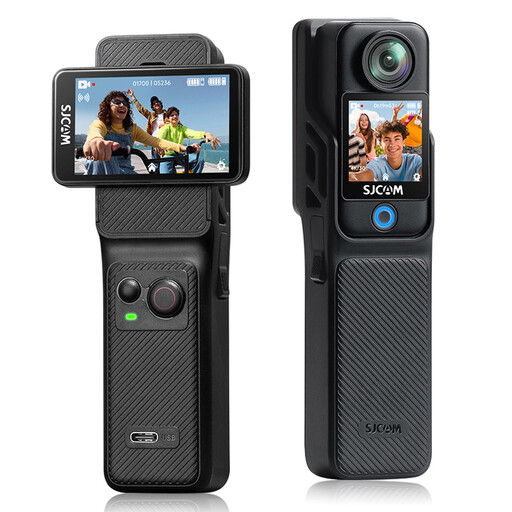
Why This Fits Their Persona: A practical match for cycling, hiking, fishing and family outdoor trips where a compact, case-protected camera and extended recording are priorities.
The 30m water depth applies with the waterproof case. The product also specifies 6-axis stabilisation and a stated recording time of up to 437 minutes with the handle and auxiliary battery.
4K/30fps video, dual touchscreens, 5GHz Wi-Fi, 16MP photos and microSD support up to 512GB.
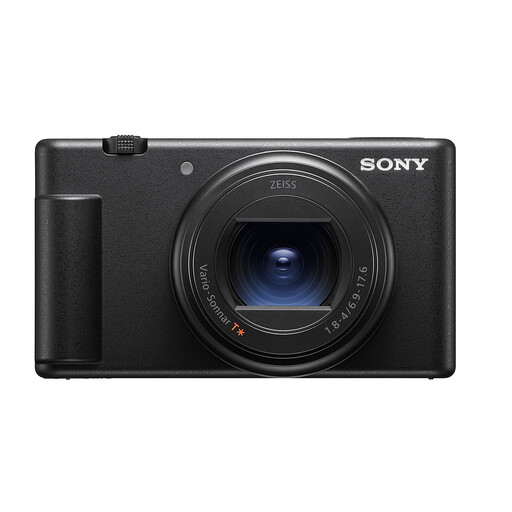
Why This Fits Their Persona: Designed for users wanting a compact hybrid camera for travel scenes, portraits, social video and more manual control as their skills develop.
The 18–50mm lens range is stated as a wide-angle zoom, avoiding ambiguity around a headline digital zoom figure. It is not water-resistant, making outdoor precautions essential.
20.1MP 1-inch stacked sensor, 4K video, RAW capture, built-in ND filter and smartphone transfer through Sony’s Creators’ App.
We have compiled a complete, real-time list of products that fully satisfy these strict selection criteria and UK safety regulations.
Yes, particularly compact models with automatic modes, autofocus and touch controls. A point-and-shoot camera can reduce setup decisions, while a more advanced compact model may offer manual settings as your confidence grows.
Lifespan depends on battery care, storage, moisture exposure and how frequently it is used. Keep the camera dry, protect the lens, avoid extreme heat and remove the battery during extended storage where the manufacturer recommends it. Memory cards and batteries may need replacing sooner than the camera itself.
Allow for a compatible memory card, spare battery, protective case and occasional charging accessories. Action cameras may also require a waterproof housing or mounting system. Before buying, check which accessories are included, as a low purchase price can become less attractive if essential items must be added separately.