
24/7 Customer Support

Free returns

Same-day & Next-day Delivery

Quality Guaranteed

Unlock Your Welcome Offers: FREE Delivery | Up to 80% OFF | Free 30-day JoyPlus trial
Download the APP
The daily ritual of washing up often ends with a familiar kitchen challenge: a growing pile of wet dishes, pots and cutlery with nowhere to go. Leaving them on the side can create clutter and damp patches, while stacking them precariously invites accidents. A well-chosen dish drying rack is more than just a temporary storage spot; it's a fundamental tool for maintaining a tidy, hygienic and efficient kitchen.
However, with so many styles, materials and sizes available, finding the right one for your space can feel overwhelming. This guide is designed to simplify your decision. As a Joybuy Product Recommendation Officer, my role is to help you understand the key features to look for, so you can select a practical solution that fits your kitchen and your daily routine. We will explore some popular designs and highlight a few options that balance durability, function and smart use of space.
Before you decide, consider these three practical points. They will help you narrow down the options and find a rack that truly works for you.
The material of your dish rack directly impacts its longevity and how easy it is to keep clean. A stainless steel dish rack is a popular choice in UK kitchens for good reason. It is resistant to rust and corrosion, which is essential for an item that is constantly exposed to water. Furthermore, its non-porous surface is simple to wipe down and sanitise. Many racks combine a steel frame with a polypropylene (PP) tray, which is a durable and lightweight plastic that is easy to remove and wash, preventing the build-up of grime and limescale.
Where you place your rack is a key consideration. A countertop dish drainer is the traditional choice, offering easy access. For these models, look for a dish rack with drainboard that effectively channels water back into the sink. Some feature a swivelling spout for flexible positioning.
Alternatively, an over the sink dish rack is an excellent space saving dish rack solution. These designs fit across your sink basin, allowing water to drip directly down the drain. This frees up valuable counter space, making them ideal for smaller kitchens and helps keep your work surfaces completely dry.
Consider how many dishes you wash in a typical day. A large family might need a high-capacity, two-tier kitchen organiser rack, while an individual or couple may find a compact, single-layer rack sufficient. If you have limited space or only need a rack occasionally, a collapsible dish drainer is a brilliant option. These can be folded flat and tucked away in a cupboard or drawer, giving you back your counter space when you need it.
Based on functionality, materials and user-centric design, here are a few recommendations to suit different kitchen needs.

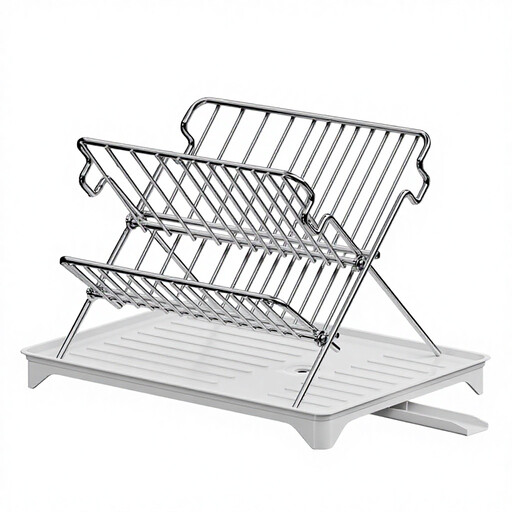
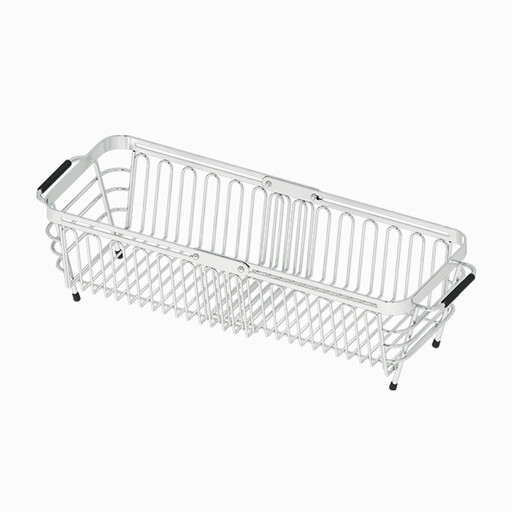
A well-organised kitchen is just the start. If you're looking to bring similar efficiency and order to other areas of your home, such as your wardrobe or utility room, exploring durable storage solutions is key. An organised space can simplify your daily routines far beyond the kitchen sink.
For sturdy and practical options to help declutter your living space, take a look at our selection of steel clothes rack.
1. How do I stop my dish rack from getting mouldy or building up limescale? Regular cleaning is essential. If you have a dish rack with drainboard, remove the tray at least once a week and wash it with warm, soapy water. For the rack itself, a quick wipe-down will help. Models made from stainless steel and PP are less prone to mould growth compared to materials like wood, as they don't absorb moisture.
2. Is a stainless steel dish rack worth the investment? For most households, yes. A stainless steel dish rack generally offers better long-term value due to its durability and resistance to rust. In the damp environment of a kitchen, cheaper, coated-metal racks can start to rust or peel over time, whereas stainless steel maintains its integrity and hygienic properties for much longer.
3. What is the most space-saving type of dish rack? The most effective options for saving space are an over the sink dish rack or a collapsible dish drainer. An over-the-sink model uses the empty vertical space above your sink, leaving your counters free for food preparation. A collapsible model offers the flexibility to be stored away completely, which is perfect for very small kitchens or for those who only wash a few items by hand.