
24/7 Customer Support

Free returns

Same-day & Next-day Delivery

Quality Guaranteed

Unlock Your Welcome Offers: FREE Delivery | Up to 80% OFF | Free 30-day JoyPlus trial
Download the APP
As a dog owner, you know the simple joy a ball can bring. It’s more than just a toy; it’s a tool for exercise, bonding and mental stimulation. Yet, the market is flooded with options, and choosing the right one can feel surprisingly complex. Many products make bold claims that don’t stand up to a determined chewer, while others have hidden design flaws that can pose risks to your pet.
My role as a Joybuy Product Recommendation Officer is to help you navigate this landscape. We will look past the marketing hype and focus on the practical details that determine a good purchase. This guide will highlight common pitfalls to avoid and break down the essential features to look for, ensuring you find a ball that is both safe and enjoyable for your canine companion.
A poor choice doesn't just lead to wasted money; it can also result in a destroyed toy within minutes or, more seriously, a safety hazard. Here are three frequent traps to be aware of:
To make an informed decision, focus on these three non-negotiable factors. They are the foundation of a safe and long-lasting toy.
The material of a dog ball dictates its durability, bounce and safety.
This is the most critical safety consideration. A ball must be large enough that it cannot be accidentally swallowed or become lodged in your dog's throat.
Think about how your dog likes to play. The right features can turn a simple ball into an enriching activity.
Based on these practical criteria, here are a few options matched to different needs and profiles.
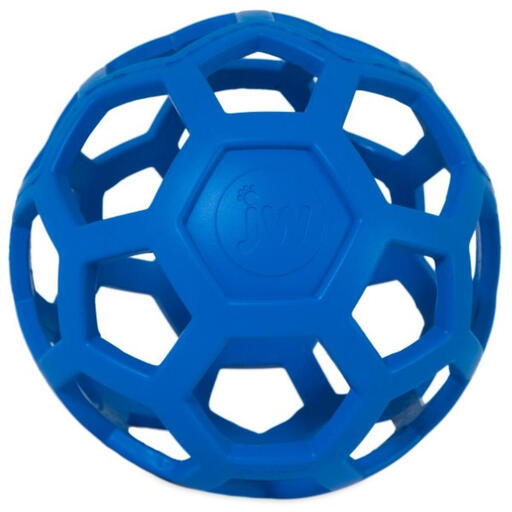
Why This Fits Their Persona: This is for the dog that needs more than just a ball to chase. Its large size and durable natural rubber construction cater to strong jaws, while the open, webbed design is perfect for stuffing with treats or other toys, turning it into an engaging puzzle.
It directly counters the "boredom destruction" pitfall. By providing mental stimulation as a dog treat ball, it channels a dog's energy into problem-solving rather than mindless chewing.
Highly versatile: functions as a fetch toy, a durable chew toy and an interactive puzzle. Made from flexible, natural rubber.
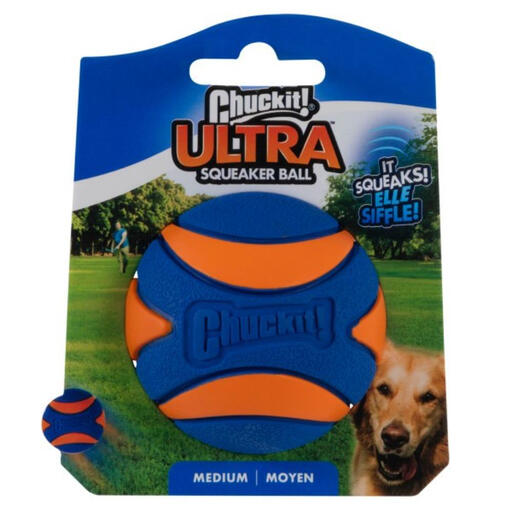
Why This Fits Their Persona: Ideal for the dog that lives for a good game of fetch. Its high-bounce design and compatibility with a dog ball launcher make for exciting, long-distance retrieving. The bright colour ensures it's easily spotted in the park.
It avoids the "abrasive felt" trap of standard tennis balls. The smooth, durable rubber surface is gentler on a dog's teeth and much easier to wipe clean after a muddy play session.
Engineered for fetch with a durable, thickened rubber core and an integrated squeaker for added stimulation. Launcher compatible.
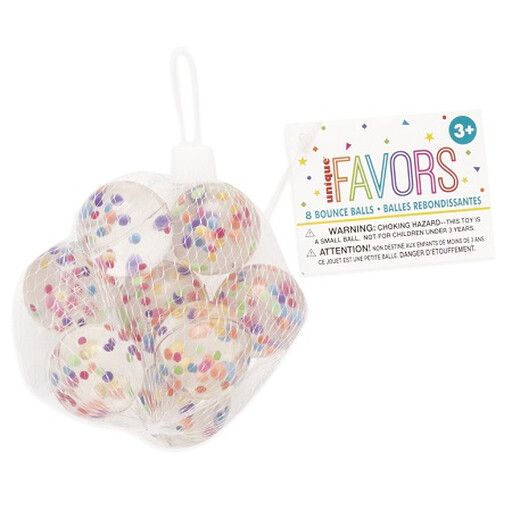
Why This Fits Their Persona: This is for the secondary audience of parents and party planners. These small, colourful bouncy balls are perfect as affordable and fun party bag fillers. The confetti inside adds a visual flair that children enjoy.
It avoids any confusion with pet toys. These are clearly labelled for children's parties (with appropriate safety warnings for small parts) and are priced as bulk-buy items, not premium dog toys.
Excellent value in an 8-pack, making them cost-effective for filling multiple party bags. The bright, eye-catching design is a classic party favour.
We have compiled a complete, real-time list of products that fully satisfy these strict selection criteria and UK safety regulations.
While a quick game of fetch is unlikely to cause harm, prolonged chewing on standard tennis balls is not recommended. The nylon-wool felt is abrasive and can act like fine sandpaper, gradually wearing down the enamel on your dog's teeth (a condition known as "blunting"). For fetch-loving dogs, it's better to choose purpose-built dog tennis balls, which use a softer, non-abrasive material.
The safest ball is one that is too large for your dog to swallow or get stuck in their throat. A good rule of thumb is to choose a ball that cannot fit past the back of their jaw. For brachycephalic (flat-faced) breeds like Pugs or French Bulldogs, be extra cautious and select larger, flatter-shaped toys that are less likely to obstruct their airways.
Durability depends on matching the ball to your dog's chew strength. However, you can extend a toy's life by encouraging "play" over "destruction." Use balls for interactive games like fetch rather than as a solo chew toy. It's also good practice to have a rotation of several different toys to keep your dog engaged and prevent them from focusing all their chewing power on a single item. Always supervise play and remove any ball that shows signs of breaking apart.