
24/7 Customer Support

Free returns

Same-day & Next-day Delivery

Quality Guaranteed

Unlock Your Welcome Offers: FREE Delivery | Up to 80% OFF | Free 30-day JoyPlus trial
Download the APP
A good doormat is the first line of defence for your home, stopping dirt, mud and moisture at the threshold. Yet, finding one that performs well, looks good and lasts more than a single season can be surprisingly difficult. Many of us have been caught out by a mat that promised much but delivered little. Before you make another purchase, let's look at the common pitfalls that lead to disappointment.
The most frequent issues often stem from overlooked design flaws. First is the slippery welcome, where a mat lacks a proper non-slip backing and becomes a hazard on smooth or wet surfaces—a common problem in the UK's damp climate. Second is the one-wash wonder; a mat advertised as washable that sheds, shrinks or falls apart after a single cycle. Finally, there's the fading fa?ade, where a decorative front door mat with a vibrant print looks worn and faded after just a few weeks of use, losing its charm and making your entrance look untidy.
Choosing the right entrance mat means looking beyond the surface pattern and understanding the core features that determine its performance and longevity.
To avoid wasting money on a doormat that doesn't do its job, focus on these three critical areas. They will help you distinguish a durable, effective mat from one that is all style and no substance.
The material of a doormat dictates its primary function. There is no single material that does everything perfectly, so it's important to match it to your needs.
The backing is arguably the most important feature for safety. A mat that slides is not only ineffective but dangerous.
How you clean your mat determines how long it will look good.
To help you find a mat that suits your home and lifestyle, we've matched a few options to different household needs, ensuring they address the common pitfalls.
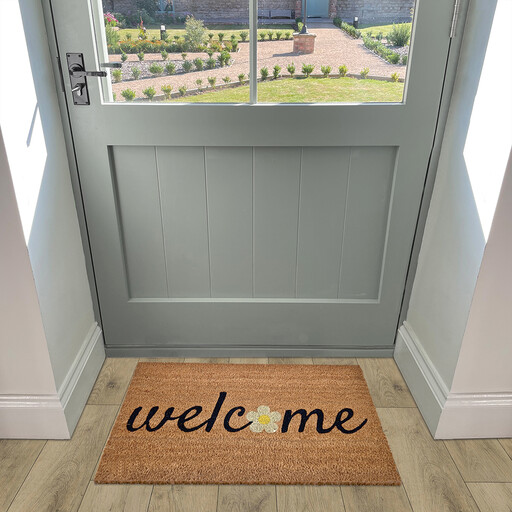
Why This Fits Their Persona: Ideal for those who want a traditional and friendly greeting at their doorstep. The classic coir material and welcoming design suit a variety of home styles, from country cottages to suburban houses, offering a timeless look for a sheltered porch.
It avoids the "slippery welcome" trap with a sturdy PVC backing that provides reliable grip. The fade-resistant print is designed for longevity in a sheltered area, countering the "fading fa?ade" issue seen in lower-quality printed mats.
The natural coir surface provides excellent scraping performance for removing mud and dirt. Its simple, charming design adds personality without being overpowering.
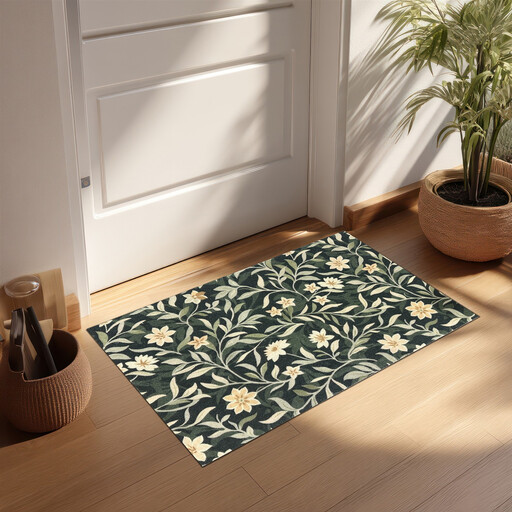
Why This Fits Their Persona: Perfect for those who prioritise sustainability and easy care. This indoor mat is made from 100% PET fibre from recycled plastic bottles, and its elegant floral design suits contemporary interiors. It's ideal for hallways, kitchens or inside the front door.
This mat directly counters the "one-wash wonder" trap by being machine washable at 30°C. Its slip-resistant TPR backing provides a secure grip, preventing it from becoming a "slippery welcome" on hard floors.
It combines eco-friendly construction with practicality. The soft texture is comfortable underfoot, while the durable fibres are designed to withstand daily wear and protect floors.

Why This Fits Their Persona: Built for busy households where function is paramount. This mat is designed to be a workhorse, trapping moisture and dirt effectively in high-traffic areas like entrances, utility rooms or back doors. The neutral grey colour is practical for hiding dirt.
Its durable, non-slip backing provides excellent stability, making it a safe choice and avoiding the "slippery welcome" pitfall. As a machine-washable mat designed for resilience, it is the opposite of a "one-wash wonder".
The highly absorbent cotton fibres are extremely efficient at capturing moisture and fine dust. Its robust construction ensures it is hard-wearing and suitable for long-term use.
We have compiled a complete, real-time list of products that fully satisfy these strict selection criteria and UK safety regulations.
The lifespan of a doormat depends on its material, quality and the amount of foot traffic it receives. A high-quality heavy duty welcome mat in a busy household might last one to two years, while a decorative mat in a low-traffic area could last longer. You should replace your mat when you notice it has lost its texture, the backing is cracked or no longer non-slip or it sheds fibres excessively.
While you can, it's often not the best choice. Outdoor mats, like those made of coir or rubber, are designed to scrape off heavy mud and debris. They are less effective at absorbing fine dust and water, which is the main job of an indoor door mat. Using a dedicated indoor mat made of cotton or microfibre will keep your interior floors much cleaner and drier.
The primary difference is their function. A coir doormat is a natural-fibre scraper, ideal for removing mud and dirt outside. A synthetic mat, often made from recycled materials like PET, is typically an absorber, designed for indoor use to trap water and dust. Synthetic mats also often have the advantage of being a washable doormat, which coir mats are not.