
24/7 Customer Support

Free returns

Same-day & Next-day Delivery

Quality Guaranteed

Unlock Your Welcome Offers: FREE Delivery | Up to 80% OFF | Free 30-day JoyPlus trial
Download the APP
Navigating the world of drones can feel overwhelming. The market is filled with everything from high-end camera platforms for professional videographers to simple, fun models for a weekend in the park. Whether you're a content creator chasing the perfect shot, a hobbyist looking for a new gadget, or a parent searching for a safe and engaging toy drone, finding the right model is key.
This guide is designed to cut through the clutter. As a Joybuy Product Recommendation Officer, my role is to provide clear, practical advice to help you understand your options and select a drone that fits your needs and budget. We'll explore the essential features to look for and highlight a few standout models for different users.
Before you start browsing, it's helpful to consider a few key factors. Thinking about these points will narrow down your search and ensure you get a quadcopter that you'll genuinely enjoy using.
Drones are generally categorised by their intended user. A professional drone will have advanced features, complex controls and a high-price tag, which can be frustrating for a novice. Conversely, a beginner drone is designed for ease of use, often featuring one-touch take-off, altitude hold and durable construction to withstand the inevitable bumps and scrapes of learning. For younger users, a dedicated drone for kids will prioritise safety with features like enclosed propellers and lightweight materials.
What do you plan to do with your drone? If your goal is content creation, a drone with camera capabilities is essential. Look for specifications like video resolution (4K or 8K), sensor size and image stabilisation. For a more immersive experience, an FPV drone (First-Person View) transmits a live video feed from the drone's camera directly to a headset, making you feel as if you're in the cockpit.
Beyond the camera, consider practical flight features. Flight time (typically ranging from 5-10 minutes for toy models to over 30 minutes for premium ones) determines how long you can stay in the air on a single battery. Control range and responsiveness are also crucial, especially for flying in larger, open spaces.
Flying a drone in the UK is regulated by the Civil Aviation Authority (CAA). The rules depend on the drone's weight and whether it has a camera. For any drone weighing 250g or more, you must register for an Operator ID. If you plan to fly it, you'll also need to pass an online theory test to get a Flyer ID. Always fly safely, respect people's privacy and stay away from restricted areas like airports. For the most current information, it's always best to check the official CAA website.
After analysing the market for different types of users, we've selected a few models that offer a great combination of features, performance and value.

Why It Stands Out: This DJI drone is a powerhouse for immersive content creation. It combines the agility of an FPV drone with the imaging quality of a professional camera system. The ability to capture a full 360-degree view in 8K resolution opens up limitless creative possibilities in post-production, allowing you to reframe a single shot from multiple perspectives.
Pros:
Who is it for? Professional videographers, content creators and tech enthusiasts who demand high-end imaging performance and an immersive FPV flying experience.

Why It Stands Out: The Xtreme Airwave is an excellent beginner drone that makes learning to fly fun and accessible. Its simplified controls, including one-button take-off and landing, remove the initial intimidation factor. Once you're comfortable, the pre-programmed stunt drone modes let you perform flips and rolls with ease.
Pros:
Who is it for? First-time flyers and children (ages 8+) looking for a durable and easy-to-operate remote control drone to learn the basics of flight.
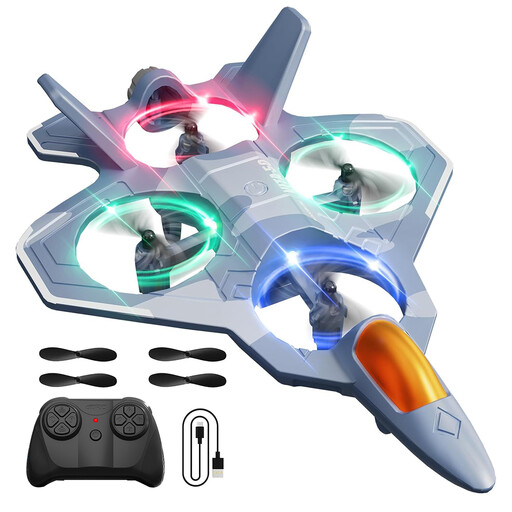
Why It Stands Out: Safety and durability are the core strengths of this toy drone. Made from flexible EPP foam and featuring enclosed propellers, it's designed to withstand bumps and crashes without damaging walls or furniture. The simple controller and headless mode (which makes orientation intuitive) ensure that even young children can get it airborne in minutes.
Pros:
Who is it for? Families and children (ages 8+) seeking a safe, robust and highly entertaining drone for indoor and outdoor play.
If a quadcopter-style drone isn't quite what you're looking for, there are other exciting remote-controlled aircraft to explore. For those who enjoy the mechanics and classic flight patterns of rotary aircraft, a different kind of challenge awaits.
Discover a wide range of models by exploring our RC helicopter category for more options.
Browse RC Helicopters on Joybuy
1. What is the difference between a toy drone and a regular drone? The main differences are in weight, features and regulation. A toy drone is typically very lightweight (often under 250g), has basic controls, shorter flight times and is built for durability and safety over performance. A regular or hobbyist drone with camera is heavier, offers longer flight times, GPS stability and advanced imaging features, and is subject to more stringent CAA regulations.
2. Do I need a licence to fly a drone in the UK? You don't need a "licence" in the traditional sense, but you must adhere to the CAA's 'Drone and Model Aircraft Code'. If your drone is 250g or heavier, you must register for an Operator ID (which you display on the drone). To fly it, you must also pass a free online theory test to get a Flyer ID. These rules are in place to ensure everyone flies safely.
3. What is an FPV drone? FPV stands for First-Person View. An FPV drone uses a camera to send a real-time video feed to a headset worn by the pilot. This creates a highly immersive experience, as if you are sitting in the drone's cockpit. It's popular for drone racing and for capturing dynamic, fast-paced video, as seen with models like the DJI Avata.