
24/7 Customer Support

Free returns

Same-day & Next-day Delivery

Quality Guaranteed

Unlock Your Welcome Offers: FREE Delivery | Up to 80% OFF | Free 30-day JoyPlus trial
Download the APP
Choosing the right food for your cat can feel overwhelming. With so many options on the shelves, it’s difficult to know which bag of kibble will keep your feline companion healthy and happy. Whether you have a playful kitten, a settled adult or a distinguished senior, their nutritional needs change over time. This guide is designed to help you navigate the choices and understand what to look for when selecting a dry cat food in the UK.
We'll cover the key factors to consider, from understanding labels to matching a formula to your cat's specific life stage or health requirements.
Making an informed decision starts with knowing what to look for on the packaging. Here are a few practical points to help you select a suitable diet.
In the UK, when a product is labelled as a 'complete cat food', it means it has been formulated to provide all the essential nutrients your cat needs to thrive, according to established nutritional guidelines. This ensures your cat receives the correct balance of proteins, fats, vitamins and minerals from their daily meals without the need for additional supplements, assuming they are otherwise healthy.
A cat's dietary requirements are not static; they evolve significantly from kittenhood to their senior years.
Some cats may benefit from specialised diets. For instance, formulas designed as cat food for urinary health contain balanced mineral levels to support the lower urinary tract. For cats with sensitivities, a grain-free cat food might be a suitable option, replacing common grains like wheat and corn with alternatives such as potatoes or peas. Always consult a vet if you have concerns about your cat's specific health requirements before changing their diet.
Here are a few options that cater to different life stages and needs, helping you find a suitable match for your cat.
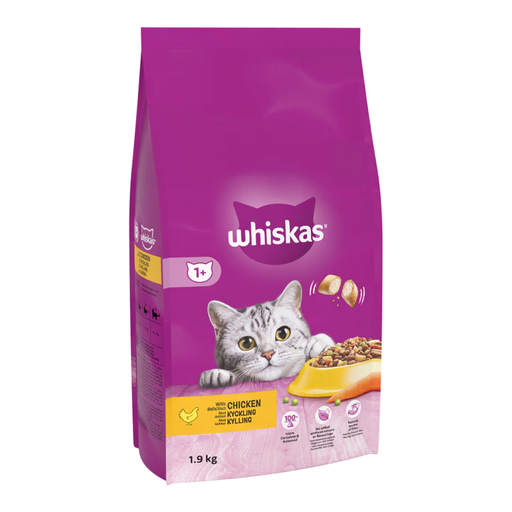
Whiskas 1+ with Delicious Chicken 1.9kg
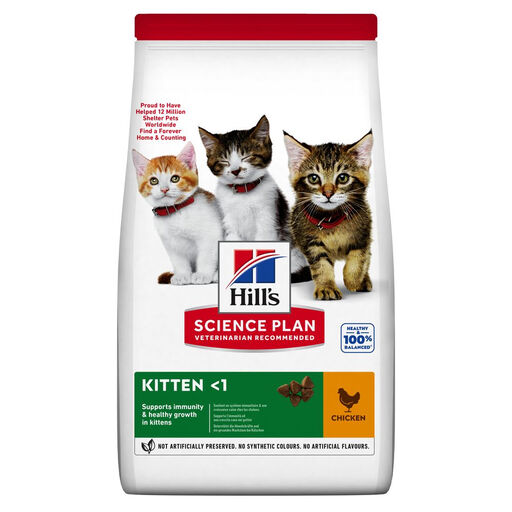
Hills Science Plan Kitten Dry Chicken 1.5kg
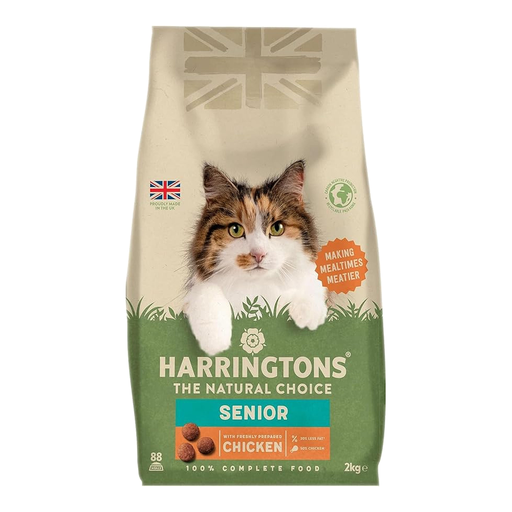
Harringtons Senior Dry Cat Food Chicken 2kg
The products highlighted here are just a starting point. Many cats have a preference for a particular flavour, with chicken cat food being a consistently popular choice. If you'd like to see more varieties that fit this profile, you can browse a wider selection.
Explore our full range of Chicken Dry Cat Food to find the perfect match for your cat's tastes and needs.
1. Is dry food enough for a cat? Yes, a product labelled as a 'complete cat food' is formulated to provide all the nutrients a cat needs for a healthy diet. The main difference from wet food is the low moisture content, so it is crucial to always provide a bowl of fresh, clean water alongside dry kibble.
2. How do I switch my cat to a new dry food? To avoid digestive upset, you should transition your cat to a new food gradually. Over a period of 7-10 days, start by mixing a small amount of the new food with their old food. Slowly increase the proportion of the new food each day until you have fully switched over.
3. What should I look for in a food for older cats?Senior cat food is typically formulated with fewer calories to suit a less active lifestyle and help prevent weight gain. Many formulas also include added supplements like glucosamine and chondroitin to create a cat food for joints, supporting mobility in their later years. These diets are often designed to be highly digestible for older, more sensitive systems.