
24/7 Customer Support

Free returns

Same-day & Next-day Delivery

Quality Guaranteed

Unlock Your Welcome Offers: FREE Delivery | Up to 80% OFF | Free 30-day JoyPlus trial
Download the APP
Welcoming a kitten into your home is a joyous occasion, but it also comes with the responsibility of providing the very best care during their crucial first year. Navigating the world of kitten nutrition can feel overwhelming, with countless options all claiming to be the right choice. As the Joybuy Product Recommendation Officer, my role is to help you understand the key factors in choosing a high-quality diet, ensuring your new companion gets the nutritional foundation they need for a long and healthy life.
This guide will walk you through what to look for in a dry kitten food, offer some practical selection advice and present a few carefully chosen recommendations to help you make an informed decision.
Before looking at specific products, it's helpful to understand the nutritional cornerstones of a kitten's diet. Their needs are very different from those of an adult cat, requiring a specialised formula to support rapid growth and development.
Kittens have immense energy and growth demands, which require a diet rich in protein. Look for formulas where a named meat, such as chicken or turkey, is listed as one of the primary ingredients. A high protein kitten food provides the essential amino acids necessary for building strong muscles, healthy organs and a robust immune system. Many owners find that a chicken kitten food is a palatable and effective choice for their young felines.
A kitten's brain and vision develop at an incredible rate. Docosahexaenoic acid, or DHA, is an omega-3 fatty acid that plays a vital role in this process. It is naturally found in mother's milk and is a key ingredient to look for in a quality kitten kibble. Formulas containing kitten food with DHA, often sourced from fish oil, support healthy cognitive function and retinal development.
This phrase is more than just marketing; it's a regulatory standard. A food labelled as providing complete nutrition for kittens has been formulated to meet the specific nutritional levels established by regulatory bodies like FEDIAF (the European Pet Food Industry Federation). This ensures your kitten receives all the necessary vitamins, minerals (like calcium and phosphorus for strong bones) and taurine in the correct ratios, eliminating the need for additional supplements.
Based on their formulations and nutritional profiles, here are a few standout options designed to support your kitten's first year.
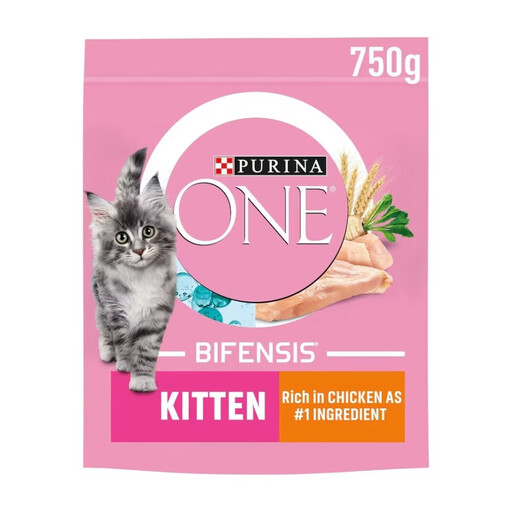
Why It Stands Out: This formula is notable for its focus on digestive health and immunity. It contains dried chicory root, a natural prebiotic that helps nourish good bacteria in the gut. According to the manufacturer, it also includes a unique blend with heat-treated Lactobacillus, designed to support a kitten's natural defences. With 41% protein and chicken as the number one ingredient, it provides a strong foundation for growth.
Pros:
Who is it for?: This is an excellent choice for owners who want to proactively support their kitten's digestive and immune systems from the very beginning.
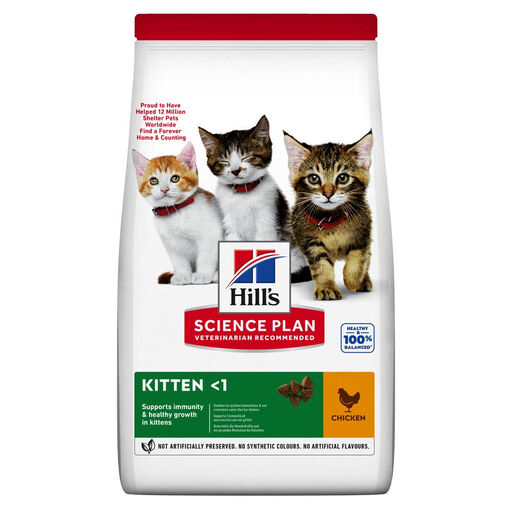
Why It Stands Out: Hill's Science Plan places a strong emphasis on scientifically-backed developmental support. This kitten kibble is formulated with DHA from fish oil to promote healthy brain and eye development, and a precisely balanced mineral content to help build strong bones and teeth. The inclusion of high-quality protein from chicken and turkey meal ensures your kitten has the building blocks needed for lean muscle.
Pros:
Who is it for?: Owners looking for a formula focused on the core pillars of development—brain, bones and teeth—will find this to be a well-rounded option.
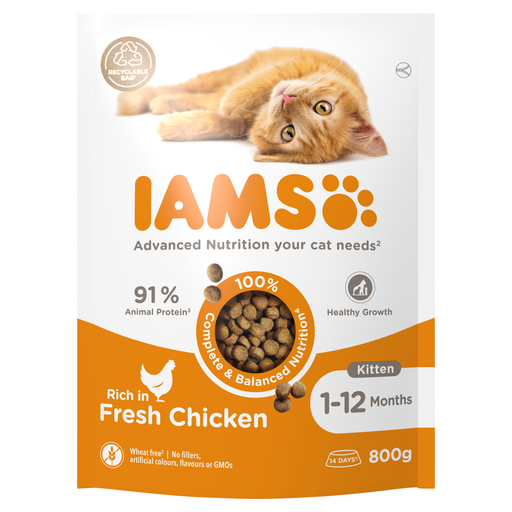
Why It Stands Out: This Iams for Vitality formula is distinguished by its very high proportion of animal-based protein, which the brand states is 91% of the total protein content. With fresh chicken as a key ingredient, it's designed to be highly palatable and digestible. The recipe is also wheat-free, making it a suitable choice for kittens who may have sensitivities. It supports what the manufacturer calls the "seven signs of healthy vitality," covering everything from brain development with DHA to digestive health with prebiotics.
Pros:
Who is it for?: This food is ideal for owners seeking a meat-first, very high-protein diet for their kitten and for those who prefer a wheat-free formulation.
While these are our top recommendations for 2026, we understand that every kitten has unique needs and preferences. Some may thrive on a fish-based diet, while others might require a grain-free formula. To explore a wider selection of specialised diets, browse our full kitten food category.
1. When can kittens start eating dry kitten food? Kittens typically begin to wean off their mother's milk around 3-4 weeks of age. At this point, you can introduce a small amount of dry kitten food moistened with warm water to create a soft gruel. As they grow more confident with chewing, you can gradually reduce the amount of water until they are eating the dry kibble on its own.
2. How long should my kitten eat kitten food? It is generally recommended that kittens continue to eat a specially formulated kitten food until they are around 12 months old. At this stage, they are considered adults and can be slowly transitioned to an adult cat food formula. For larger breeds that mature more slowly, you may wish to consult your vet.
3. Is a high protein kitten food really necessary? Yes, it is. During their first year, kittens experience their most rapid growth phase, building muscle, bone and vital organs. A high protein kitten food provides the essential amino acids required to fuel this intense development, which an adult cat food formula cannot adequately supply.