
24/7 Customer Support

Free returns

Same-day & Next-day Delivery

Quality Guaranteed

Unlock Your Welcome Offers: FREE Delivery | Up to 80% OFF | Free 30-day JoyPlus trial
Download the APP
A kitchen bin is more than just a place for rubbish; it's a part of your daily routine. With recycling becoming increasingly important in UK households, a dual compartment kitchen bin is no longer a luxury but a necessity. However, choosing the right one can be surprisingly difficult. Many models look good online but fail to deliver on practicality, leaving you with a purchase you regret.
As a Joybuy Product Recommendation Officer, my role is to help you navigate the market and identify the features that truly matter. Before you commit, let's look at the common pitfalls that can turn a promising purchase into a daily frustration.
To avoid these issues, focus on a few core specifications. Getting these right ensures your new kitchen recycling bin is a helpful tool, not a hindrance.
The outer body of a bin takes a lot of wear. While plastic can be an affordable option, a steel rubbish bin offers superior durability and is far easier to clean. Look for models made from robust steel or stainless steel, which resist dents and rust. Some modern steel bins also feature fingerprint-proof coatings, which are a great advantage for keeping the exterior looking clean in a busy kitchen.
Bin capacity is measured in litres, and choosing the right size depends on your household.
Crucial Tip: Always check the total height of the bin with the lid fully open. Ensure you have enough clearance if you plan to place it under a countertop or kitchen island.
The small details often make the biggest difference in daily use. A soft close kitchen bin is a feature worth looking for. The dampened lid mechanism prevents loud slamming, which is a welcome relief in any home, especially open-plan living spaces. It also reduces wear and tear on the hinge. When assessing the pedal, look for a wide, sturdy design that feels solid underfoot.
Based on these practical criteria, here are a few options matched to different household needs.
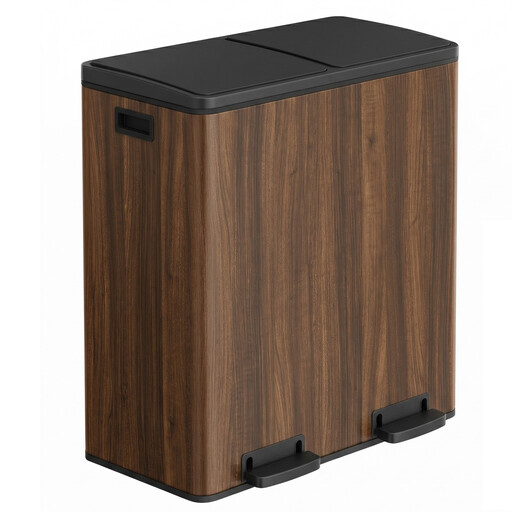
Why This Fits Their Persona: This bin is for those who see every kitchen item as part of the overall decor. The dark walnut finish on the steel body offers a warm, sophisticated alternative to standard stainless steel, complementing modern and traditional kitchens alike.
The dual pedal mechanism is engineered for durability and the soft-close lids provide a tight seal to contain odours. The two 30L inner buckets are made from sturdy PP plastic with metal handles, making them easy to remove and clean.
Its main advantage is the unique aesthetic. The steel construction provides durability, while the walnut finish adds a touch of elegance not often found in a waste separation bin.
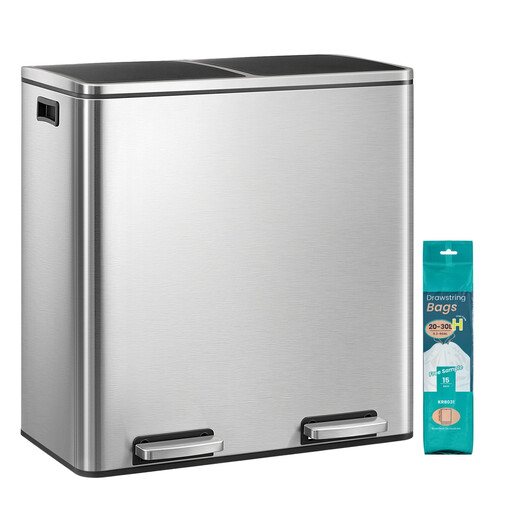
Why This Fits Their Persona: For a busy family, capacity and durability are paramount. This 60L recycling bin handles the high volume of waste from daily meals and packaging, making the recycling routine more efficient and less of a chore.
Its robust stainless steel body and wide pedals are built for frequent use. The large, independent inner buckets are simple to lift out, even when full and the soft-close lids prevent noise and keep odours contained effectively.
The primary benefit is the generous 60L total capacity, which reduces the number of times you need to empty the bin. The classic stainless steel finish is also practical and easy to wipe clean.
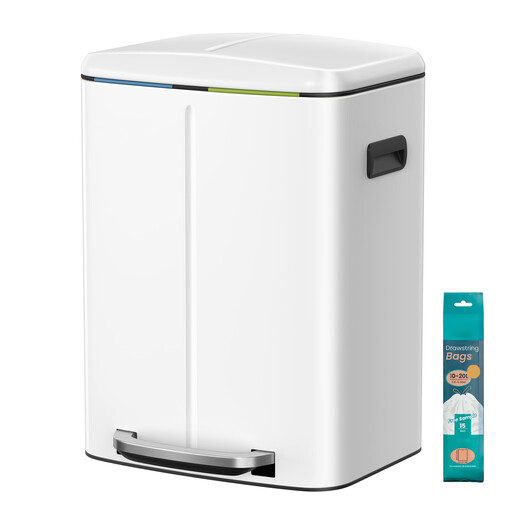
Why This Fits Their Persona: In a smaller city flat or compact kitchen, every square inch counts. This **40L kitchen bin** provides the essential dual-compartment functionality without the large footprint of a 60L model, and its clean white finish helps maintain a bright, uncluttered look.
Despite its smaller size, it doesn't compromise on build quality. It features a durable steel body, a quiet soft-close lid and removable inner buckets with a clever rear hole to keep bin liners tidy and prevent them from slipping.
Its space-efficient design is the main draw. It offers a proper waste separation solution for kitchens where a larger bin would be too intrusive, proving that you don't need a huge space to be organised.
We have compiled a complete, real-time list of products that fully satisfy these strict selection criteria and UK safety regulations.
For hygiene, it's good practice to wipe down the inner buckets each time you change the liners. A more thorough clean with warm, soapy water is recommended weekly or bi-weekly, depending on what you've disposed of. Always ensure the buckets are completely dry before putting them back to prevent moisture buildup.
While some brands promote their own liners, they are not always necessary. Many standard UK supermarket liners will fit well. The key is to check the dimensions of the inner buckets (in litres and cm) and buy liners that are a close match. Some bins include a hole in the bucket to tuck away excess bag material, which helps secure a wider range of liners.
For a typical family of four in the UK, a 60L recycling bin (2 x 30L compartments) is generally a suitable starting point. This provides ample room for a few days of mixed recycling and general waste, aligning well with most council collection schedules. If you produce a lot of recyclable packaging, you might even consider a larger model or a separate container for items like cardboard.