
24/7 Customer Support

Free returns

Same-day & Next-day Delivery

Quality Guaranteed

Unlock Your Welcome Offers: FREE Delivery | Up to 80% OFF | Free 30-day JoyPlus trial
Download the APP
A well-organised kitchen is a joy to use, but managing waste and recycling can quickly lead to clutter and frustration. A dual compartment kitchen bin offers a streamlined solution, but choosing the right one isn't as simple as it seems. Many promise convenience but deliver disappointment. As a Joybuy Product Recommendation Officer, my role is to help you see past the marketing jargon and focus on what truly matters for your home.
Before you invest, be aware of a few common pitfalls that can turn a promising purchase into a daily annoyance:
To ensure your new bin is a long-term asset rather than a short-term regret, focus on these core parameters.
The material of your bin dictates its durability and ease of maintenance. Look for a stainless steel rubbish bin that specifies a fingerprint-resistant coating. This finish significantly reduces smudges and makes cleaning as simple as a quick wipe with a damp cloth. For the inner compartments, PP (polypropylene) plastic is the standard for good reason. It's robust, lightweight and won't absorb odours like cheaper plastics. The smooth surface also makes it easy to rinse out.
The convenience of a double kitchen bin hinges on its mechanism. A pedal bin with soft close functionality is a non-negotiable feature for a modern kitchen. It prevents the loud, jarring slam of a closing lid, contributing to a calmer home environment. More importantly, it’s a sign of better engineering. Pay attention to the pedal itself; those made from reinforced steel are far more likely to withstand the rigours of daily family life than their flimsy plastic counterparts.
A 60L recycling bin is a popular choice for families, typically split into two 30L compartments for recycling and general waste. This provides ample space for a few days' worth of waste without being overly bulky. However, always check the dimensions. Measure your intended space carefully, and crucially, check the height of the bin with the lid fully open. Many people forget this step, only to find their new bin won't fit under their kitchen worktops or wall-mounted cabinets.
Instead of a one-size-fits-all approach, we've matched a few standout options to different household needs.
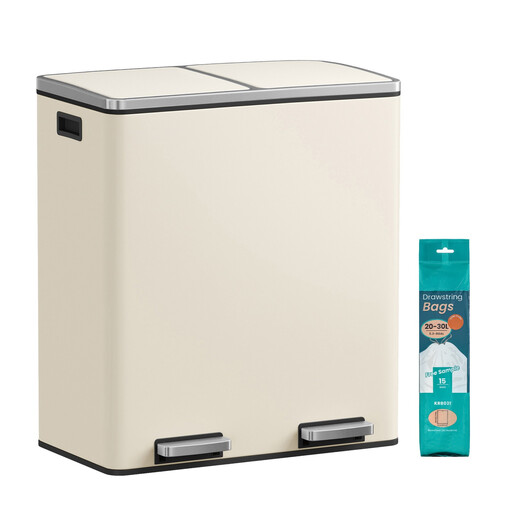
Why This Fits Their Persona: For those who value aesthetics as much as function, this bin's sleek cream steel finish and minimalist design blend seamlessly into modern kitchen decor. It provides full functionality without creating a visual distraction.
The removable PP plastic inner buckets feature sturdy metal handles, directly addressing the frustration of awkward, handle-less designs that make emptying the bin a chore.
Quiet Operation: The soft-close lid mechanism ensures no slamming.
Hygienic: The pedal operation keeps hands clean during waste disposal.
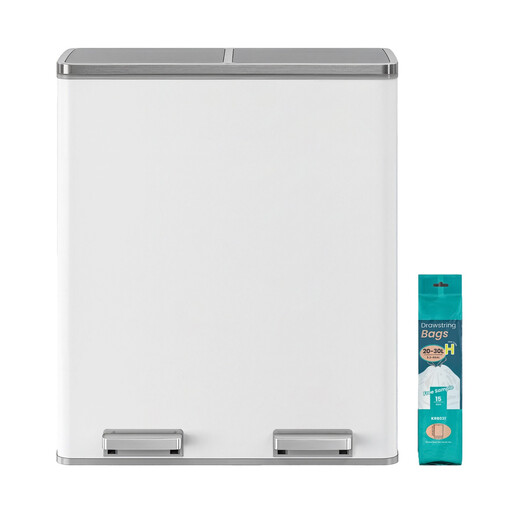
Why This Fits Their Persona: This is a practical workhorse for a busy home. The 60L total capacity handles family-sized waste, while the durable construction is designed to withstand the demands of daily use, from hurried foot-pedal presses to frequent emptying.
It sidesteps the "flimsy pedal" trap with a robust metal pedal mechanism. The stainless steel outer body is also easy to wipe down, avoiding the permanent smudges seen on lower-quality finishes.
Large Capacity: The 2 x 30L compartments are ideal for managing both general waste and recycling.
Easy Maintenance: Removable inner buckets with handles simplify cleaning.
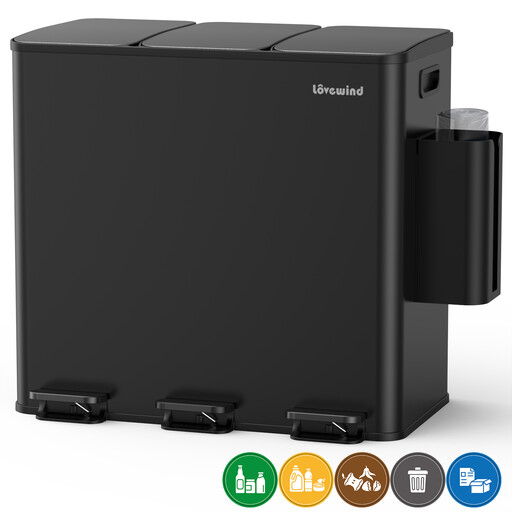
Why This Fits Their Persona: For households that separate food waste, glass and mixed recycling, a standard **2 compartment bin** isn't enough. This three-compartment model offers maximum sorting capability in a single, organised unit.
This model features a reinforced steel pedal and a fingerprint-resistant stainless steel finish, directly countering the common issues of premature breakage and a constantly smudged appearance.
Advanced Sorting: Three 20L compartments for detailed waste separation.
Helpful Features: Includes magnetic labels for clear identification and built-in activated carbon filters to help manage odours.
We have compiled a complete, real-time list of products that fully satisfy these strict selection criteria and UK safety regulations.
Effective odour control comes down to three things: regular cleaning, using the right bags and choosing a bin with a well-fitting lid. Wipe down the inner buckets with a disinfectant or soapy water each time you empty them. Ensure your bin liners are the correct size for the compartments to prevent spills. Some models also feature airtight lids or integrated carbon filters, which can provide an additional barrier against odours.
For a typical family of four in the UK, a total capacity of 50-60 litres is usually sufficient. A 60L recycling bin split into two 30L sections provides a good balance, offering enough space for a few days of general waste and a week's worth of recyclables, depending on your local council's collection schedule. If you produce a lot of food waste, a three-compartment model might be more suitable.
While you can, it's not always a good idea. Using liners that are too small can cause them to slip down and create a mess inside the bucket. Liners that are too large can prevent the lid from closing properly. For the best fit, check the dimensions of the inner buckets (usually provided in litres) and purchase liners designed for that specific capacity. This ensures a snug fit and makes removal much cleaner.