
24/7 Customer Support

Free returns

Same-day & Next-day Delivery

Quality Guaranteed

Unlock Your Welcome Offers: FREE Delivery | Up to 80% OFF | Free 30-day JoyPlus trial
Download the APP
As a Joybuy Product Recommendation Officer, my role is to help you navigate the crowded market of children's products. When it comes to educational toys, the choice can feel overwhelming. Shelves are filled with items promising to boost a child's development, but not all deliver on that promise. Many parents find themselves with toys that are either unsafe, unengaging or simply not as educational as advertised.
Before you spend your hard-earned money, it's worth knowing about a few common pitfalls:
To make a confident choice, focus on a few key parameters that define a high-quality educational toy. These objective markers cut through the clutter and ensure you are getting a product that is safe, durable and truly beneficial.
This is the most important factor. In the UK and Europe, toys must meet the EN 71 safety standard. This isn't just a sticker on a box; it's a series of rigorous tests. In simple terms, it ensures:
Always check for EN 71 certification in the product description. It’s a non-negotiable baseline for any toy you bring into your home.
Age-appropriateness is more than just a number. Consider the specific developmental stage the child is in. Are they working on:
The most effective learning toys are often open-ended, allowing a child to play in multiple ways as their imagination and skills grow.
A toy's material is a strong indicator of its lifespan. For wooden toys, look for solid wood (like rubberwood or beech) and MDF with smooth, polished edges. For plastic items, check for sturdy, non-toxic ABS plastic, which is far more resilient than cheaper, brittle alternatives. A well-made toy not only lasts longer but also provides a safer and more satisfying play experience.
Based on these practical criteria, here are a few recommendations matched to specific needs and developmental stages.
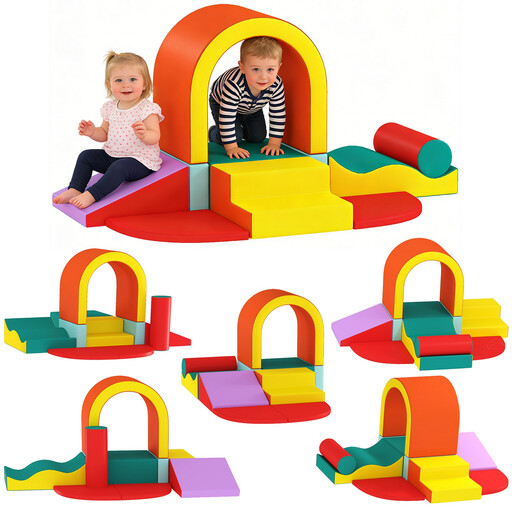
Why This Fits Their Persona: Ideal for families with toddlers (12-36 months) who need a safe outlet for their climbing and exploring instincts. It provides a dedicated, cushioned environment for physical play, perfect for UK homes where outdoor play isn't always an option.
This set avoids the "flimsy toy" pitfall with its high-density EPE foam core and durable, water-resistant PU leather cover. It's a purpose-built piece of developmental equipment, not just a toy.
The 10-piece modular design allows for endless configurations, preventing boredom and encouraging creativity. It is also EN 71-1-2-3 tested for safety.
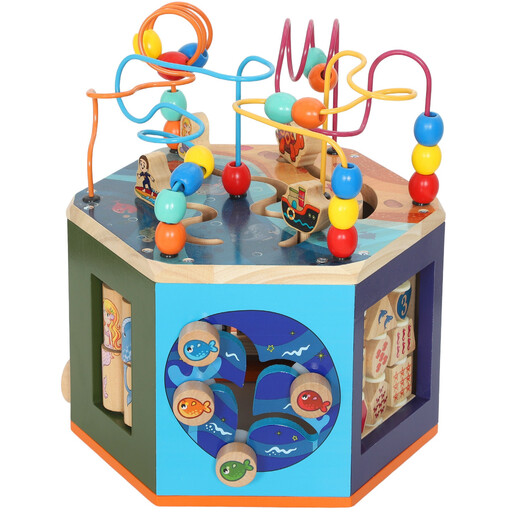
Why This Fits Their Persona: For parents and caregivers seeking a single, high-quality item that covers multiple developmental areas. This is a classic example of a Montessori toy, promoting self-directed activity and hands-on learning for toddlers from 18 months.
It directly counters the "single-use" trap by offering multiple activities—bead maze, pattern sorter and number games. It also avoids the durability pitfall with its solid wood and MDF construction and smooth, polished edges.
This cube is a space-saving hub for developing fine motor skills, hand-eye coordination and logical thinking. It is also certified to the EN71-1-2-3 safety standard.
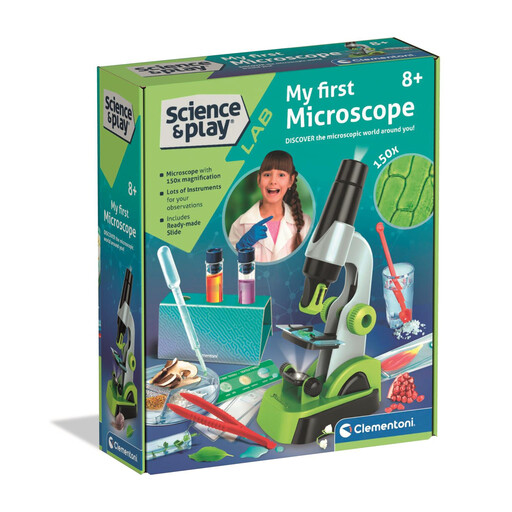
Why This Fits Their Persona: Perfect for older children (8+) who are ready to move beyond basic toys and engage with genuine scientific tools. This is an excellent STEM toy that introduces core concepts of biology in a hands-on, exciting way.
It avoids the "educational veneer" trap by being a functional instrument. With magnification up to 300x, it offers real scientific observation, not just pretend play, fostering genuine curiosity and patience.
The kit includes a full set of laboratory tools, pre-prepared slides and blank slides, empowering children to conduct their own experiments and explore the world around them.
We have compiled a complete, real-time list of products that fully satisfy these strict selection criteria and UK safety regulations.
The EN 71 standard is a legal requirement in the UK for toy safety. It involves a comprehensive set of tests to ensure a toy is safe for its intended age group. This includes checking for small parts that could be a choking hazard, ensuring there are no sharp points or edges, testing for flammability and analysing the materials to ensure they are free from harmful chemicals like lead and cadmium. A toy with this certification has passed these critical safety checks.
Look for toys that offer open-ended play. Unlike a toy that does only one thing, an open-ended toy like a set of building blocks, a modular climbing frame or an art easel can be used in countless ways. This allows the toy to adapt as your child's imagination and skills develop, providing far greater long-term value and preventing the quick boredom that comes with single-function toys.
Montessori toys are not inherently "better," but they are designed with a specific philosophy in mind: to encourage independent, hands-on learning. They are typically made from natural materials like wood and are designed to help children explore concepts through their senses. An activity cube, for example, allows a child to discover cause-and-effect and practice fine motor skills at their own pace. They are a great option if you want to foster self-directed play and concentration.