
24/7 Customer Support

Free returns

Same-day & Next-day Delivery

Quality Guaranteed

Unlock Your Welcome Offers: FREE Delivery | Up to 80% OFF | Free 30-day JoyPlus trial
Download the APP
If you have ever wondered why your home-brewed coffee does not quite match the quality of your favourite café, the secret often lies in the grind. Pre-ground coffee loses its aromatic compounds quickly, and an inconsistent grind can lead to a brew that is simultaneously bitter and sour. An electric burr coffee grinder is the single most significant upgrade for any coffee enthusiast, ensuring every cup is brewed from uniformly ground, fresh beans.
Navigating the market for a coffee bean grinder UK residents can rely on can be confusing. With terms like conical burrs, grind settings and anti-static features, it is easy to feel overwhelmed. As the Joybuy Product Recommendation Officer, my role is to help you understand what truly matters. This guide will break down the essential features to look for and present a few carefully selected models that deliver on performance and value.
Before diving into specific products, let's clarify a few key features that separate a great grinder from a mediocre one. Understanding these will help you make a more informed choice for your daily coffee ritual.
The grinding mechanism is what defines a quality grinder. Burr grinders use two revolving abrasive surfaces (burrs) to crush beans into a uniform size, unlike blade grinders which simply smash them inconsistently.
A conical burr grinder is a popular choice for home use. They operate at lower speeds, which generates less heat and helps preserve the delicate flavour oils in the coffee beans. Look for grinders with larger, high-quality steel burrs (e.g., 48mm), as they tend to produce a more consistent grind with greater efficiency.
Whether you are a fan of rich espresso, a clean pour over coffee grinder user or a French press devotee, you need a machine that can adapt. An adjustable coffee grinder with a wide range of settings is crucial for versatility.
A machine with 30 or more distinct settings gives you the fine control needed to dial in the perfect shot for an espresso grinder (very fine) or achieve the ideal coarse texture for cold brew. This flexibility ensures you can explore different brewing techniques without needing multiple machines.
Modern grinders come with features designed to improve the user experience. An anti-static coffee grinder is particularly useful, as it helps to reduce the amount of coffee grounds that cling to the machine and your worktop, leading to less mess and less waste. Other practical considerations include the capacity of the bean hopper and grounds container, the ease of cleaning and the overall build quality.
Based on features that offer consistency, versatility and user-friendly operation, here are our recommendations for the dedicated home barista grinder.
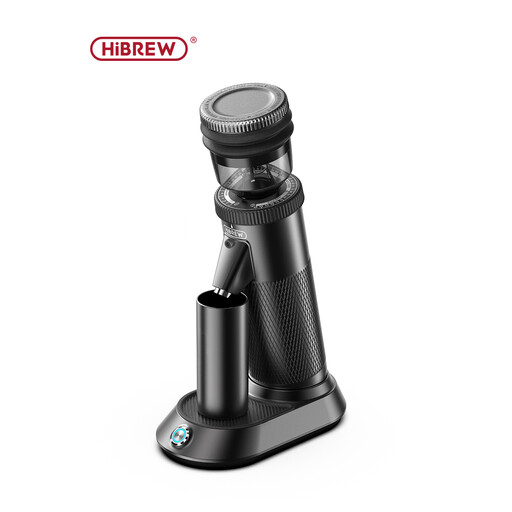
Why It Stands Out: The HiBREW G5 combines a robust aluminium alloy body with precision engineering. Its standout feature is the dual-speed motor, allowing you to choose a slower grind (400r/min) to minimise heat and retain the coffee's original flavour profile. A manual powder discharger helps clear the chute, ensuring less retention.
Pros:
Who is it for? The coffee enthusiast who prioritises flavour preservation and wants fine control over their grind for everything from Turkish coffee to pour-over. Its compact footprint makes it suitable for most kitchen counters.
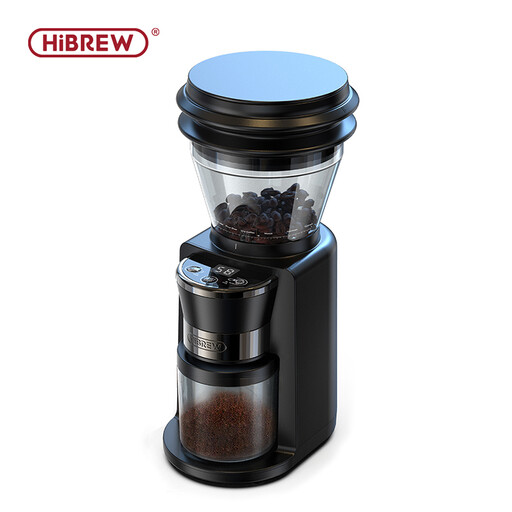
Why It Stands Out: The HiBREW G3 is built for convenience and capacity. With a large 210g bean container and a 100g powder tank, it is ideal for households that consume more coffee or for those who prefer to grind for a few cups at a time. The intelligent quantitative buttons for single and double cups streamline the morning routine.
Pros:
Who is it for? Busy households or individuals who value efficiency. If you want to grind a larger quantity of beans with minimal mess and fuss, the G3's capacity and anti-static features make it a strong contender.
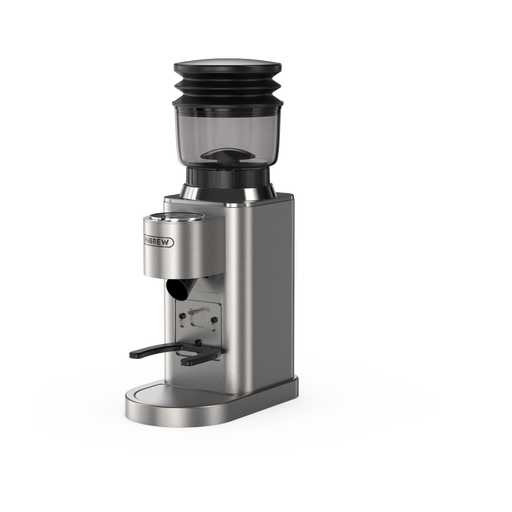
Why It Stands Out: The HiBREW coffee grinder G7 model is designed for the modern espresso lover. Its visualised digital touchscreen and timed grinding, accurate to 0.1 seconds, offer an exceptional level of control and repeatability. It also includes direct compatibility for 51mm, 54mm and 58mm portafilters, creating a seamless workflow from grinder to espresso machine.
Pros:
Who is it for? The dedicated home espresso maker who demands precision, consistency and a streamlined, tech-forward experience. Its specific portafilter compatibility makes it a perfect partner for a home espresso setup.
While these models represent excellent choices for different needs, the world of coffee grinders is vast. If you are looking for a different set of features or want to compare more models, there are many other high-quality grinders available.
Explore our full range of espresso grinder options to find the ideal match for your coffee setup.
A burr grinder uses two abrasive surfaces to crush coffee beans into a uniform particle size. This consistency allows for a balanced extraction and a better-tasting cup. A blade grinder, in contrast, uses a spinning blade to randomly chop the beans, resulting in an uneven mix of fine dust and large chunks, which can lead to a bitter and underdeveloped flavour.
During grinding, friction can create static electricity, causing fine coffee grounds to cling to the grinder's chute and your worktop. An anti-static feature, often using an ioniser, neutralises this charge. This results in a cleaner grinding process, less wasted coffee and more accurate dosing into your portafilter or brewer, making it a very worthwhile feature for anyone who values a tidy and efficient workflow.
This depends on your brewing habits. If you only use one method, like a French press, fewer settings may suffice. However, for enthusiasts who enjoy experimenting with everything from espresso to pour-over and cold brew, a grinder with 30 or more settings is highly recommended. This range provides the fine control needed to "dial in" the perfect grind for each specific method, unlocking the full potential of your coffee beans.