
24/7 Customer Support

Free returns

Same-day & Next-day Delivery

Quality Guaranteed

Unlock Your Welcome Offers: FREE Delivery | Up to 80% OFF | Free 30-day JoyPlus trial
Download the APP
The electric kettle is an undisputed cornerstone of the British kitchen. From the first morning brew to a late-night cuppa, it’s an appliance we rely on daily. Yet, when it comes to buying a new one, the market is flooded with claims and features that can be confusing. Choosing incorrectly can lead to frustration, from water that tastes of plastic to a stylish model that gives up after a few months.
As a Joybuy Product Recommendation Officer, my role is to help you see past the marketing jargon. Before you spend your hard-earned money, let’s look at the common pitfalls to avoid.
rapid boil kettle is certainly fast, but the real-world time saved over a 2.2kW model for a single cup can be mere seconds. For larger households boiling full capacities, the speed is noticeable. However, for individuals or couples, focusing solely on the highest wattage might lead to higher energy use without a significant practical benefit.variable temperature kettle is invaluable for coffee aficionados or green tea lovers. But if you just need boiling water for a standard black tea, paying a premium for functions you'll never use is an unnecessary expense.To make a confident choice, focus on the core specifications that determine a kettle's performance, safety and longevity.
The material of your kettle's interior is crucial for both taste and durability.
stainless steel kettle is a popular choice for good reason. It's durable, easy to clean and doesn't impart flavours. Look for models specifying food-grade 304 stainless steel, which offers excellent resistance to rust and corrosion. Some models feature a double-wall construction for better insulation and a cooler exterior.glass kettle offers a modern aesthetic, often complemented by LED lighting during the boil. It allows you to see the water level and any limescale build-up clearly. Quality models use toughened borosilicate glass, which is resistant to thermal shock. The main drawback is that limescale is more visible, requiring more frequent cleaning to keep it looking its best.Most UK kettles have a standard capacity of 1.7 litres, which is enough for about 6-7 cups, making it ideal for families or when hosting guests. For individuals, smaller 1-litre or even a compact travelling kettle might be more efficient.
Power, measured in kilowatts (kW), dictates boiling speed.
rapid boil kettle in the UK, capable of boiling a full 1.7L capacity in just a few minutes.Beyond simply boiling water, some kettles offer features for specific needs.
stovetop kettle remains a durable and stylish option.Based on these practical considerations, here are a few recommendations matched to different household needs.

Why This Fits Their Persona: This is a workhorse for the busy UK family or shared house. It focuses on doing one job exceptionally well: boiling water quickly and reliably. Its classic design fits into any kitchen without fuss.
It avoids the 'premium plastic' trap with a durable, brushed stainless steel body that won't impart unwanted tastes into your water.
Its 3000W rapid boil system is genuinely fast for its 1.7L capacity. The removable, washable limescale filter is essential for hard water areas.
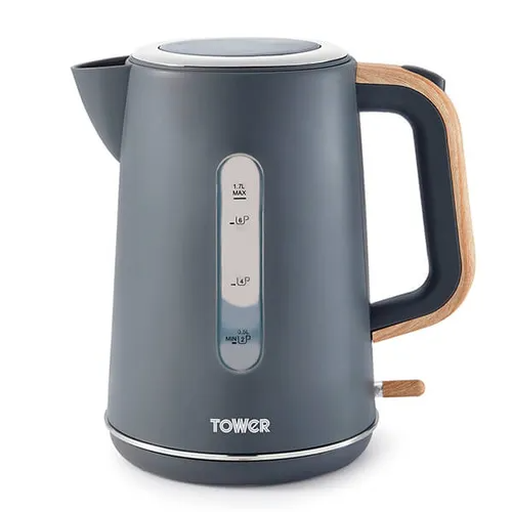
Why This Fits Their Persona: For those who see their kitchen appliances as part of the decor. This designer kettle offers a minimalist Scandinavian aesthetic that elevates the countertop, making it a feature piece rather than just a utility item.
This kettle proves style doesn't mean sacrificing substance. It sidesteps the trap of being purely cosmetic by including a powerful 3kW rapid boil system, matching the performance of more utilitarian models.
The combination of a smooth grey body and wood-effect accents provides a unique, contemporary look. It includes all necessary safety features like automatic shut-off and boil-dry protection.
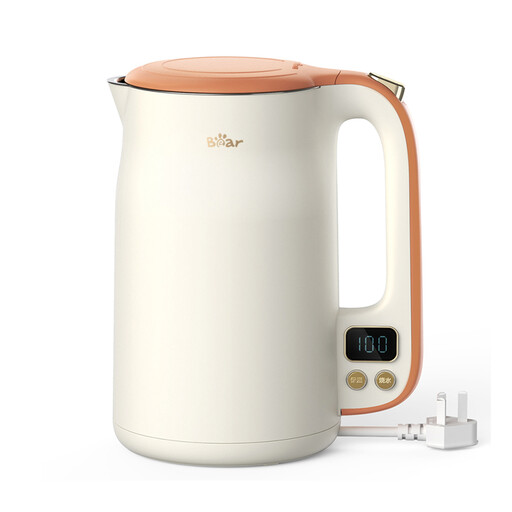
Why This Fits Their Persona: Perfect for the tea or coffee enthusiast who understands that water temperature is key to a perfect brew. This kettle offers the precision needed for everything from delicate white teas to full-bodied coffee from a French press.
It avoids the 'feature overload' trap by providing genuinely useful functions. The multiple temperature settings and keep-warm function are practical tools for anyone serious about their hot drinks, not just gimmicks.
The main advantage is its precise temperature control, with settings from 40°C to 100°C. The microprocessor touch panel and stainless steel interior provide a high-quality, functional experience.
We have compiled a complete, real-time list of products that fully satisfy these strict selection criteria and UK safety regulations.
This largely depends on the water hardness in your area. For those in hard water regions like London and the South East, descaling every one to two months is advisable to maintain efficiency and prevent flakes in your drink. In softer water areas, every three to four months should suffice. A good visual cue is when you start to see a chalky white layer forming on the base.
Neither is definitively "better"; it comes down to personal preference. A glass kettle offers a modern look and lets you easily monitor boiling and limescale build-up. A stainless steel kettle is generally considered more robust and durable, and double-walled versions offer superior insulation, keeping the exterior cooler to the touch.
The cost is minimal. A typical 3kW kettle takes about three minutes to boil its full 1.7L capacity. This uses approximately 0.15 kWh of electricity. Based on an average electricity rate of 25p per kWh, a single full boil costs around 3.75 pence. Boiling just enough for one or two cups will cost even less.