
24/7 Customer Support

Free returns

Same-day & Next-day Delivery

Quality Guaranteed

Unlock Your Welcome Offers: FREE Delivery | Up to 80% OFF | Free 30-day JoyPlus trial
Download the APP
Making the switch to an electric toothbrush is a significant step towards better oral health. However, the market is flooded with models boasting countless features, making it difficult to know where to invest your money. As a Product Recommendation Officer at Joybuy, my role is to help you navigate the options and find a toothbrush that genuinely meets your needs, without paying for marketing hype.
Before you add a new toothbrush to your basket, let's look at some common pitfalls that UK shoppers encounter.
To make a smart choice, focus on the functional specifications that directly impact your daily cleaning routine. Here are the three non-negotiable features to look for.
Brushing too hard is a common habit that can lead to gum recession and enamel wear. An electric toothbrush with a pressure sensor is an essential feature that provides real-time feedback, usually through a light or a change in vibration, to alert you when you are applying too much force. This single feature can help protect your oral health, making it a crucial element for both beginners and seasoned electric toothbrush users.
There are two main types of cleaning action, and the choice often comes down to personal preference.
Both technologies are effective at removing plaque. If you have particularly sensitive gums, you might prefer the feel of a sonic toothbrush, but many oscillating-rotating models also offer excellent modes for an electric toothbrush for sensitive gums.
Dentists recommend brushing for two minutes, but many of us stop sooner. A built-in timer, often with 30-second pulses (quadrant pacing), ensures you brush for the recommended duration and give equal attention to all areas of your mouth. This simple feature is standard on most models and is fundamental to improving your brushing habits. Features like app connectivity on a smart toothbrush can enhance this, but the basic timer is the most important part.
Based on these core principles, we've matched a few standout models to different user needs.
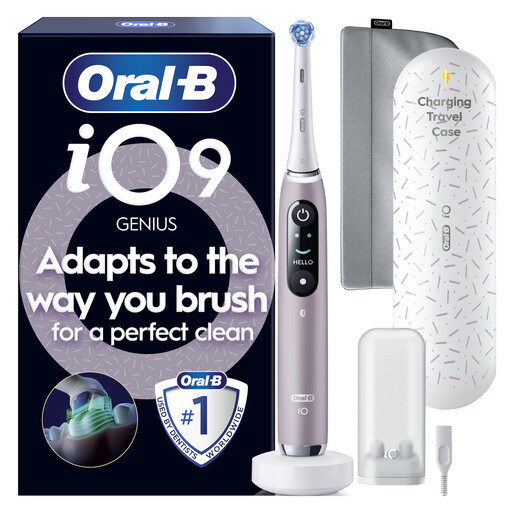
Why This Fits Their Persona: For the user who wants data-driven results and the latest technology. This smart toothbrush uses AI to track your brushing coverage in 3D, providing real-time feedback via an app to ensure no spot is missed. It's a gadget-lover's approach to oral hygiene.
While it has 7 modes, its value is for the user who will actively engage with the AI tracking and app features to improve their technique. The premium price is justified by the advanced guidance system, not just the number of modes.
Features the advanced Oral-B iO magnetic drive for a quiet, smooth clean. The smart pressure sensor and interactive colour display provide a superior user experience. The charging travel electric toothbrush case is a practical luxury.
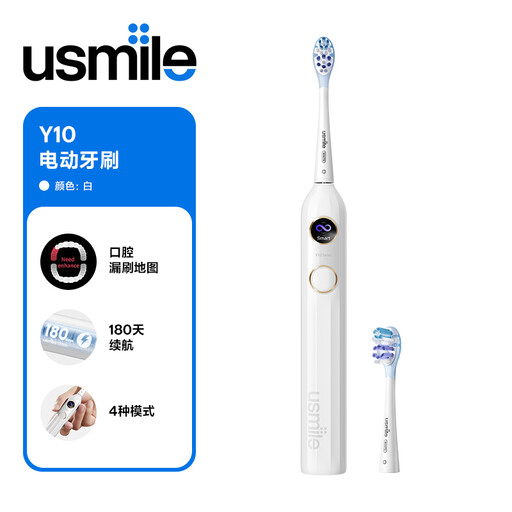
Why This Fits Their Persona: This is for the person who values convenience above all else. Whether you travel frequently or simply dislike bathroom clutter, the standout 180-day battery life means you can go for months without thinking about a charger.
It completely eliminates the battery and charging pitfall. By focusing on an exceptionally long battery life and convenient USB-C charging, it offers a highly practical solution that other brands often overlook.
A single charge lasts up to 180 days. The built-in smart screen on this sonic toothbrush provides real-time feedback on brushing coverage without needing to connect to a phone app.
We have compiled a complete, real-time list of products that fully satisfy these strict selection criteria and UK safety regulations.
Most electric toothbrushes sold in the UK come with a 2-pin plug. This is a standard safety feature, as these plugs are designed to fit the shaver sockets found in many UK bathrooms, which are isolated from the main electrical circuit. If your bathroom does not have a shaver socket, you will need to purchase a simple 2-pin to 3-pin adapter to charge your toothbrush from a standard wall socket.
For both hygiene and effectiveness, it is recommended to replace your brush head approximately every three months, or sooner if the bristles become visibly frayed. Many toothbrushes now include indicator bristles that fade over time to remind you when a change is due. Factoring in the cost of four replacement heads per year is a good way to estimate the long-term running cost.
Neither technology is definitively "better" than the other; they are just different. Both types have been shown to be significantly more effective at removing plaque than a manual toothbrush. The choice largely comes down to personal preference. Some people prefer the deep-clean feeling of an oscillating-rotating brush, while others favour the gentler, quieter vibration of a sonic model. If you have sensitive teeth or gums, it may be worth trying a model with a dedicated sensitive mode, which is available in both technologies.