
24/7 Customer Support

Free returns

Same-day & Next-day Delivery

Quality Guaranteed

Unlock Your Welcome Offers: FREE Delivery | Up to 80% OFF | Free 30-day JoyPlus trial
Download the APP
Keeping your baby close while managing daily life is a balancing act many new parents in the UK know well. An ergonomic baby carrier can be a game-changer, offering a hands-free way to soothe your little one, navigate busy streets or simply get things done around the house. However, with so many options, choosing the right one can feel overwhelming. The priority is always to find a carrier that supports your baby’s healthy development while also protecting your own back from strain.
This guide is designed to help you understand the key features to look for in an ergonomic carrier. We will walk you through what makes a carrier comfortable and safe and present a few recommendations to help you in your search.
Making an informed choice comes down to a few crucial features. Focusing on these will ensure both you and your baby have a comfortable and secure experience.
One of the most critical aspects of an ergonomic carrier is its ability to support your baby in a natural, hip-healthy position. Look for a carrier with a wide, supportive seat that allows your baby’s legs to form an "M" shape, where their knees are positioned slightly higher than their bottom. This posture supports the healthy development of the hip joints and is a key feature to look for in any newborn to toddler carrier, as it needs to adjust to maintain this position as your child grows.
Carrying a baby, even a small one, can place significant strain on your back, shoulders and hips. A high-quality baby carrier with lumbar support is essential for distributing your baby's weight evenly and reducing pressure on your lower back. Look for models with a wide, firm waistband and well-padded shoulder straps. Some designs feature an X-shaped back strap configuration, which can offer enhanced weight distribution compared to traditional H-strap styles, making it a more comfortable experience for longer periods.
The right material can make a significant difference. For parents who are often on the move or for use during warmer months, a breathable baby carrier made from mesh fabric can help keep both you and your baby cool. For everyday use, soft, natural fabrics like 100% cotton offer a gentle and comfortable feel. If you travel frequently, a lightweight baby carrier for travel that is easy to pack and machine washable adds a layer of practical convenience.
Based on features that prioritise comfort and ergonomic design, here are our recommendations.
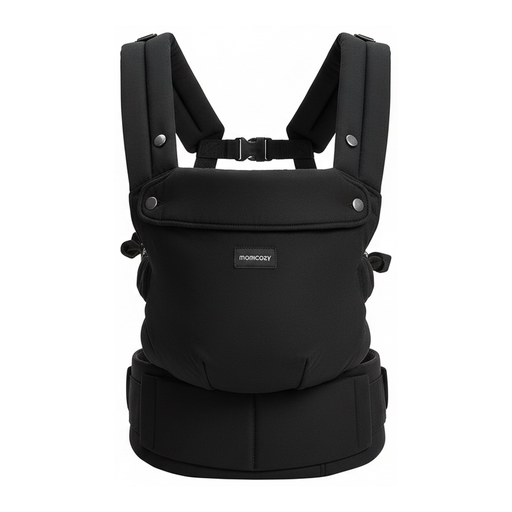
Why It Stands Out: This Momcozy baby carrier is a versatile option designed for all-season use. Made from 100% cotton, it feels soft against the skin. Its key feature is the three-stage adjustability, allowing it to grow with your child from 3 kg to 20 kg. The design incorporates an X-shaped back support system and built-in EVA waist support to effectively reduce carrying pressure on the parent.
Pros:
Who is it for?: Parents looking for a reliable, all-around carrier made from natural fabric that provides excellent support for both baby and wearer from infancy through to the toddler years.
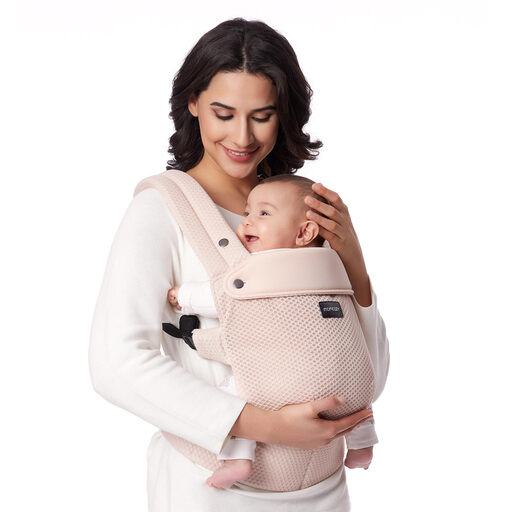
Why It Stands Out: Specifically designed for warmer weather or active parents, this carrier features a large Air Mesh panel and cooling neck fabric. It maintains all the core ergonomic benefits, including the "M" position support and adjustable sizing for babies from 3.2 kg to 20 kg. The lightweight construction makes it an excellent hands-free baby sling alternative for those who prioritise airflow.
Pros:
Who is it for?: Active parents, those living in warmer areas or anyone concerned about overheating during the summer months.
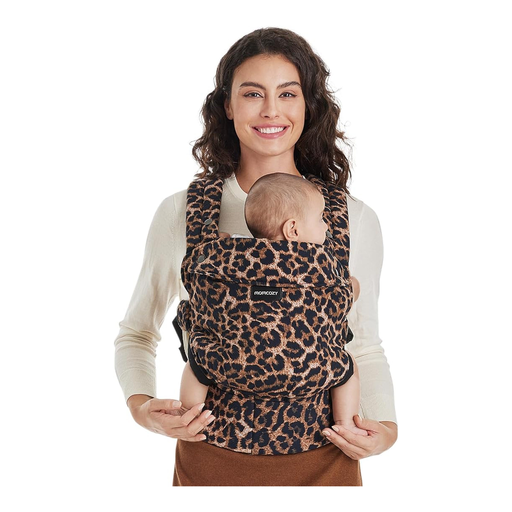
Why It Stands Out: This carrier combines proven ergonomic function with a bold, fashionable design. It offers the same structural benefits as the standard cotton model, including 100% pure cotton fabric, three-stage adjustability for babies from 7-44 lbs (approx. 3.2-20 kg) and the supportive X-back design. It’s a choice for parents who don’t want to compromise on style while ensuring their baby’s comfort.
Pros:
Who is it for?: Style-conscious parents who want a carrier that is as fashionable as it is functional, without sacrificing any ergonomic features.
While these carriers offer excellent features for a wide range of needs, we understand that every family is unique. If you are planning a holiday or require a different style, you can explore a wider selection to find the perfect fit for your adventures.
Discover more in our full range of Carriers for travel.
1. Can you use an ergonomic baby carrier for a newborn? Yes, many ergonomic carriers are designed as a newborn to toddler carrier. It is crucial to check the manufacturer's specified weight and age range. For newborns, look for carriers that provide adequate head and neck support and ensure the baby can be positioned snugly and securely, typically starting from around 3.2 kg or 7 lbs.
2. What is the safest way to carry a baby in a front-facing baby carrier? A front-facing baby carrier position should only be used once a baby has strong and consistent head and neck control, usually around 5-6 months. Ensure the carrier's seat is wide enough to support the ergonomic "M" position even when facing out. It is also advisable to keep outward-facing carrying sessions shorter to prevent overstimulation for the baby. Always ensure their airway is clear and they are not slumping.
3. How do I know if my baby is comfortable in the carrier? Check for a few key signs. Your baby should be high enough on your chest for you to kiss the top of their head (the "visible and kissable" rule). Their back should be gently curved in a "C" shape and their legs should be in the "M" position. They should not be slumped down and their chin should not be pressed against their chest. A content, settled baby is often the best indicator of a comfortable fit.