
24/7 Customer Support

Free returns

Same-day & Next-day Delivery

Quality Guaranteed

Unlock Your Welcome Offers: FREE Delivery | Up to 80% OFF | Free 30-day JoyPlus trial
Download the APP
Spending hours at a desk is a reality for many of us, whether we're in a home office, studying, or at a corporate workplace. The wrong chair can lead to persistent back pain, poor posture and a noticeable dip in productivity. An ergonomic office chair isn't a luxury; it's a fundamental tool for maintaining your health and focus throughout the workday.
However, the market is filled with options, making it difficult to know where to start. This guide is designed to cut through the clutter. We'll walk you through the essential features to look for and present a few carefully selected recommendations to help you find a chair that supports you, day in and day out.
Before diving into specific models, understanding the key features will empower you to make a confident choice. Here are a few crucial elements to consider.
A one-size-fits-all approach simply doesn't work for seating. The cornerstone of an ergonomic chair is its ability to adapt to your unique body shape. The most critical feature is an office chair with lumbar support. This is designed to support the natural inward curve of your lower spine, which helps prevent slouching and reduces strain. Look for chairs where the lumbar support can be adjusted for height and sometimes depth, allowing you to position it perfectly. Beyond the lower back, consider adjustments for seat height, armrest position (height, width and angle), and recline tension.
The material of your chair directly impacts your comfort, especially during long sessions. While leather and fabric have their place, a mesh office chair offers superior breathability. The open-weave material allows for continuous air circulation, which helps to dissipate heat and moisture. This keeps you cool and comfortable, even on warmer days or in a stuffy room, making it an excellent choice for a computer chair for long hours.
The height of the chair's backrest is another important consideration. A high back office chair provides support for your entire spine, including your upper back and shoulders. Many high-back models also include a desk chair with headrest, which can be adjusted to support your neck and head. This is particularly beneficial when you recline or need to relieve tension in your neck and shoulders after focusing on a screen for an extended period.
Based on features that promote comfort and support, here are our recommendations for your home office chair.

Why It Stands Out: The Sihoo M57S is a well-rounded ergonomic chair that balances a comprehensive feature set with accessibility. Its design includes an S-shaped backrest that mimics the curve of the human spine, providing full-back support. The combination of an adjustable headrest, lumbar support and versatile 3D armrests makes it highly adaptable to different body types and tasks.
Pros:
Who is it for? This chair is an excellent starting point for anyone setting up a new home office or upgrading from a standard chair. It's ideal for professionals and students who need a reliable, highly adjustable chair for daily use without committing to a top-of-the-range price tag.
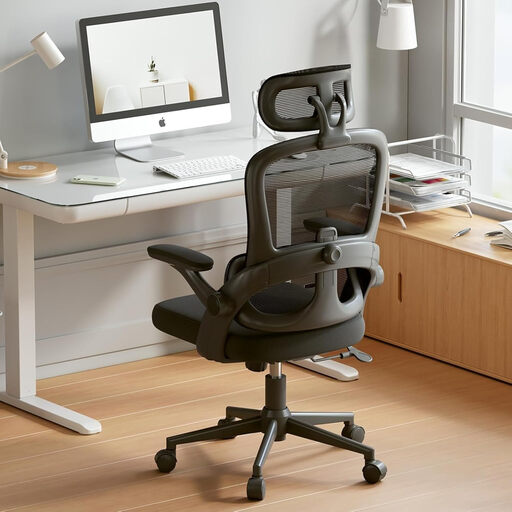
Why It Stands Out: The Sihoo M102C distinguishes itself with a focus on customisable lumbar support and space-saving design. The lumbar support can be adjusted vertically by 6 cm, allowing users to target pressure relief precisely on their lower back. A key practical feature is its flip-up armrests, which allow the chair to be pushed neatly under a desk to save space when not in use.
Pros:
Who is it for? This model is perfect for users who prioritise specific lower back support and work in smaller spaces. If you need a chair that offers targeted comfort but can also be tucked away to keep your room tidy, the M102C is a strong contender.

Why It Stands Out: The Doro C300 represents a step up in ergonomic technology, offering dynamic support that adapts to your movements. Its standout feature is the self-adaptive lumbar support, which moves with your body to provide continuous support as you shift positions. Combined with an intelligent weight-sensitive mechanism and ultra-soft 3D armrests that synchronise with the recline, this chair is engineered for responsive comfort.
Pros:
Who is it for? The Doro C300 is suited for individuals who spend the majority of their day seated and are looking for a premium ergonomic experience. If you want a chair that actively works with you, adjusting to your every move to maintain comfort and support, this is an option worth serious consideration.
These recommendations are a great starting point, but every person's needs are different. If you're looking for a different style, feature set or price point, there are many other chairs to explore. To discover more styles and features, we invite you to browse our full range of office seating.
While an ergonomic chair is designed to provide support for long hours, it's still advisable to take regular breaks. Health professionals recommend standing, stretching or walking for a few minutes at least once every hour. The chair's role is to ensure your body is properly supported while you are sitting, minimising strain and fatigue.
This often comes down to personal preference and your working environment. A mesh office chair offers excellent breathability, which helps prevent heat and sweat build-up, making it a practical choice for long work sessions or warmer climates. Leather chairs provide a classic aesthetic and a plush feel but are generally less breathable.
While a combination of features creates a truly ergonomic experience, adjustable lumbar support is widely considered the most critical. The lower back is highly susceptible to strain from poor posture. A support that can be positioned correctly for your spine's natural curve is fundamental to preventing discomfort and long-term back issues.