
24/7 Customer Support

Free returns

Same-day & Next-day Delivery

Quality Guaranteed

Unlock Your Welcome Offers: FREE Delivery | Up to 80% OFF | Free 30-day JoyPlus trial
Download the APP
Spending hours at a desk, whether in a home office or for study, can take a toll on your body. The persistent ache in your lower back, the stiffness in your neck and the general discomfort that builds throughout the day are common complaints. An unsuitable chair is often the primary cause, forcing your body into unnatural positions that lead to strain.
Investing in a quality ergonomic office chair is not a luxury; it is a practical step towards improving your daily comfort and maintaining your posture. This guide is designed to help you understand the key features to look for and to present a selection of chairs that offer notable support and adjustability. Our goal is to provide clear, objective information to help you find a computer desk chair that fits both your body and your workspace.
Navigating the market for office chairs can be confusing. To simplify your search, focus on these three core areas to ensure you select a chair that genuinely supports your needs.
A truly ergonomic chair adapts to you, not the other way around. A one-size-fits-all approach rarely works for seating. Look for an adjustable office chair with multiple points of customisation. Key features include:
A primary reason for discomfort is a lack of proper spinal alignment. A good chair for back pain will have features specifically designed to support the natural curve of your back.
Pay close attention to the lumbar support. Many models feature a curved backrest, while more advanced options offer adjustable lumbar pads that can be moved up, down, in or out to fit the small of your back perfectly. For those who experience neck strain, a high back executive chair with an adjustable headrest can provide crucial support for your head and neck, especially when reclining.
The materials of a chair affect both comfort and longevity. A mesh office chair with lumbar support is a popular choice in the UK, as the breathable fabric allows for better air circulation, keeping you cool during long work sessions.
Beyond the fabric, check the chair's foundation. Look for certifications like BIFMA (Business and Institutional Furniture Manufacturers Association), which indicate that the chair has passed rigorous tests for safety, durability and performance. A sturdy base, smooth-rolling casters and a high weight capacity are all signs of a well-constructed chair built to last.
Based on features that promote comfort and support, here are our recommendations for individuals seeking to upgrade their seating.
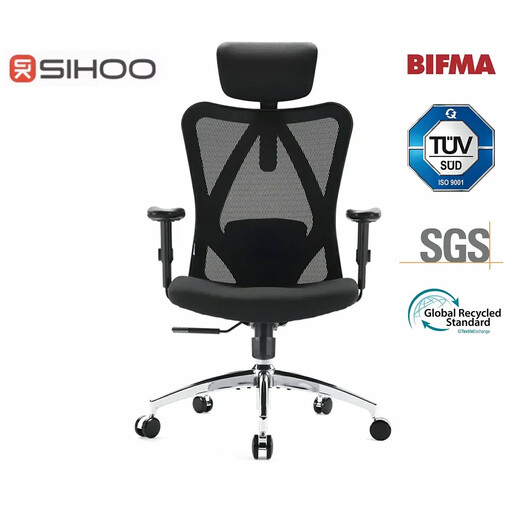
Why It Stands Out: The Sihoo M18 is a versatile all-rounder that balances a comprehensive set of ergonomic features with a robust build. Its design is informed by a digital human model to promote a supportive posture and it holds both BIFMA and SGS certifications, having passed a static pressure test of 1136 kg.
Pros:
Who is it for?: An excellent choice for professionals and students who need a reliable and highly customisable home office chair for all-day use.
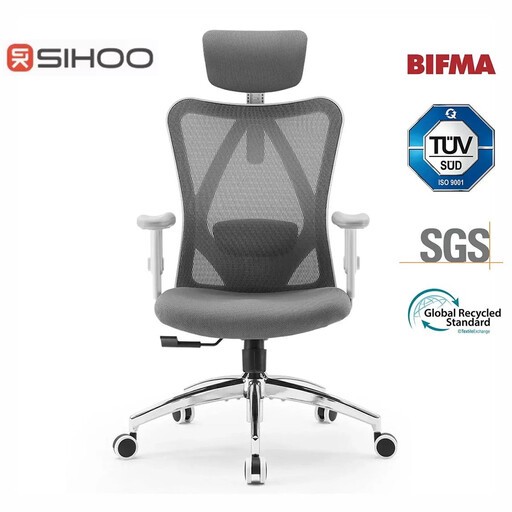
Why It Stands Out: This model offers the same dependable ergonomic foundation as its black counterpart but in a modern grey finish that suits a variety of home and office interiors. It provides five key ergonomic adjustment points, allowing for a truly personalised seating experience.
Pros:
Who is it for?: Ideal for those who value the proven ergonomics of the M18 model but prefer a lighter, more contemporary colour palette for their workspace.
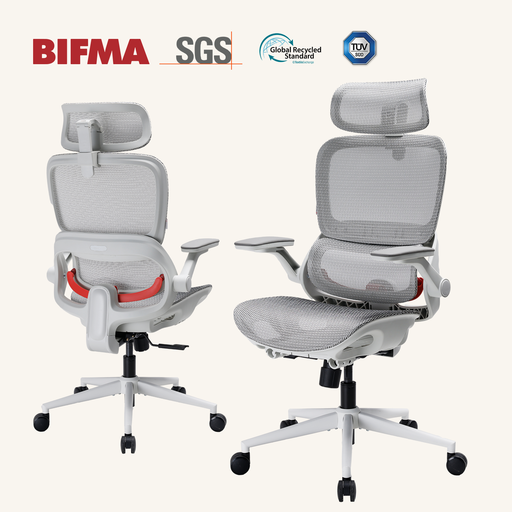
Why It Stands Out: The SIHOO B100 focuses on dynamic support and space-saving functionality. Its key features include adaptive lumbar support that moves with you and flip-up armrests, making it a practical choice for multi-use desks or compact spaces.
Pros:
Who is it for?: A great fit for remote workers with flexible workstations or anyone who needs an ergonomic chair that can be easily stored to save space.
While a dedicated ergonomic chair is excellent for focused work, perhaps you're looking for something with a different aesthetic for a multi-purpose living area. For a blend of comfort and contemporary design, you might consider exploring other seating options.
Discover our curated collection of stylish and comfortable seating, including the popular grey swivel armchair, to find the perfect fit for your home.
Q: How long should an ergonomic office chair last? A: The lifespan of an ergonomic office chair depends on its build quality, materials and usage. A well-made chair with certifications like BIFMA is a long-term investment, typically expected to last between 5 to 10 years. Regular checks to tighten any loose components can help extend its life.
Q: Is a mesh office chair better for back pain? A: While a mesh back provides excellent breathability, the material itself is not the most critical factor for back pain. The chair's support structure is more important. A chair with effective, adjustable lumbar support will do more to alleviate back pain than any specific material. The key is finding a chair that helps you maintain a healthy posture.
Q: What is the most important feature in a computer desk chair? A: If you have to choose one, overall adjustability is the most important feature. Specifically, the ability to adjust the seat height and the lumbar support is paramount. This ensures your feet are correctly positioned on the floor and your lower back is properly supported, forming the foundation of good sitting posture at your desk.