
24/7 Customer Support

Free returns

Same-day & Next-day Delivery

Quality Guaranteed

Unlock Your Welcome Offers: FREE Delivery | Up to 80% OFF | Free 30-day JoyPlus trial
Download the APP
Spending long hours at a desk is a modern reality for many of us, whether we're in a corporate office or a home study. Unfortunately, this can often lead to persistent discomfort, poor posture and nagging back pain. An ergonomic office chair isn't a luxury; it's a fundamental tool for maintaining your well-being and productivity.
As the Joybuy Product Recommendation Officer, my role is to help you navigate the options. This guide cuts through the clutter to focus on what truly matters: adjustability, support and certified quality. We'll explore key features to look for and highlight a few standout models to help you find a chair that works for you.
Choosing the right chair can feel overwhelming. By focusing on a few core principles, you can make a more informed decision that supports your health for years to come.
A truly ergonomic chair adapts to your unique body shape, not the other way around. Look for multiple points of adjustment to create a personalised fit. Key features include:
Lower back pain is one of the most common complaints from desk workers. A chair with proper lumbar support helps maintain the natural curve of your spine. Many modern chairs, particularly a mesh office chair with lumbar support, offer dynamic systems that adjust as you move, providing continuous support throughout the day. This is a critical feature for anyone seeking an office chair for back pain.
A well-made chair is a long-term investment. Look for models that have been tested against recognised industry standards. A BIFMA certified chair meets the criteria set by the Business and Institutional Furniture Manufacturer's Association for safety, durability and structural performance. This certification indicates the chair is built to withstand the demands of daily, long-term use.
Based on features, user feedback and adherence to quality standards, here are our recommendations for those seeking to upgrade their seating experience.

Why It Stands Out: The Sihoo S100 is engineered with a focus on dynamic, responsive support. Its standout feature is the Dual Dynamic Lumbar Support, which uses a spring mechanism to automatically adjust to your posture in multiple directions. This provides consistent support to the lower back whether you are sitting upright or leaning. The breathable mesh construction also promotes airflow, enhancing comfort during long sessions.
Pros:
Who is it for? Professionals, remote workers and students who spend the majority of their day seated and are looking for a highly customisable chair to proactively manage posture and alleviate back pain. Its feature set makes it a strong contender for those conducting a detailed Sihoo S100 review.
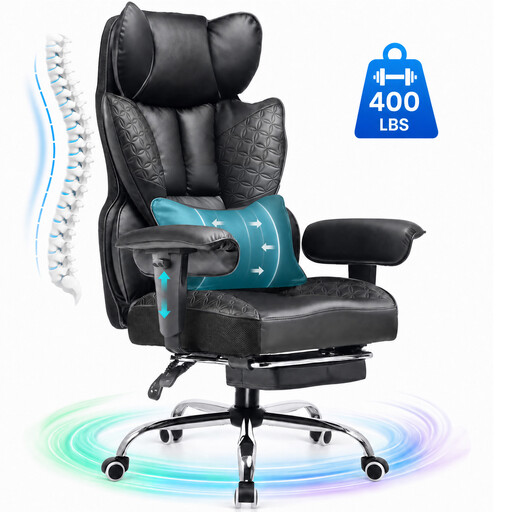
Why It Stands Out: While styled as a gaming chair, its ergonomic features make it a versatile choice for the office. The integrated retractable footrest and deep recline function (up to 150 degrees) offer a level of relaxation not found in many traditional office chairs. It combines the supportive features of a work chair with the comfort of a recliner.
Pros:
Who is it for? Users who value versatility and want a single chair that can transition from focused work to relaxation or gaming. It's an excellent option for a home office where space is at a premium.
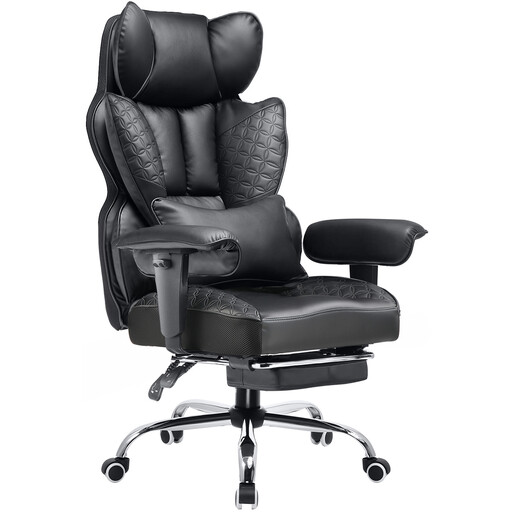
Why It Stands Out: This chair is specifically constructed for durability and to accommodate larger users comfortably. Its heavy-duty metal base, wider seat and high back provide a secure and spacious seating experience. The PU leather finish gives it a classic executive look while being easy to clean.
Pros:
Who is it for? Individuals who require a more robust chair with a higher weight capacity and more generous dimensions than standard models offer.
The chairs highlighted here offer excellent support, but everyone's needs are different. If you are particularly interested in chairs that provide deep recline functions for taking pressure off your spine during breaks, there are many other models to consider.
To see a wider variety of chairs with this feature, explore our full collection of reclining office chairs.
1. What is the most important feature in an office chair for back pain? While the entire chair should be adjustable, the most critical feature is adjustable lumbar support. A system that can be fine-tuned to the curve of your lower back provides the targeted support needed to maintain a healthy posture and reduce strain over long periods.
2. Is a mesh or leather office chair better? This often comes down to personal preference. A mesh office chair with lumbar support offers superior breathability, which is ideal for warmer environments and helps conform to your body shape. Leather (or PU leather) provides a plusher, more traditional feel and is often easier to wipe clean. Both can be excellent choices, provided they have a strong ergonomic foundation.
3. How long should a good ergonomic office chair last? The lifespan of a chair depends on its build quality, materials and usage. A high-quality, BIFMA certified chair is an investment expected to last for many years, often between 5 to 10. Models with robust metal frames, high-density foam and durable fabrics or mesh tend to have greater longevity.