
24/7 Customer Support

Free returns

Same-day & Next-day Delivery

Quality Guaranteed

Unlock Your Welcome Offers: FREE Delivery | Up to 80% OFF | Free 30-day JoyPlus trial
Download the APP
The shift towards remote and hybrid work has made one thing clear: the standard dining chair is not a substitute for a proper office seat. If you spend long hours at a desk, you may be familiar with the creeping discomfort in your lower back, the tension in your neck or the general fatigue that comes from poor posture. An ergonomic office chair is not a luxury; it is a fundamental tool for maintaining comfort and focus throughout your workday.
Navigating the market can be challenging, with countless models all claiming to be the solution. This guide is designed to cut through the clutter. As a Joybuy Product Recommendation Officer, my role is to provide you with clear, practical information to help you select a chair that genuinely meets your needs, based on its features and design.
Before looking at specific models, it is helpful to understand the key features that define a quality ergonomic chair. Focusing on these three areas will help you make a more informed choice.
A one-size-fits-all approach does not work for seating. A good ergonomic chair should adapt to your body, not the other way around. Look for multiple points of adjustment, including:
A key cause of discomfort is a lack of support for the natural curve of your spine. An office chair with lumbar support is designed to fill this gap, promoting a healthy posture. Some chairs offer fixed support, while more advanced models feature dynamic or adjustable systems that move with you. For those who want full-body support, a high back office chair can also provide relief for the upper back, shoulders and neck.
The material of your chair affects both comfort and longevity. While leather and fabric have their place, a mesh office chair is often a practical choice for a computer chair for long hours. The open-weave material allows for excellent airflow, helping to regulate temperature and keep you cool and comfortable, even during intense periods of work. It is also typically durable and easy to clean.
Based on features that promote comfort and support, here are our recommendations for your home office chair or workplace upgrade.
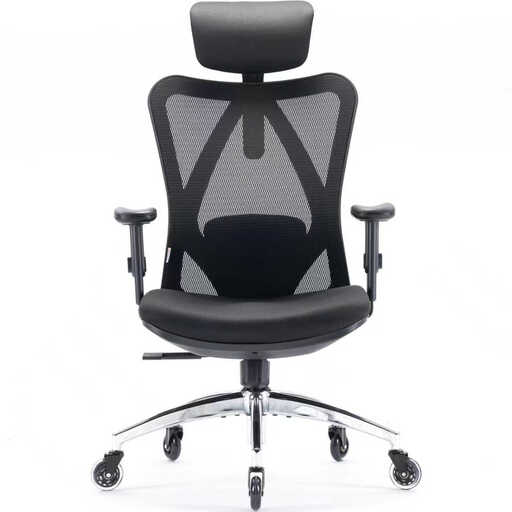
Why It Stands Out The SIHOO M18 is a well-rounded ergonomic chair that delivers on the core principles of adjustable support. It offers five distinct ergonomic settings, including an adjustable headrest, lumbar support and armrests, allowing for a highly personalised fit. The design is centred on user comfort, from the breathable mesh back that promotes airflow to the W-shaped padded seat that encourages a central sitting position and reduces leg pressure. Its construction is validated by BIFMA certification, ensuring it meets rigorous standards for safety and durability up to a weight of 150 kg.
Pros
Who is it for? This is an excellent choice for professionals and students looking for a reliable and highly adjustable ergonomic desk chair that covers all the essential features for all-day comfort.
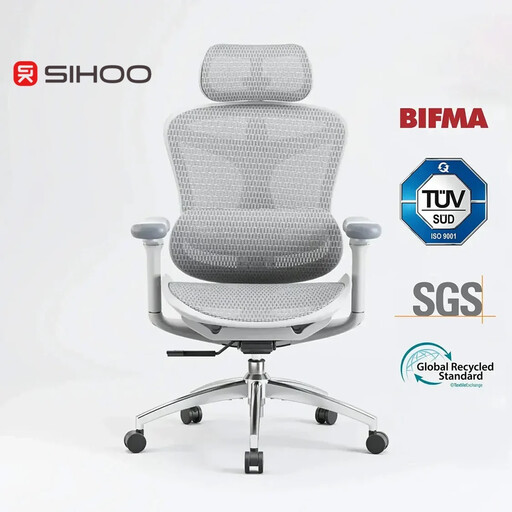
Why It Stands Out The SIHOO Doro C300 represents a step forward in dynamic seating technology. Its standout feature is the self-adaptive lumbar support, which automatically adjusts to your posture as you move, providing continuous support to your lower back. This is complemented by 3D armrests that adjust in multiple directions and an intelligent weight-sensitive mechanism that balances the recline function. The entire backrest is made of a flexible, breathable mesh that conforms to your body, making it a sophisticated piece of office equipment. It holds numerous safety certifications, including EU REACH and German T?V.
Pros
Who is it for? This chair is suited for users who want an advanced ergonomic solution that actively responds to their movements, making it ideal for dynamic work environments and those particularly focused on maintaining spinal health.
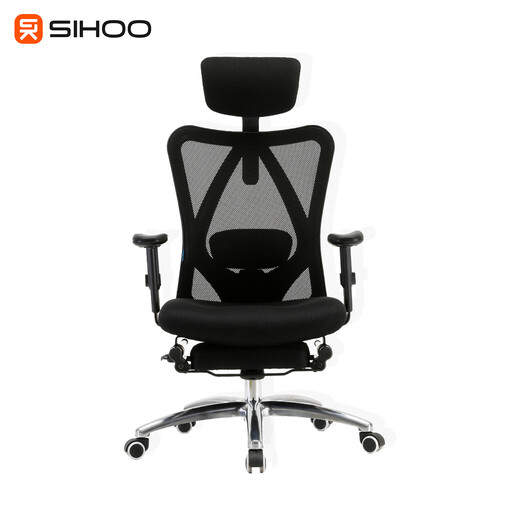
Why It Stands Out The Sihoo M18JT takes the solid ergonomic foundation of the M18 model and adds a significant feature for relaxation: an adjustable footrest. This transforms the chair from a purely task-oriented seat into a versatile station for both work and rest. It retains the five core ergonomic adjustments, the breathable mesh back and the high-density foam cushion. The addition of the footrest, combined with its recline function, allows you to lean back and elevate your legs during breaks, which can help improve circulation and reduce fatigue.
Pros
Who is it for? This model is perfect for individuals in a home office who appreciate the ability to switch from an upright working posture to a relaxed, reclined position without leaving their desk. It is a great computer chair for long hours that accommodate both focus and rest.
The primary focus of an ergonomic chair is function and support. However, personal taste in aesthetics also plays a role. For those who prefer a style often found in gaming setups but still require excellent back support, you might want to explore our range of gaming chairs with lumbar support.
1. How long should you sit in an ergonomic office chair? While an ergonomic chair is designed for prolonged use, it is still recommended to take frequent breaks. Health guidelines suggest standing up, stretching and moving around for a few minutes at least once every hour to encourage blood flow and prevent muscle stiffness.
2. Is a mesh office chair better than a fabric one? This often comes down to personal preference and environment. A mesh office chair provides superior airflow, which is a significant advantage in warmer rooms or for people who tend to feel hot while sitting. Fabric chairs can offer a softer texture but may retain more heat. Both can be comfortable, provided the underlying structure and padding are well-designed.
3. What is the most important feature in an ergonomic chair? If one feature had to be singled out, it would be adjustable lumbar support. Providing proper support to the natural curve of your lower back is fundamental to preventing pain and encouraging a healthy posture. However, a truly effective ergonomic office chair is one where all adjustable components—seat height, armrests and backrest—work together to create a personalised fit for the user.