
24/7 Customer Support

Free returns

Same-day & Next-day Delivery

Quality Guaranteed

Unlock Your Welcome Offers: FREE Delivery | Up to 80% OFF | Free 30-day JoyPlus trial
Download the APP
That familiar ache in your lower back after a long day at the desk, the stiffness in your neck, the general feeling of fatigue – these are common complaints for many of us who spend hours sitting. Whether you're in a corporate office or have a dedicated home office chair, the seat you use is more than just a piece of furniture; it's a tool that can significantly impact your comfort and focus.
An ergonomic office chair is designed to support your body, promote good posture and reduce physical strain. But with so many options available, how do you choose the right one? This guide is here to help. We'll walk you through the key features to look for and share some of our top recommendations to help you find a chair that works as hard as you do.
Selecting the right chair involves looking beyond aesthetics. Here are a few practical considerations to guide your decision.
A truly ergonomic chair adapts to you, not the other way around. The ability to customise settings is paramount for maintaining a healthy posture throughout the day. Look for chairs with multiple adjustment points:
high back office chair provides full support for your spine and shoulders. The ability to recline and lock the backrest at different angles allows you to shift positions and relieve pressure.office chair with lumbar support helps maintain the natural curve of your lower spine, preventing slouching and reducing back pain.The material of your chair affects both comfort and maintenance. While traditional fabric and leather chairs have their place, the mesh office chair has become increasingly popular for good reason.
Breathable mesh allows for continuous airflow, which helps regulate body temperature and prevent discomfort during long sessions. It's also flexible and conforms to your body shape, providing firm yet comfortable support.
Think about how you work. Do you spend most of your day typing, or do you often lean back to think or take calls? If you need a chair for extended periods, look for features designed for an office chair for long hours. This might include a deeper, more cushioned seat, a robust headrest or even an integrated footrest for moments of relaxation.
After reviewing a range of models, we've selected a few standout options from the SIHOO office chair collection that offer a strong combination of features, adjustability and value.
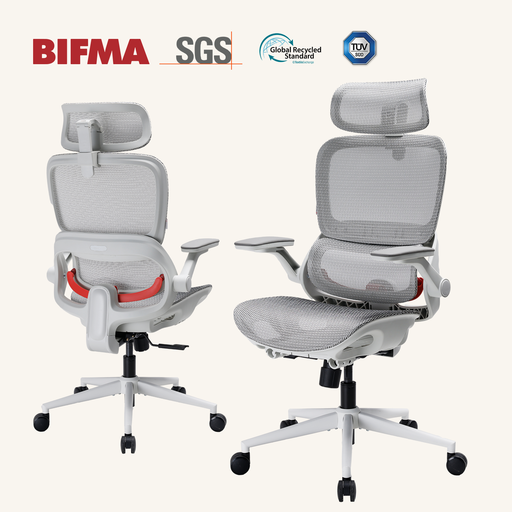
Why It Stands Out The SIHOO B100 Ultra is built around dynamic support. Its key feature is the adaptive lumbar support, which automatically adjusts to your posture as you move, providing consistent support to your lower back. Paired with a wide, adjustable headrest and a breathable mesh back, this chair is engineered for sustained comfort. The 360° rotatable flip-up armrests add a layer of versatility, allowing you to move them out of the way when not needed.
Pros:
Who is it for? Professionals and students who spend the majority of their day at a desk and require advanced, responsive back support to stay comfortable and focused.
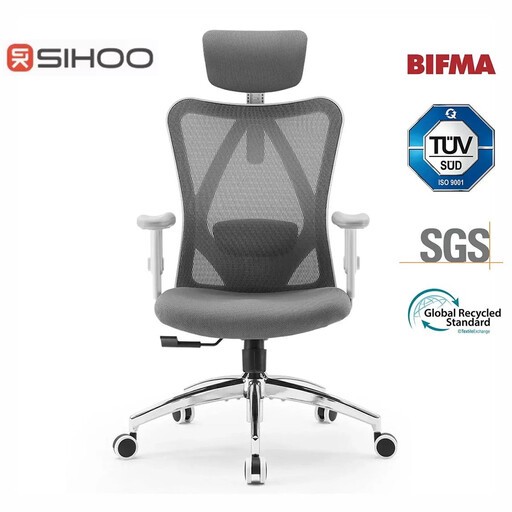
Why It Stands Out The Sihoo M18 is a versatile and highly adjustable computer desk chair. It offers five distinct ergonomic adjustment points, including the headrest, backrest, seat height, armrests and lumbar support, allowing for a truly personalised fit. The high-density foam seat is designed in a W-shape to encourage a centred posture, while the waterfall edge reduces pressure on the back of your legs. According to the brand, this model has passed the BIFMA test for durability and can support up to 150 kg.
Pros:
Who is it for? This is an excellent all-round option for anyone setting up a new home office or looking for a reliable upgrade that balances customisation with comfort.
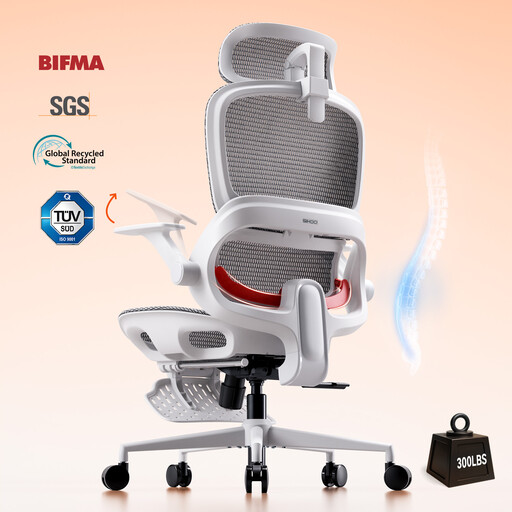
Why It Stands Out Taking comfort to the next level, the SIHOO B100JT includes all the core features of a great ergonomic chair—like adaptive lumbar support and a high back—but adds a retractable footrest. This transforms the chair from a focused work tool into a space for relaxation. During breaks or while on long calls, you can recline the backrest, extend the footrest and take the pressure off completely. It’s an ideal solution for those who spend exceptionally long hours at their desk.
Pros:
Who is it for? Gamers, developers and anyone working long or irregular hours who would benefit from the ability to recline and rest comfortably without leaving their desk.
If you're still searching for the perfect model or prefer a different style, there are many other chairs to consider.
Looking for a different shade or feature set? Explore our full collection of grey ergonomic office chairs to find the perfect fit for your workspace.
What makes an office chair 'ergonomic'? An ergonomic chair is defined by its adjustability and its ability to support a healthy, neutral posture. Key features include adjustable seat height, depth, backrest, armrests and, most importantly, effective lumbar support that conforms to the natural curve of your spine.
Is a high back office chair necessary? A high back chair provides support for your entire back, including the upper back, shoulders and neck (often with an integrated headrest). This is particularly beneficial for people who spend long hours sitting or tend to recline, as it reduces strain on the upper body. For tasks that require constant forward-leaning, a mid-back chair might suffice, but a high-back model generally offers more comprehensive support.
How do I set up my ergonomic chair correctly? Start by adjusting the seat height so your feet are flat on the floor and your thighs are parallel to it. Adjust the backrest to support the natural curve of your spine, ensuring the lumbar support fits snugly in your lower back. Finally, set the armrests so your shoulders are relaxed and your forearms are level with the desk.