
24/7 Customer Support

Free returns

Same-day & Next-day Delivery

Quality Guaranteed

Unlock Your Welcome Offers: FREE Delivery | Up to 80% OFF | Free 30-day JoyPlus trial
Download the APP
Watching your child learn to write is a significant milestone, but it can come with its own set of challenges. If you've noticed your little one struggling with a tight grip, complaining of a tired hand or simply getting frustrated with messy results, the type of pencil they are using might be a factor. Standard pencils are not always suited for small hands that are still developing fine motor skills.
This is where ergonomic pencils for children can make a difference. These tools are specifically designed to support a child's hand, encouraging a proper grip and making the process of writing more comfortable and enjoyable. This guide will walk you through what to look for in a good handwriting pencil and offer some practical recommendations to help your child on their writing journey.
Choosing the right pencil involves more than just picking a fun colour. For young learners, a few key features can significantly impact their comfort and ability to form letters correctly.
The shape of the pencil barrel is crucial. Many educators and occupational therapists suggest triangular grip pencils because their three-sided shape naturally guides a child's fingers into the tripod grip. This is the efficient and relaxed hold where the pencil rests between the thumb and index finger, supported by the middle finger. For very young children, chunky pencils for toddlers offer a larger surface area that is easier for small hands to grasp and control. Look for pencils with a non-slip or textured grip zone to further improve grip and prevent fingers from sliding.
Children learning to write often apply inconsistent pressure, which can lead to a lot of broken pencil tips and interruptions. Break-resistant school pencils are a practical choice. These pencils often have thicker leads or feature a special bonding process that secures the lead to the wood casing, making it far more durable. An HB lead is a good standard as it provides a clear mark without requiring too much pressure.
Approximately 10% of the population is left-handed, and using a pencil designed for right-handers can be awkward and uncomfortable for them. Specially designed left-handed children's pencils feature moulded grips that are a mirror image of right-handed versions. This ensures left-handed learners receive the correct ergonomic support from the very beginning, preventing them from developing poor writing habits.
Here are a few options that incorporate these helpful features, selected to suit different needs and stages of writing development.

Why It Stands Out: This mechanical pencil removes the need for constant sharpening. Its innovative design is built around a non-slip grip zone with moulded finger grooves to guide a right-handed child into the correct tripod grip. The extra-thick 3.15 mm HB lead is sturdy and break-resistant, and the cushioned tip adds another layer of comfort.
Pros:
Who is it for: Right-handed children in preschool or early primary school who are developing their writing skills. It is particularly useful for those who tend to press hard when they write.
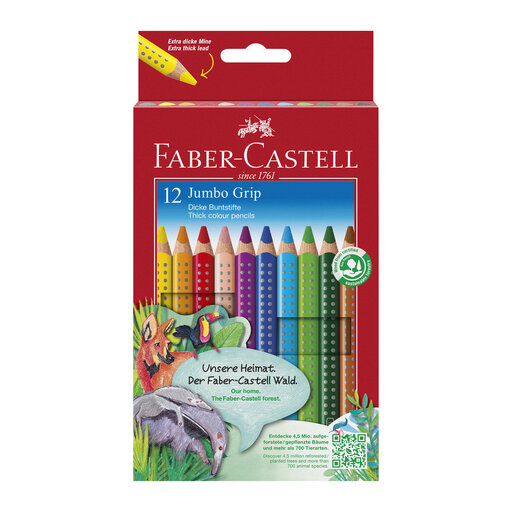
Why It Stands Out: Combining creativity with comfort, these jumbo coloured pencils are excellent for both drawing and early writing. The thick, triangular barrel is easy for little hands to hold, and the patented Soft-Grip zone with raised dots prevents slipping. A unique feature is the water-soluble pigments, which allow children to turn their drawings into watercolour paintings with a wet brush.
Pros:
Who is it for: Toddlers and preschoolers who need a versatile tool for both art and pre-writing activities. The chunky design is perfect for the earliest learners.
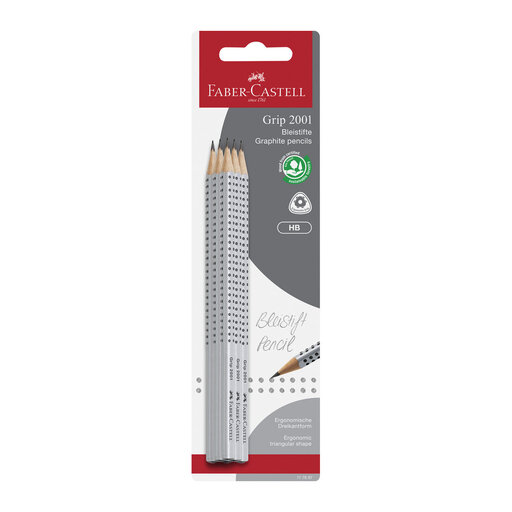
Why It Stands Out: For children who have moved beyond jumbo pencils but still benefit from ergonomic support, the Grip 2001 is a solid choice. It maintains the ergonomic triangular shape but in a more standard size suitable for daily schoolwork. The patented Grip zone with its distinctive raised dots offers a secure hold for fatigue-free writing.
Pros:
Who is it for: Primary school children who need reliable and comfortable handwriting pencils for kids for everyday writing, drawing and sketching.
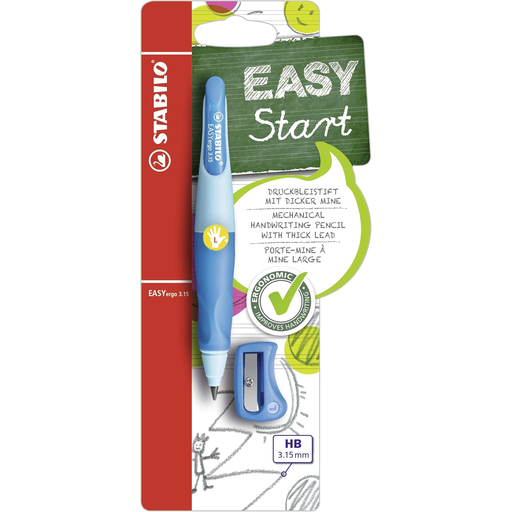
Why It Stands Out: This pencil offers all the benefits of the right-handed EASYergo but is specifically engineered for left-handers. The moulded grip zone is shaped to guide a left-handed child's fingers into a comfortable and efficient writing position, ensuring they get the support they need without having to adapt to a right-handed tool.
Pros:
Who is it for: Left-handed children who are learning to write and need a tool that is anatomically suited to their needs.
Sometimes a child may already have a favourite set of pencils, or you might be looking for a more adaptable solution. In these cases, adding a separate grip can be a great way to provide ergonomic support to any standard-sized pencil or pen.
For children who need a little extra help with comfort, explore our collection of soft grips to find an accessory that can make any pencil easier to hold.
At what age should a child start using an ergonomic pencil? A child can start using an ergonomic pencil as soon as they show an interest in writing and drawing, typically around ages 3 to 4. Chunky, easy-to-hold pencils are great for toddlers, while more structured ergonomic designs are well-suited for preschool and early primary school children who are actively learning to form letters.
Do triangular pencils really help with handwriting? Yes, triangular grip pencils are widely recommended by educators as their shape naturally encourages children to adopt the tripod grip. This hold—using the thumb, index and middle fingers—is generally considered efficient for writing as it can reduce hand fatigue and allow for better pencil control.
What is the difference between a regular pencil and a break-resistant one?Break-resistant school pencils are designed to withstand the heavy pressure and occasional drops that come with use by young children. They often feature leads that are fully bonded to the wood casing, which prevents the lead from snapping internally. Many also use thicker leads than standard pencils, making the tip itself stronger and less prone to breaking.